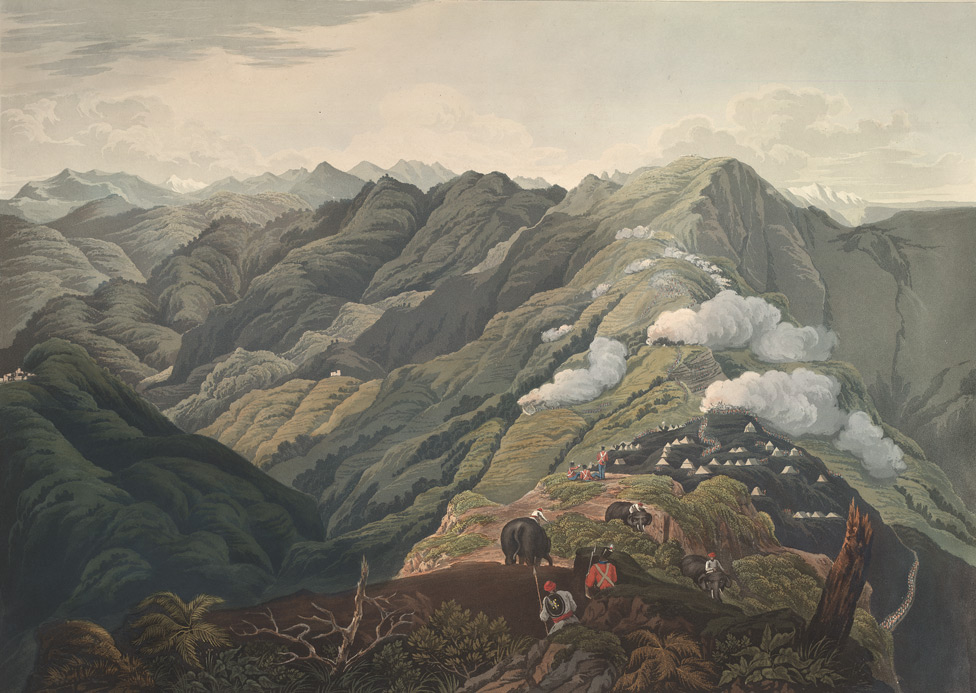
Nepal Signs the Treaty of Sugauli with the East India Company
After the Anglo-Nepalese War, Nepal gave up Kumaon, Garhwal, Sikkim and much of the Tarai, and Gurkha soldiers began to serve in British armies.
On March 4, 1816, representatives of the Kingdom of Nepal and the British East India Company finalized the Treaty of Sugauli, concluding the two-year Anglo-Nepalese War. Negotiations had initially produced a draft in Bihar in December 1815, signed on behalf of Nepal by Guru Gajraj Mishra. The Nepali court hesitated to ratify the punishing terms, but relented after British forces led by General David Ochterlony defeated Nepali troops near Makwanpur in early 1816. The formal agreement brought an end to an intense regional confrontation and established the territorial framework that still defines most of Nepal's borders.
The conflict had been brewing since the second half of the eighteenth century, following the unification of Nepal under Prithvi Narayan Shah. The expanding Himalayan kingdom pushed east into Sikkim and west across the Karnali and Gandaki basins into the Uttarakhand regions of Kumaon and Garhwal. This rapid growth collided with the interests of the East India Company, which exercised direct or indirect authority over the plains between Delhi and Calcutta. Company officials were eager to secure predictable borders, gain access to Himalayan trans-border salt trade routes to Tibet, and recruit from the resilient Gorkha military. Tensions along the frontier culminated in an outright declaration of war by the company in 1814.

Keep reading in Yester
Coming soonKeep following the story
Sources
Image: James Baillie Fraser · Public domain · Wikimedia Commons · cropped
