Prithvi Narayan Shah Takes Kathmandu and Unifies Nepal
The king of Gorkha entered Kathmandu during a festival and went on to unite the valley’s kingdoms into a single state.
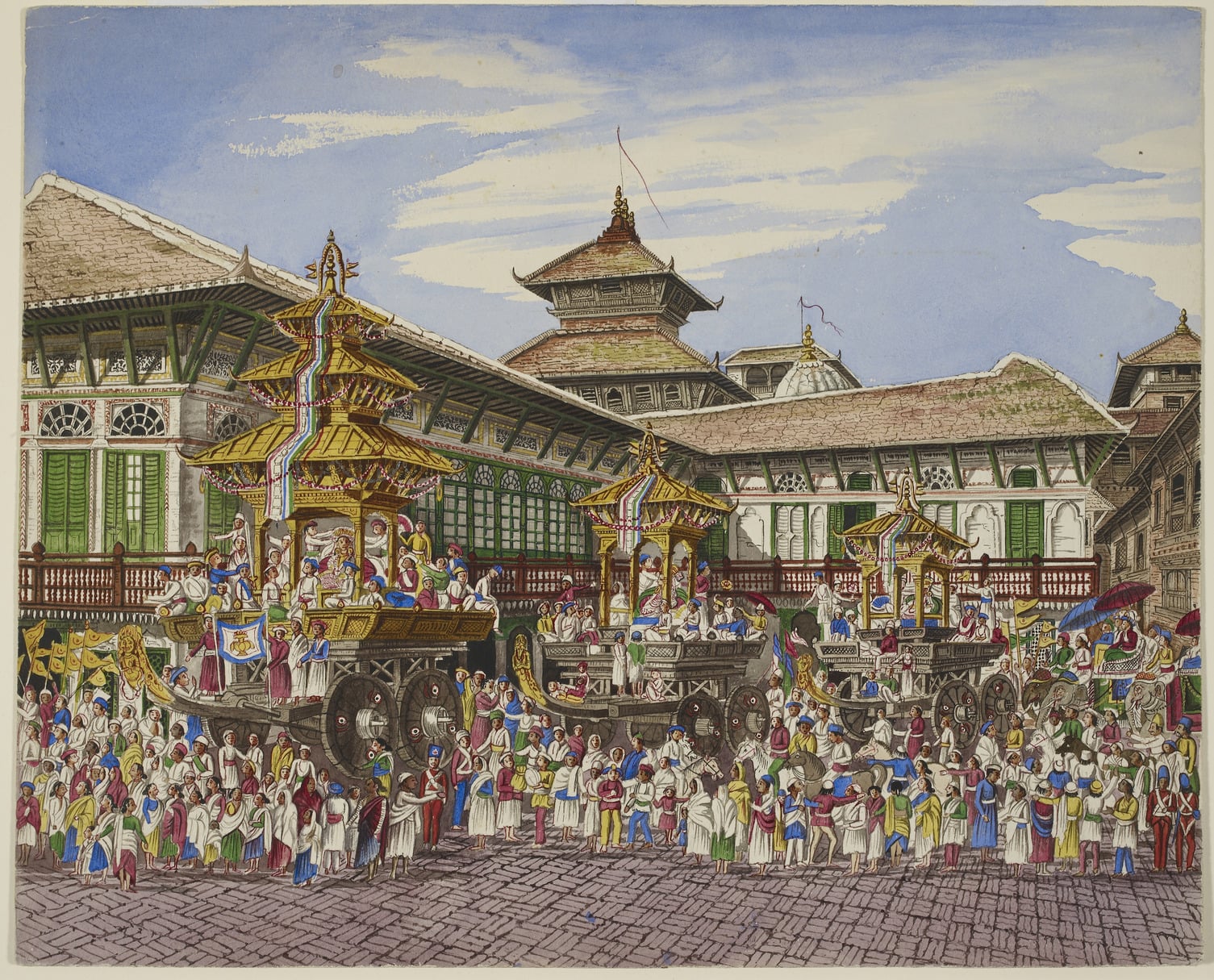
On 25 September 1768, King Prithvi Narayan Shah of Gorkha entered Kathmandu. According to Nepali tradition, the city's defenders and citizens were occupied with the annual Indra Jatra festival, and the Gorkhali troops took the city, ending the Malla dynasty's rule there. This entry served as the definitive pivot in a territorial campaign that turned a cluster of competing principalities into a centralized Himalayan kingdom.
Prior to this conquest, the region comprised dozens of small states, among them the groups known as the Baisi and Chaubise rajyas, along with the distinct kingdoms of the Kathmandu Valley: Kantipur, Lalitpur, and Bhaktapur. When Prithvi Narayan Shah ascended the throne of Gorkha in 1743, his kingdom was merely a minor hill power. Seeking to broaden his realm, he is said to have traveled to Varanasi to learn about politics beyond the hills. His early military ventures met immediate resistance, including an initial defeat at Nuwakot in 1743, but diplomatic alliances with neighboring hill chiefs allowed him to capture that crucial trade route the following year.

Keep reading in Yester
Coming soonKeep following the story
Sources
- Nepal country profile, Library of Congress Federal Research Division (via UNHCR Refworld archive)
- Diary of a disastrous campaign (Himal Southasian)
- The battle of Sindhuli (Museum Association of Nepal)
- Kirtipur, 2008 (Nepali Times)
- Embassy of Nepal, Washington: history
- How Indra Jatra came to be one of Kathmandu's most celebrated festivals (The Kathmandu Post)
- Prithvi Narayan Shah
Image: Henry Ambrose Oldfield · CC0 · Wikimedia Commons · cropped
