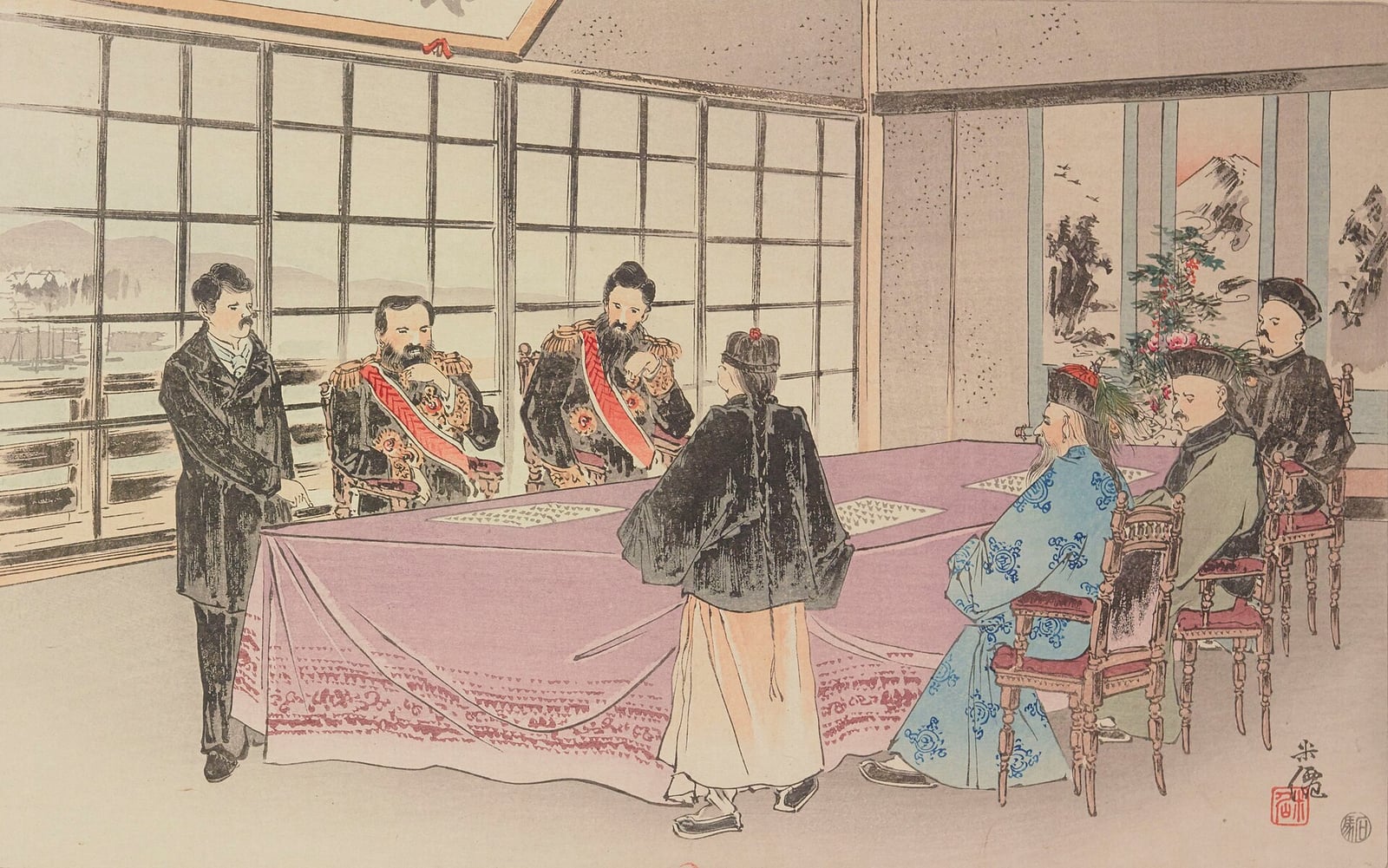
China Signs Away Taiwan After Losing a War to Japan
Defeated in the First Sino-Japanese War, the Qing empire recognized Korea’s independence and ceded Taiwan to Japan.
On April 17, 1895, representatives of the Qing dynasty and the Empire of Japan met at the Shunpanro hotel in Shimonoseki, Japan, to sign the peace treaty concluding the First Sino-Japanese War. The conflict had resulted in decisive defeats for Chinese land and naval forces, leaving the Qing government with little leverage during negotiations. Count Ito Hirobumi and Viscount Mutsu Munemitsu represented Japan, while Chinese diplomat Li Hongzhang and his son Li Jingfang negotiated on behalf of China, accompanied by former United States Secretary of State John W. Foster as an advisor.
The talks, which had commenced on March 20, were interrupted when a Japanese extremist shot and wounded Li Hongzhang on March 24 as he returned to his lodgings at the Injoji temple. The ensuing public outcry led Japan to moderate some of its initial positions and agree to a temporary armistice before formal negotiations resumed on April 10. Despite this pause, the final eleven articles imposed sweeping concessions on the Qing Empire. China agreed to recognize the complete independence and autonomy of Joseon Korea, terminating the centuries-old tributary ceremonies and relations between Beijing and Seoul.

Keep reading in Yester
Coming soonKeep following the story
Sources
Image: Kubota Beisen · Public domain · Wikimedia Commons · cropped
