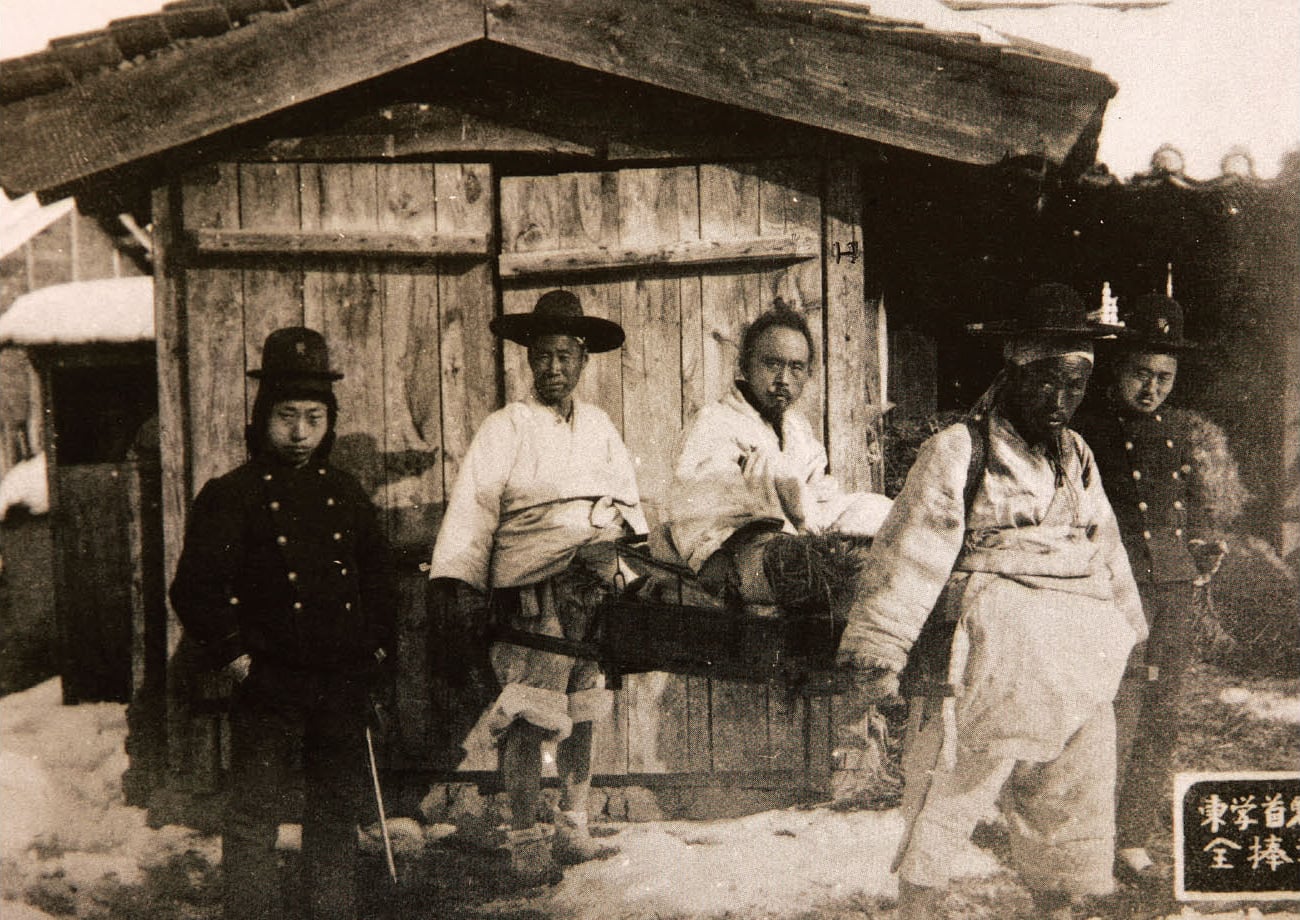
Korean Peasants Rise in the Donghak Revolution
Followers of the Donghak religion led a peasant army against corrupt officials, and the rising drew Chinese and Japanese troops into Korea.
In January 1894, an uprising erupted in the southwestern Korean county of Gobu, driven by intense local frustration with the magistrate Jo Byeong-gap. The official had imposed heavy taxes, levied a tax on the water from a new reservoir that farmers had been made to build as unpaid labourers, and intimidated residents with false criminal accusations. Under the leadership of Jeon Bong-jun, angered villagers occupied the local government office and destroyed the reservoir. Although this initial disorder briefly subsided after the central government replaced the magistrate, widespread rural grievances against administrative extortion and social inequality remained unresolved across the southern provinces.
The discontent quickly merged with Donghak, a religious and social movement established in the 1860s by Choe Je-u. Combining indigenous folk practices and shamanic rituals with elements reminiscent of monotheism and egalitarian ideals, Donghak taught that humanity shared a divine nature. The Joseon dynasty had outlawed the doctrine and executed Choe in 1864, driving the movement into an organized network of local chapters known as jeob. By the 1890s, followers were petitioning the royal court not only to restore the founder's honor but also to lower taxes, stop illicit levies, and expel foreign merchants and Christian missionaries.

Keep reading in Yester
Coming soonKeep following the story
Sources
- Donghak Peasant Revolution timeline (Donghak Peasant Revolution Memorial Foundation)
- Donghak Peasant Rebellion, Glossary (JACAR, National Archives of Japan)
- The Donghak Peasant Rebellion: A Bloody Chapter in Jeolla History (Gwangju News)
- Gobu uprising and Jeongeup Donghak memorial (Jeonbuk Ilbo)
- Tonghak Peasant Revolution
Image: Murakami Tenshin (村上天眞) · Public domain · Wikimedia Commons · cropped
