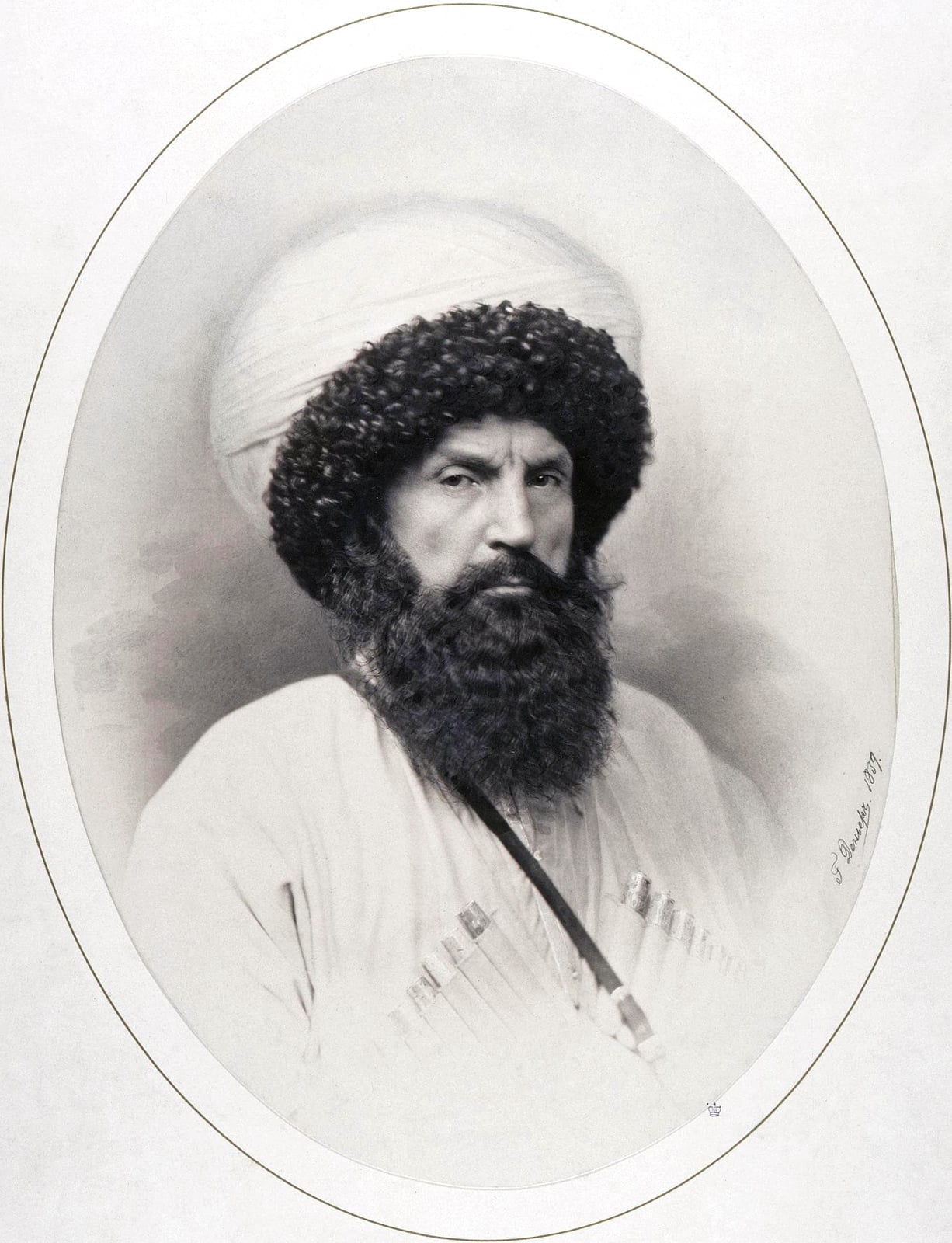
Imam Shamil Surrenders at Gunib After 25 Years of Resistance
The leader of the North Caucasus mountaineers gave himself up to the Russian army, ending one of the longest wars of the century.
In late August 1859 (Old Style; early September in the Gregorian calendar), the long campaign waged by Imperial Russia to subjugate the North Caucasus reached a turning point at the mountain redoubt of Gunib in Dagestan. Surrounded by superior forces under the command of Prince Aleksandr Baryatinsky, Imam Shamil, the third leader of the Caucasian Imamate, yielded to imperial authorities. His surrender brought an effective close to a quarter-century of organized mountain guerrilla warfare under his leadership, ending the most formidable phase of the Caucasian War.
Born around 1797 in the Avar settlement of Gimry, Shamil studied Arabic, Islamic law, and logic alongside his childhood associate Ghazi Muhammad, who later served as the first Imam of the regional resistance. Shamil entered the struggle during a period of imperial expansion, as the Russian Empire consolidated control over lands bordering the Ottoman Empire and Qajar Iran. Following Ghazi Muhammad's death at the Battle of Gimry in 1832 and the subsequent killing of the second Imam, Hamzat Bek, in 1834, Shamil assumed leadership of the Imamate, combining spiritual authority as a Naqshbandi Sufi sheikh with strict political administration.

Keep reading in Yester
Coming soonKeep following the story
Sources
- Imam Shamil and Sufism in the North Caucasus (Russia's Periphery, William & Mary)
- Shamil (Encyclopedia.com)
- Shamil (Encyclopaedia Britannica)
- The Surrender of Imam Shamil and the End of the Caucasus War (Cartographer)
- Seyh Samil (Biyografiler)
- Through the Caucasus to the Volga, p. 189 (Project Runeberg)
- Imam Shamil
Image: Andrey Denyer · Public domain · Wikimedia Commons · cropped
