A Georgian King Places His Kingdom Under Russian Protection
King Erekle II signed a treaty with Catherine the Great’s Russia, hoping for safety from Persia and the Ottomans.
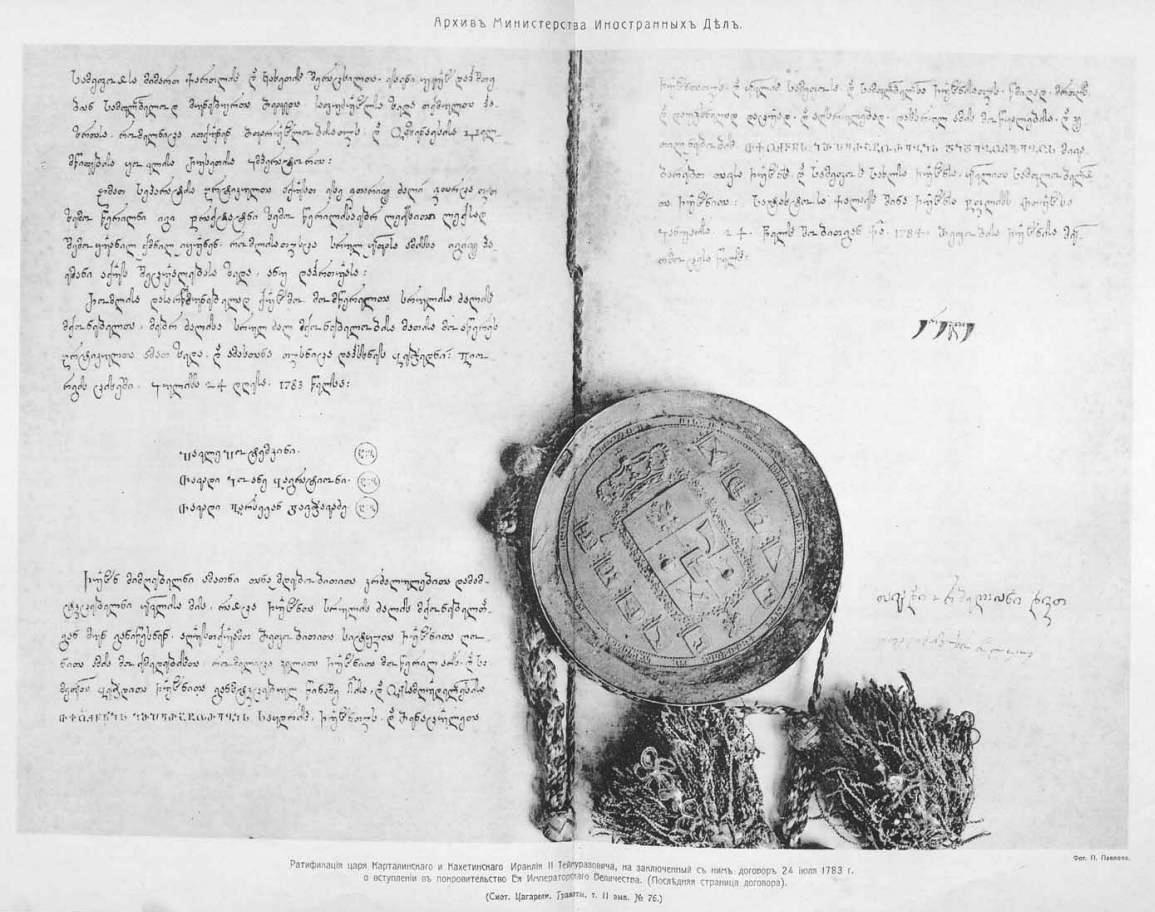
On July 24, 1783 (August 4 in the Gregorian calendar), emissaries representing the Russian Empire and the eastern Georgian kingdom of Kartli-Kakheti gathered at the fortress of Georgievsk in the North Caucasus to conclude a landmark bilateral pact. Negotiated for Russia by Lieutenant-General Pavel Potemkin and on the Georgian side by Prince Ioane of Mukhrani alongside Adjutant-General Garsevan Chavchavadze, the agreement placed eastern Georgia under Russian imperial protection. King Erekle II and Empress Catherine the Great formally ratified the treaty the following year, hoping to stabilise a vulnerable Christian realm surrounded by encroaching regional powers.
For centuries, Georgian rulers had contended with severe pressure and devastating campaigns from Ottoman and Persian neighbours. A shared Orthodox faith made Russia a natural partner. Under the terms of the treaty, the Russian monarch became the sole suzerain over Kartli-Kakheti, pledging to defend its lands and treat Georgia's adversaries as Russia's own. In return, the Georgian kings agreed to swear fealty, assist the empire in wartime, and forfeit the right to conduct foreign diplomacy without prior Russian approval.

Keep reading in Yester
Coming soonKeep following the story
Sources
Image: Unknown author · Public domain · Wikimedia Commons · cropped
