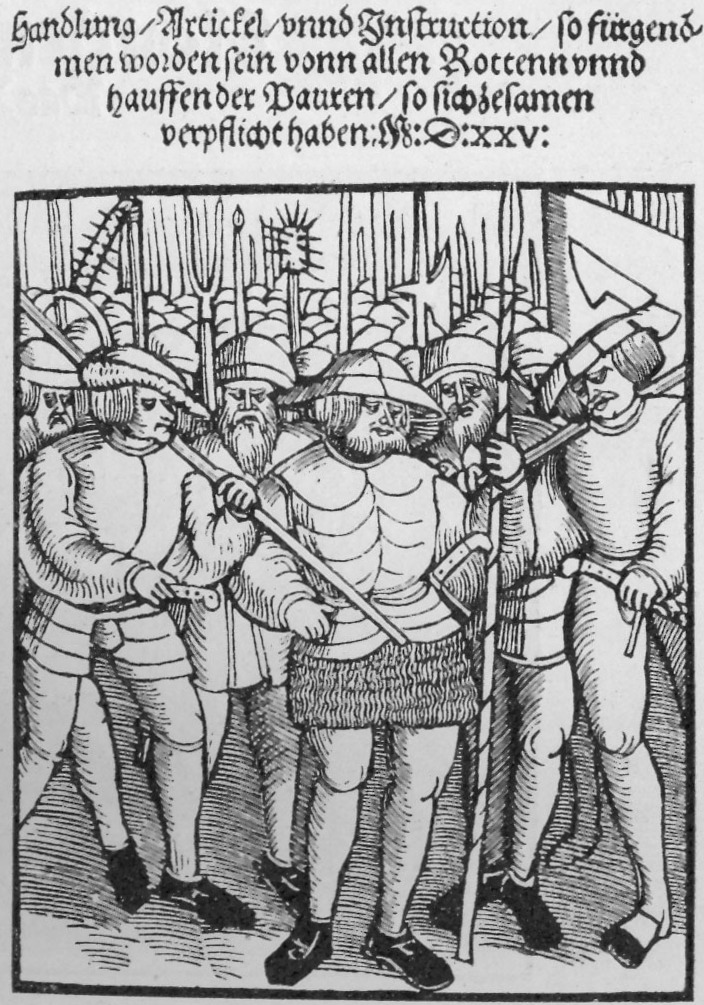
The German Peasants Rise in Revolt
Peasants across southern and central Germany rose against their lords, citing the gospel in their demands, and were crushed by princely armies.
Between 1524 and 1525, hundreds of thousands of rural laborers and townspeople across southern and central German lands took up arms against their territorial rulers. The German Peasants' War is often described as the largest and most widespread popular uprising in Europe before the French Revolution. Driven by worsening economic exactions, the expansion of Roman civil law that stripped customary land rights, and the restrictive tightening of serfdom, rural communities banded together to challenge the authority of both secular princes and ecclesiastical lords.
The grievances of the insurgents were formulated in various programs, most notably the Twelve Articles, which peasant representatives adopted at Memmingen in Upper Swabia in March 1525 and which were widely printed and circulated. These manifestos demanded that congregations elect their own pastors, an end to serfdom, the reduction of burdensome rents, the restoration of traditional access to forests and waters for hunting and fishing, and relief from oppressive death duties. Throughout these petitions, the rebels frequently appealed to divine law and the gospel to justify their demands, reflecting the pervasive influence of the early Protestant Reformation.

Keep reading in Yester
Coming soonKeep following the story
Sources
Image: Unknown author · Public domain · Wikimedia Commons · cropped
