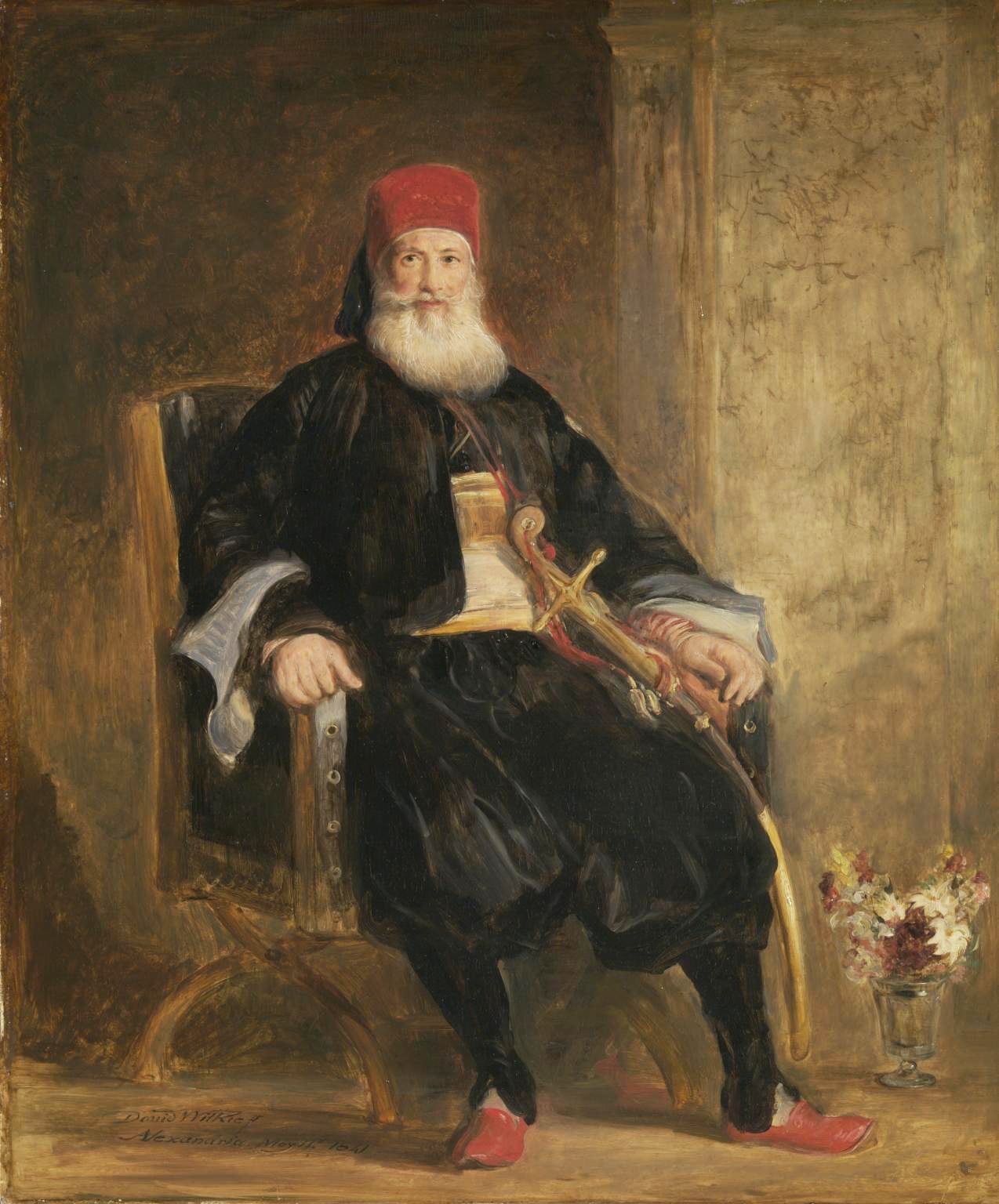
Muhammad Ali Takes Power in Egypt
An Albanian commander in the Ottoman army became governor of Egypt and began to remake it into a modern state with its own army and industry.
In 1801, an Ottoman expeditionary force landed at Aboukir to restore imperial authority in Egypt following the withdrawal of French troops under Napoleon Bonaparte. Among the Ottoman forces was a contingent of Albanian soldiers serving under Muhammad Ali, an officer born in the Rumelia Eyalet who had earlier collected taxes in Kavala. The departure of the French left Egypt destabilized, as surviving Mamluk factions struggled against Ottoman representatives for domestic dominance. Over the next four years, Muhammad Ali maneuvered between these rival camps while cultivating alliances with local religious scholars and civic leaders such as Umar Makram.
Popular dissatisfaction with the reigning Ottoman governor, Hurshid Pasha, reached a turning point in 1805. A coalition of leading scholars and notables in Cairo demanded that Hurshid be removed and insisted on Muhammad Ali taking his place. Sultan Selim III conceded to the local demands, formally naming Muhammad Ali the governor of Egypt with the rank of Pasha. Once installed, the new governor moved systematically to eliminate potential competitors. He exiled Makram to Damietta in 1809 and broke Mamluk power in March 1811 by ambushing their leadership at the Cairo Citadel during an official military celebration.

Keep reading in Yester
Coming soonKeep following the story
Sources
Image: David Wilkie · Public domain · Wikimedia Commons · cropped
