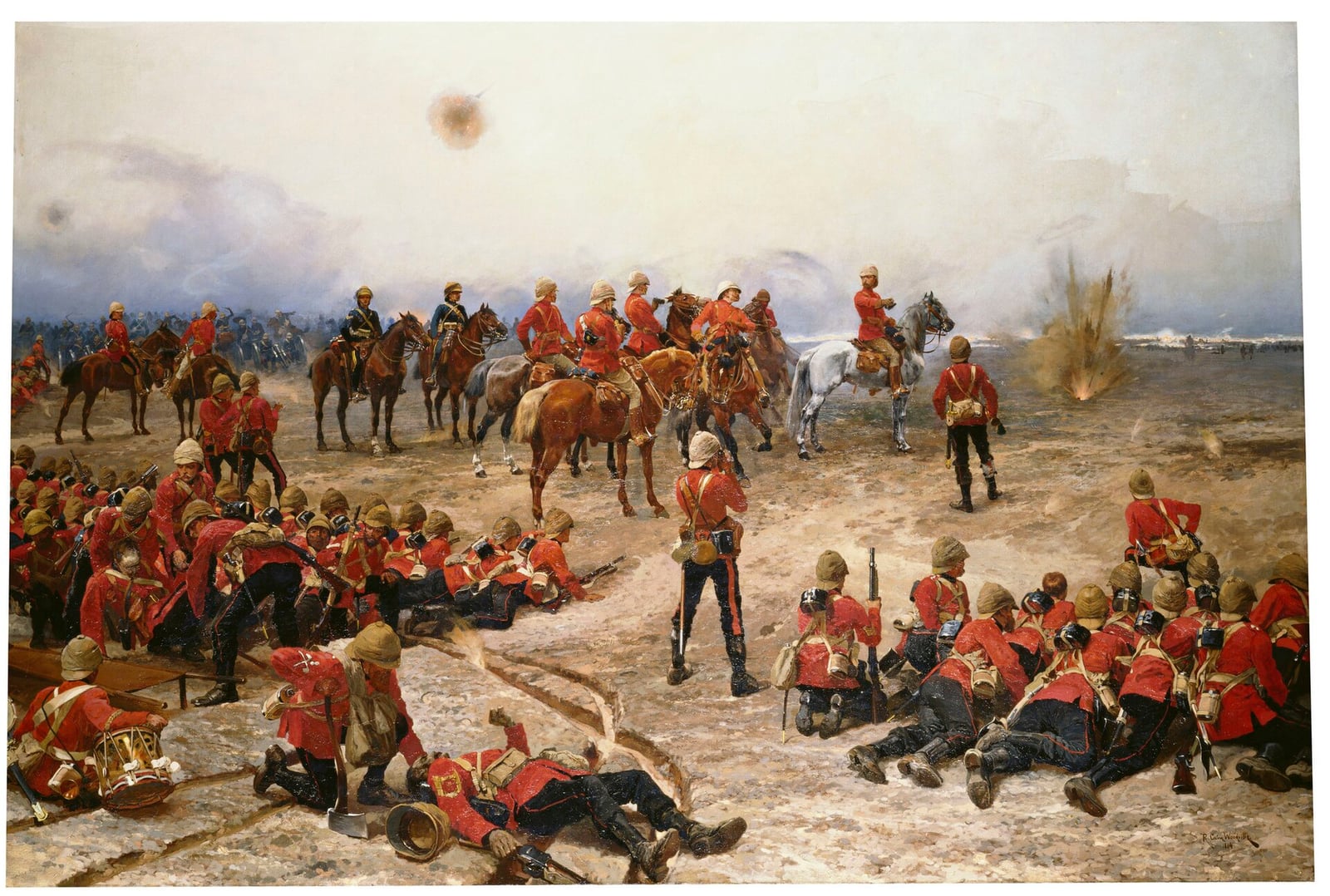
Britain Defeats Urabi and Occupies Egypt
After a nationalist army officer challenged foreign control of Egypt, British troops crushed his forces at Tell el-Kebir and began a 74-year occupation.
In the early 1880s, escalating unrest in Egypt challenged both the dynastic authority of Khedive Tewfik Pasha and the deep financial and strategic reach of European empires. Colonel Ahmed Urabi, an Egyptian army officer, led a widespread military mutiny and nationalist movement seeking to curtail British and French interference in Egyptian governance. European powers responded with mounting pressure, culminating in the appearance of British and French warships off the port of Alexandria in May 1882. Tensions exploded on June 11, when rioting in the city killed about 50 Europeans and a larger number of Egyptians, prompting European residents to flee while Urabi concentrated on fortifying coastal positions against expected foreign retaliation.
The British Royal Navy opened fire on Alexandria on July 11, bombarding the harbor forts, whose guns were silenced within days, before deploying naval landing parties to secure the burning ruins. Tewfik Pasha, having retreated to Alexandria under European protection, sided with the British against Urabi. In response, Urabi, who commanded the army's loyalty, organized national resistance to the British landing. An initial British probing assault near Kafr El Dawwar on August 5 met strong resistance, and the British commanders chose not to advance on Cairo from the northern coast.

Keep reading in Yester
Coming soonKeep following the story

Sources
Image: Richard Caton Woodville, Sr. · Public domain · Wikimedia Commons · cropped
