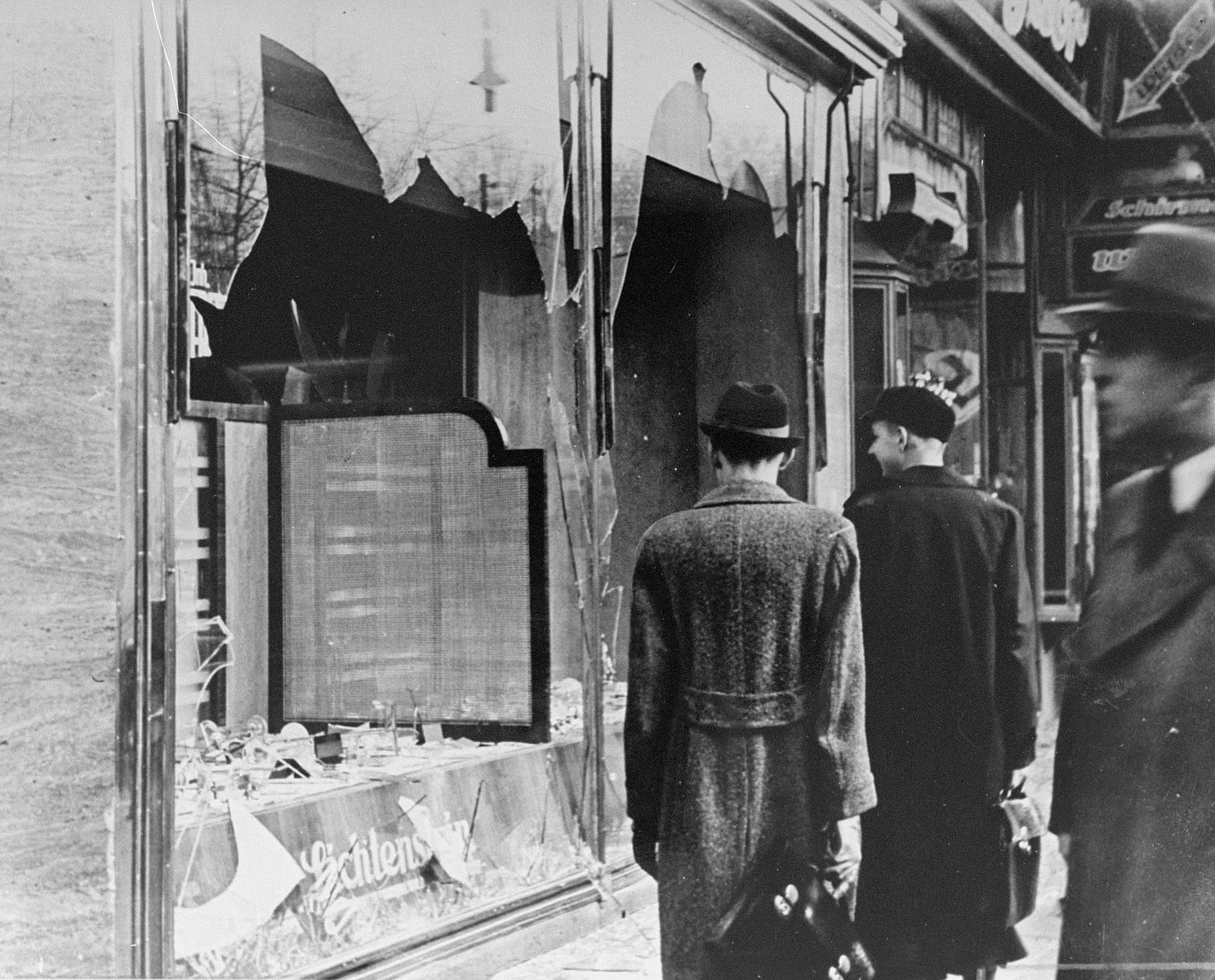
Nazi Germany Unleashes the Kristallnacht Pogrom
Through a night and a day, mobs and stormtroopers burned synagogues and wrecked Jewish shops, and some 30,000 Jewish men were sent to camps.
On the night of November 9, 1938, paramilitary squads and street mobs unleashed a wave of violent assaults against Jewish communities throughout Nazi Germany, Austria, and the Sudetenland. Through the night and into the following day, members of the Sturmabteilung and Schutzstaffel, accompanied by Hitler Youth and civilians, demolished communal buildings with sledgehammers, set fire to houses of worship, and wrecked thousands of private establishments. The popular term Kristallnacht, or the Night of Broken Glass, emerged from the vast amounts of shattered shopfronts littering the streets in the aftermath.
The institutional roots of this violence had been deepening since Adolf Hitler was appointed Chancellor of Germany on January 30, 1933. In the years following, state decrees steadily dismantled the civil rights of German Jews. These discriminatory policies culminated in severe economic disenfranchisement and citizenship revocations. Pressures escalated dramatically in late October 1938 with the Polenaktion, in which German authorities arrested at least 12,000 Polish Jews living in Germany (by some counts more than 17,000) and forcibly expelled them across the Polish frontier, leaving thousands stranded in harsh border camps.

Keep reading in Yester
Coming soonKeep following the story
Sources
Image: Unknown author · Public domain · Wikimedia Commons · cropped
