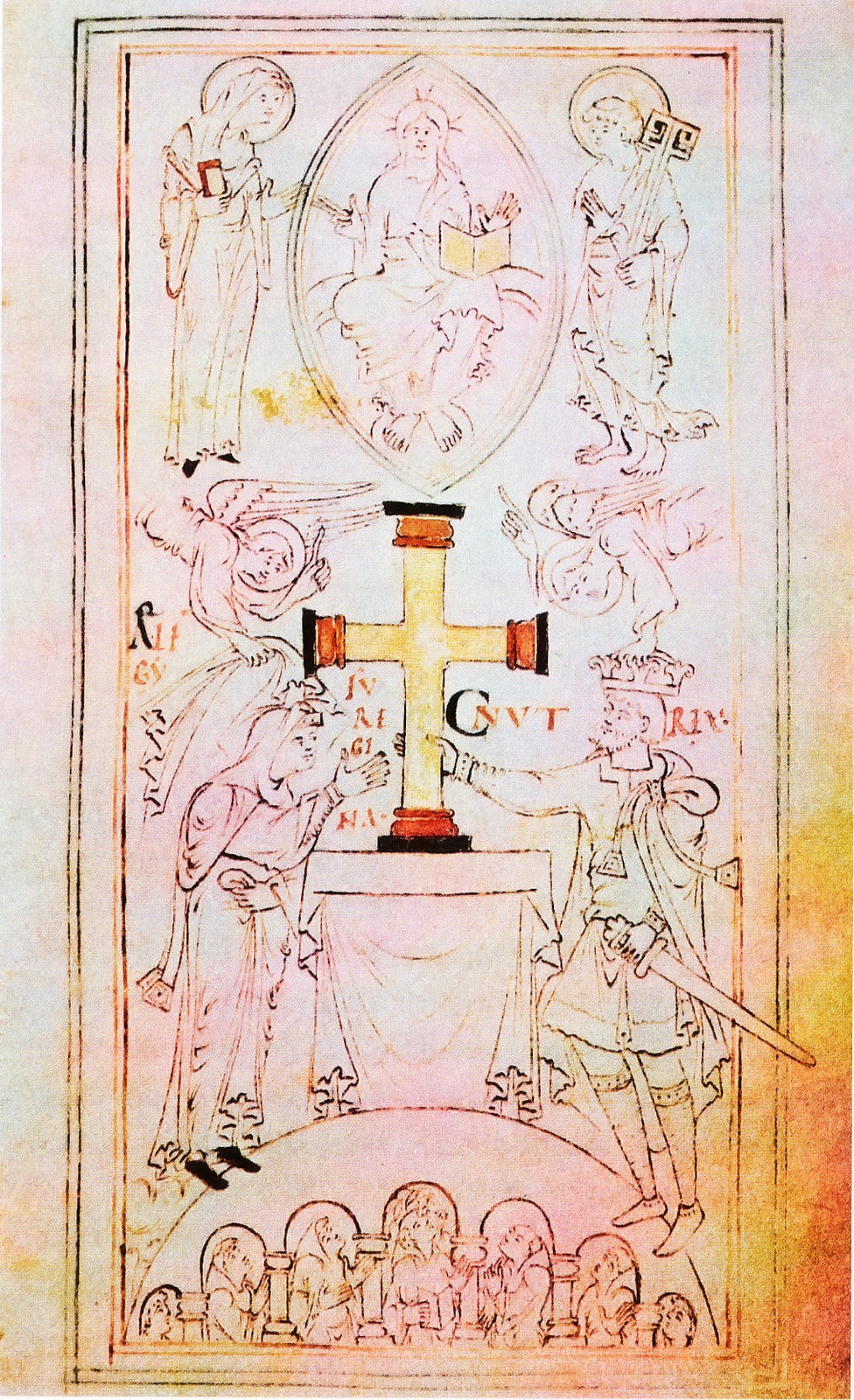
Cnut the Dane Becomes King of All England
After a year of war and the death of Edmund Ironside, the Danish prince Cnut ruled all England, and later Denmark and Norway as well.
In the summer of 1015, a large Scandinavian fleet landed on the southern coast of England. At their head was Cnut, a Danish prince seeking to restore the conquest briefly achieved by his father, Swein Forkbeard, two years earlier. Swein had driven the English king Æthelred into exile in 1013, only to die suddenly in early 1014. While the Danish fleet and Danelaw magnates quickly backed Cnut, the English council recalled Æthelred, forcing Cnut to flee across the North Sea. Gathering allies from across Scandinavia and Poland, Cnut returned in 1015 and fought a campaign that lasted until the autumn of 1016.
The conflict pitted Cnut against Æthelred's eldest son, Edmund Ironside, who assumed active leadership of the resistance and took the throne following Æthelred's death in April 1016. The rival armies clashed repeatedly across Wessex and the midlands. Danish forces besieged London and dug a ditch on the Southwark side to draw their ships past London Bridge, but Edmund forced them to lift the siege and fought battles at Penselwood, Sherston, and Brentford. A critical shift occurred through recurring defections, most notably by Eadric Streona, the ealdorman of Mercia, who swung between both sides before ultimately deserting the English army during the decisive Battle of Assandun in Essex on 18 October 1016.

Keep reading in Yester
Coming soonKeep following the story

Sources
Image: 11th century scribe · Public domain · Wikimedia Commons · cropped
