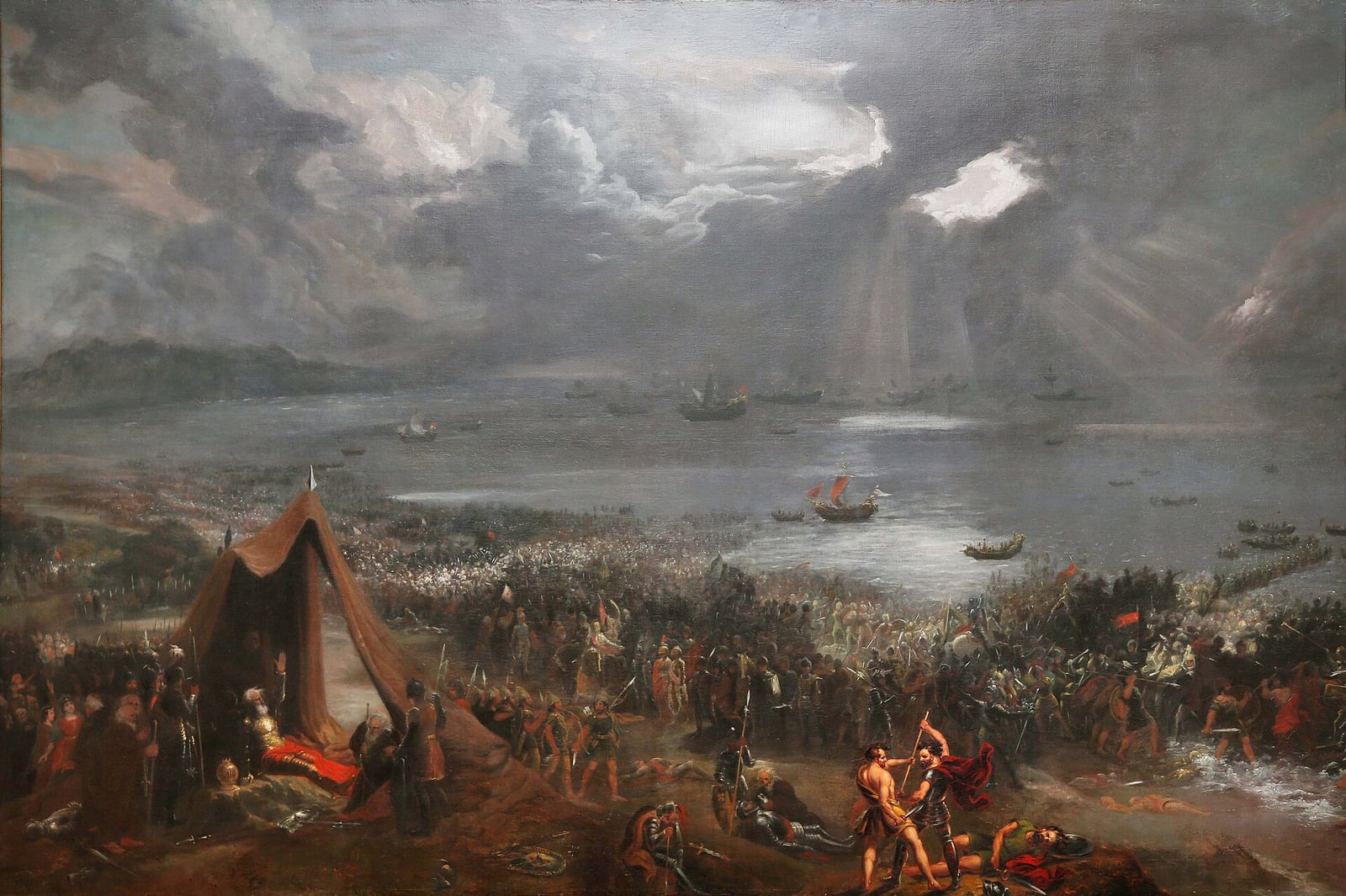
Brian Boru Is Killed Winning the Battle of Clontarf
Ireland’s high king defeated an alliance of Leinster and Norse forces near Dublin but did not survive the day.
On 23 April 1014, the forces of Brian Boru, High King of Ireland, confronted a hostile alliance outside Dublin at Clontarf. The encounter pitted the Munster king and his provincial allies against Máel Mórda mac Murchada, the King of Leinster, and Sigtrygg Silkbeard, the ruler of the Norse Kingdom of Dublin. To bolster their uprising against Brian's supreme authority, the coalition had recruited overseas Viking contingents led by Sigurd, Earl of Orkney, and Brodir of the Isle of Man.
The clash was the culmination of decades of shifting regional dominance across Ireland. Viking groups had established permanent settlements along the Irish coast in the ninth century, gradually integrating into regional politics while developing Dublin into a prosperous maritime hub. Meanwhile, the Dál gCais dynasty of Thomond expanded from western territories into wider Munster. Brian Boru steadily subdued regional rivals, negotiated temporary partitions of authority with northern rulers, and by 1002 had displaced Máel Sechnaill of the Uí Néill as high king, then campaigned in the north until all the important kings of Ireland had submitted to him.

Keep reading in Yester
Coming soonKeep following the story
Sources
- Emperor of the Irish: Brian Boru and the Battle of Clontarf, Rise to Power (Trinity College Dublin Library)
- Battle of Clontarf: Naval Reinforcements (Trinity College Dublin Library)
- Battle of Clontarf: The Combat (Trinity College Dublin Library)
- Battle of Clontarf: Death of an Emperor (Trinity College Dublin Library)
- Brian's Funeral and Legacy (Trinity College Dublin Library)
- Clontarf, Battle of (Encyclopedia.com, Oxford reference entries)
- Who was the real Brian Boru? (IrishCentral)
- Battle of Clontarf
Image: Hugh Frazer · Public domain · Wikimedia Commons · cropped
