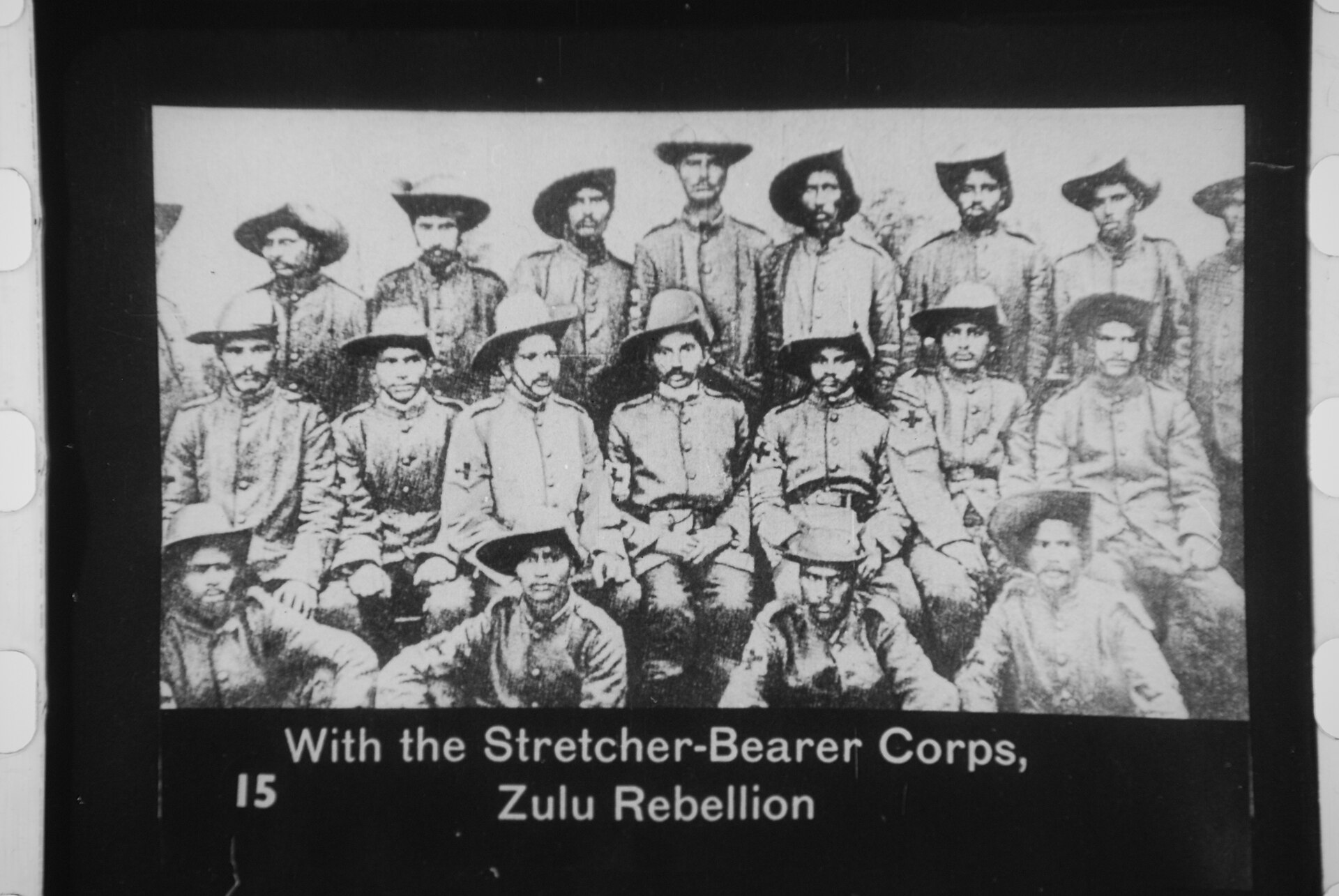
Bambatha Leads a Rising Against a Poll Tax in Natal
Zulu resistance to a new tax ended in the Mome Gorge, where colonial troops attacked Bambatha's camp and, colonial authorities said, killed him.
In the years following the end of the Second Boer War in 1902, European landowners and employers in the British colony of Natal struggled to secure cheap African labour. Many Africans in Natal could support themselves from their own land or worked on the Witwatersrand gold mines, and so were not eager to work for colonial employers. To coerce Zulu men into the wage market, the Natal colonial administration introduced an annual poll tax of one pound, levied on every adult male in addition to the long-standing hut tax. This regressive demand fell upon an African population already burdened by eviction from ancestral plots and the devastating loss of cattle caused by an epidemic in the late 1890s.
Popular indignation spread through Natal and Zululand, coalescing around long-standing grievances against European colonial encroachment. When Dinuzulu kaCetshwayo, the Zulu king, was permitted to return from exile on Saint Helena in 1897, expectations circulated among young men that royal authority might be restored to challenge colonial domination. Early in 1906, protests erupted around poll tax collection posts. The deaths of two police constables on 8 February were followed by martial law and by action against local leaders suspected of encouraging defiance.

Keep reading in Yester
Coming soonKeep following the story
Sources
Image: Unknown author · Public domain · Wikimedia Commons · cropped
