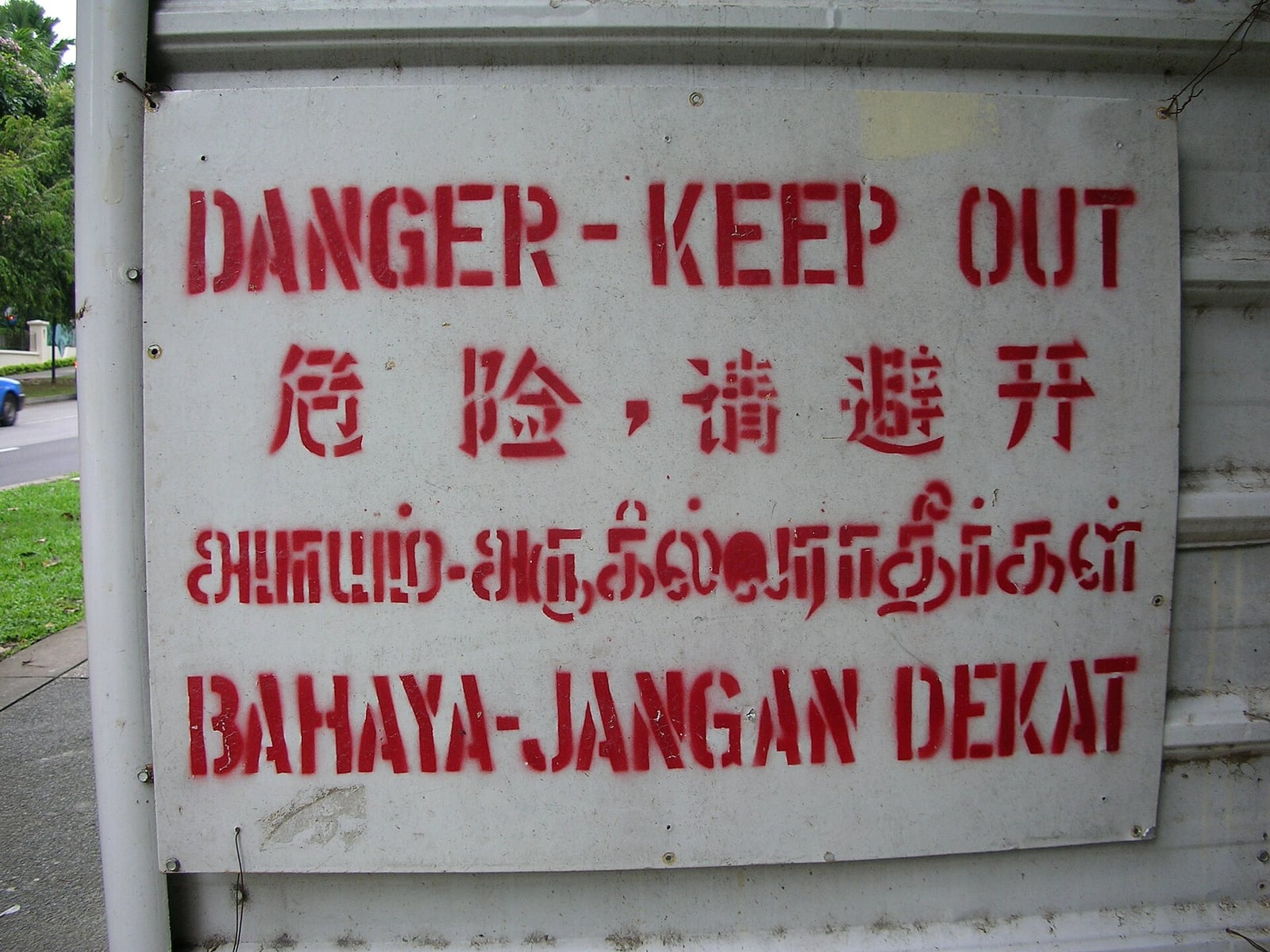
Unicode Gives the World’s Writing Systems One Code
A shared standard let computers store Arabic, Chinese, Devanagari and Latin text side by side.
During the rapid expansion of personal computing in the 1980s, exchanging digital documents across different languages was notoriously fraught. Computers relied on hundreds of separate, mutually incompatible character encodings that had been created for local markets and specific computer architectures. Text composed under one system frequently dissolved into unreadable strings of incorrect characters when opened on another machine. Most older encodings handled only a few scripts at a time, usually pairing a native alphabet with basic Latin characters and leaving multilingual interchange largely impossible.
Engineers at Xerox and Apple began investigating a comprehensive alternative in 1987. Xerox employee Joe Becker collaborated with Apple employees Lee Collins and Mark Davis to design a single, universal repertoire capable of encoding all writing systems. In his August 1988 proposal, known as Unicode 88, Becker explained that the name Unicode, which he had coined the year before, was meant to suggest a unique, unified, universal encoding. Drawing partly on Xerox character code standards and character sets developed by the Research Libraries Group for East Asian texts, the initiative quickly drew participants from other computing companies, including Metaphor, Sun Microsystems, Microsoft, and NeXT.

Keep reading in Yester
Coming soonKeep following the story
Sources
- Summary Narrative: History of Unicode (Unicode Consortium)
- Unicode 1.0 (Unicode Consortium)
- Unicode Release Dates (Unicode Consortium)
- Answers about Unicode history, Unicode mailing list, Feb 2002 (Unicode Consortium)
- Unicode Inc. formation press release, Feb 1991 (Unicode Consortium)
- FAQ: UTF-8, UTF-16, UTF-32 and BOM (Unicode Consortium)
- Unicode
Image: Gabbe · Public domain · Wikimedia Commons · cropped
