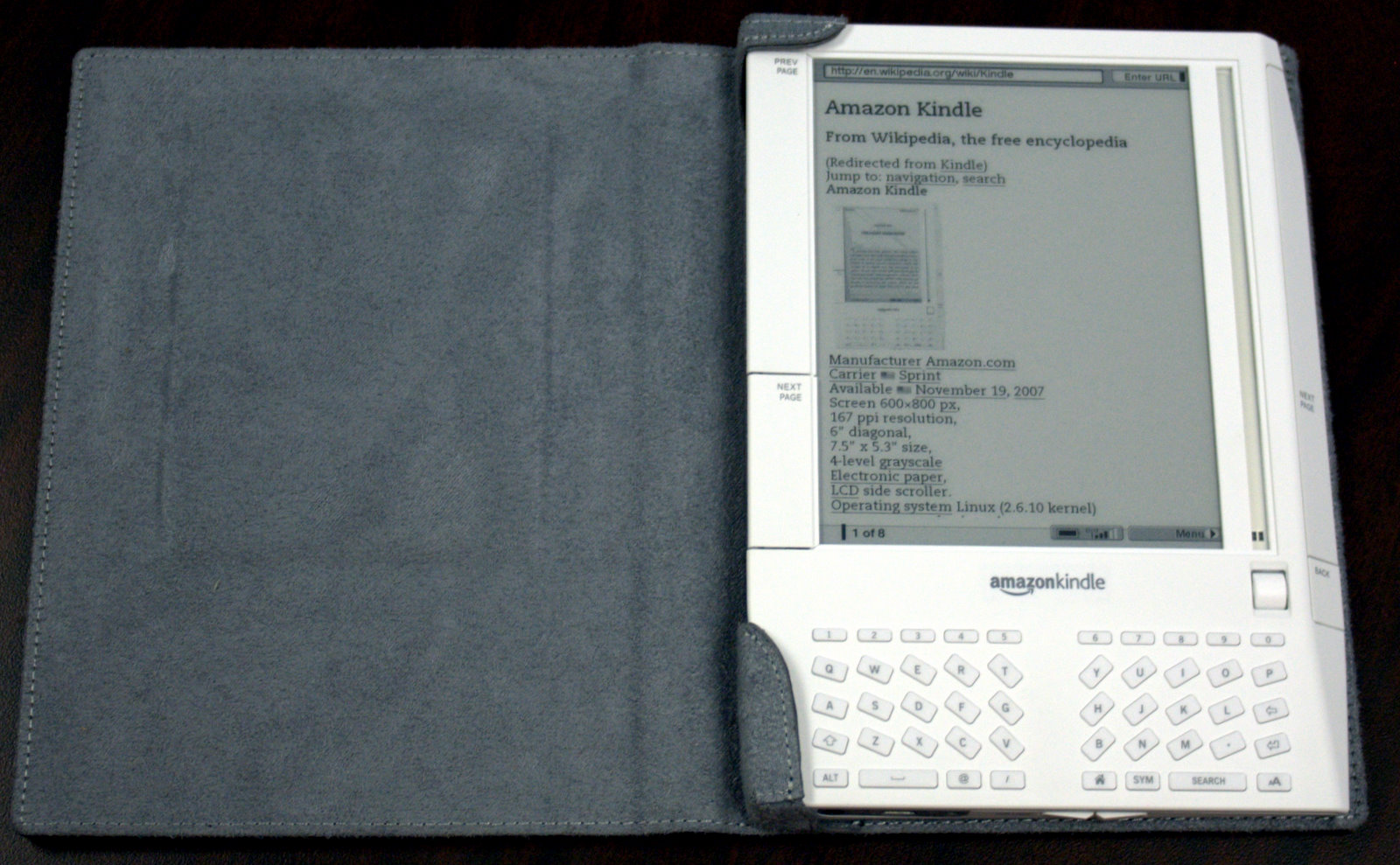
Amazon Launches the Kindle
An e-reader with wireless downloads sold out in hours and pushed e-books into the mainstream.
In 2004, Amazon founder Jeff Bezos instructed staff to build an electronic reading device before rivals could dominate the format. Developed by Amazon subsidiary Lab126 under the internal codename Fiona, the device was ultimately named Kindle, a title suggested by branding consultants Michael Cronan and Karin Hibma to evoke the ignition of intellectual interest. The first Kindle went on sale on November 19, 2007, for 399 dollars and sold out in about five and a half hours, entering a consumer electronics market where reading had historically competed against multipurpose gadgets and physical print.
Unlike earlier digital reading hardware that required tethering to a personal computer for file transfers, the first Kindle incorporated built-in cellular connectivity called Whispernet. Operating without an additional subscription fee, this wireless connection allowed readers to browse, purchase, and receive electronic texts directly on the device. On the same day, Amazon opened a self-publishing service called Digital Text Platform, later renamed Kindle Direct Publishing, through which writers could upload titles for sale in the Kindle Store.

Keep reading in Yester
Coming soonKeep following the story
Sources
- Amazon's E-Reader Sells Out Within Hours (Newser)
- How Amazon self-publishing empowers authors (About Amazon)
- Amazon.com Announces Fourth Quarter Sales up 36% (Amazon press release, Jan 2011)
- Amazon agrees to settle Kindle suit (NBC News / AP)
- Why Is It Called an Amazon Kindle? (How-To Geek)
- Amazon Kindle
Image: ShakataGaNai · CC BY 3.0 · Wikimedia Commons · cropped
