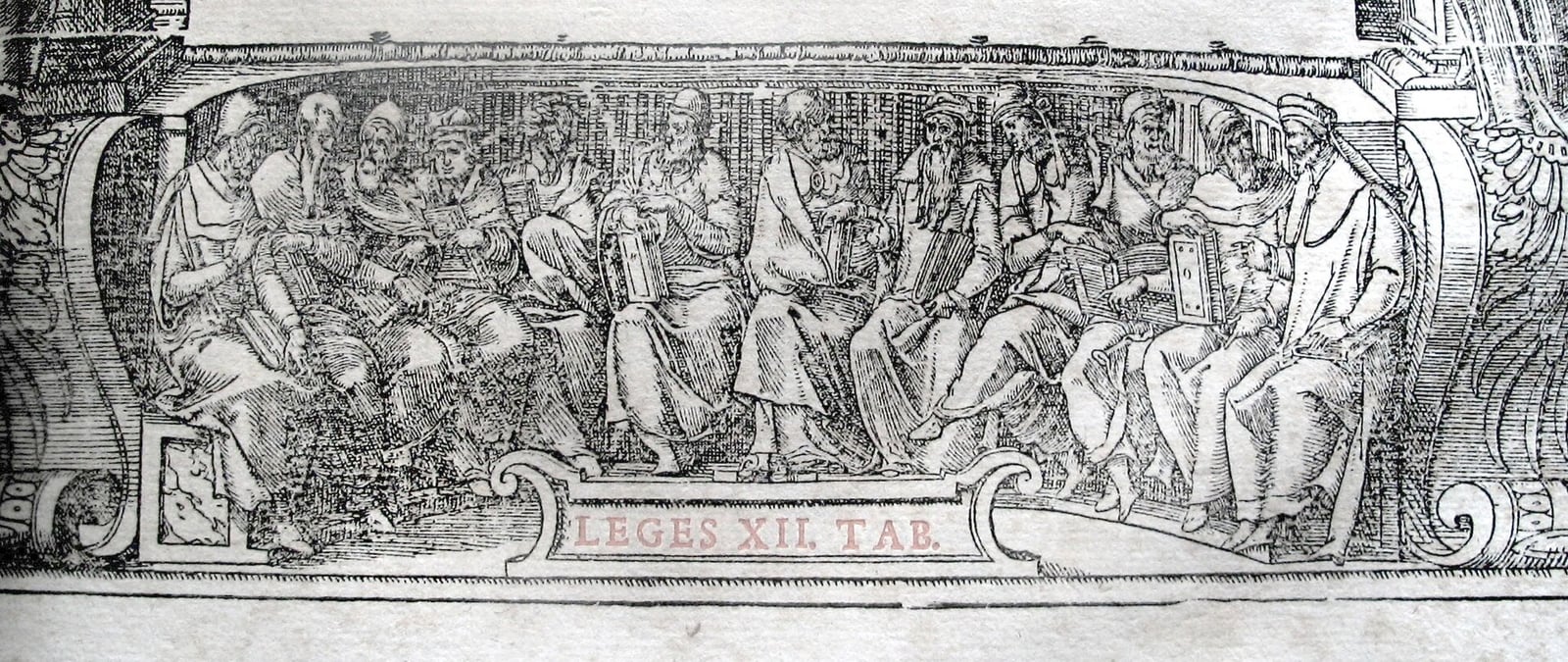
Rome Writes Its Laws on Twelve Tables
Commoners forced Rome’s patricians to put the city’s laws in writing and display them in the Forum.
In the fifth century BC, Roman society was split between patricians, who held every office, and plebeians, who were shut out. Following the overthrow of Rome's last king, Tarquinius Superbus, in 509 BC, governance fell exclusively to a patrician magistrate hierarchy. Plebeians lacked access to these offices, leaving legal authority unwritten and interpreted solely by elite priests known as pontifices. To secure civil guarantees, the plebeian labor force repeatedly threatened to withdraw from the city entirely, halting civic life. Tradition recorded by later historians like Livy and Dionysius of Halicarnassus holds that this sustained conflict prompted the appointment of a ten-man commission in 451 BC to draft a public body of statutes, marking an early turning point in the Roman Republic.
Ancient accounts describe the initial board of ten men, or decemviri, completing ten tables of legislation after consulting legal models. Livy claimed an embassy traveled directly to Greece to study Athenian statutes, though modern scholars debate whether Romans drew inspiration from Greece or limited their inquiries to the Greek settlements of southern Italy. A second board of decemvirs then added two more tables. Following another plebeian secession that compelled the Roman Senate to act, the consolidated text was formally promulgated. According to historical tradition, the laws were cast upon bronze tablets, though the jurist Sextus Pomponius uniquely recorded ivory, and set up in the Forum so that all citizens could view them.

Keep reading in Yester
Coming soonKeep following the story
Sources
Image: Sebastian Sapia · Public domain · Wikimedia Commons · cropped
