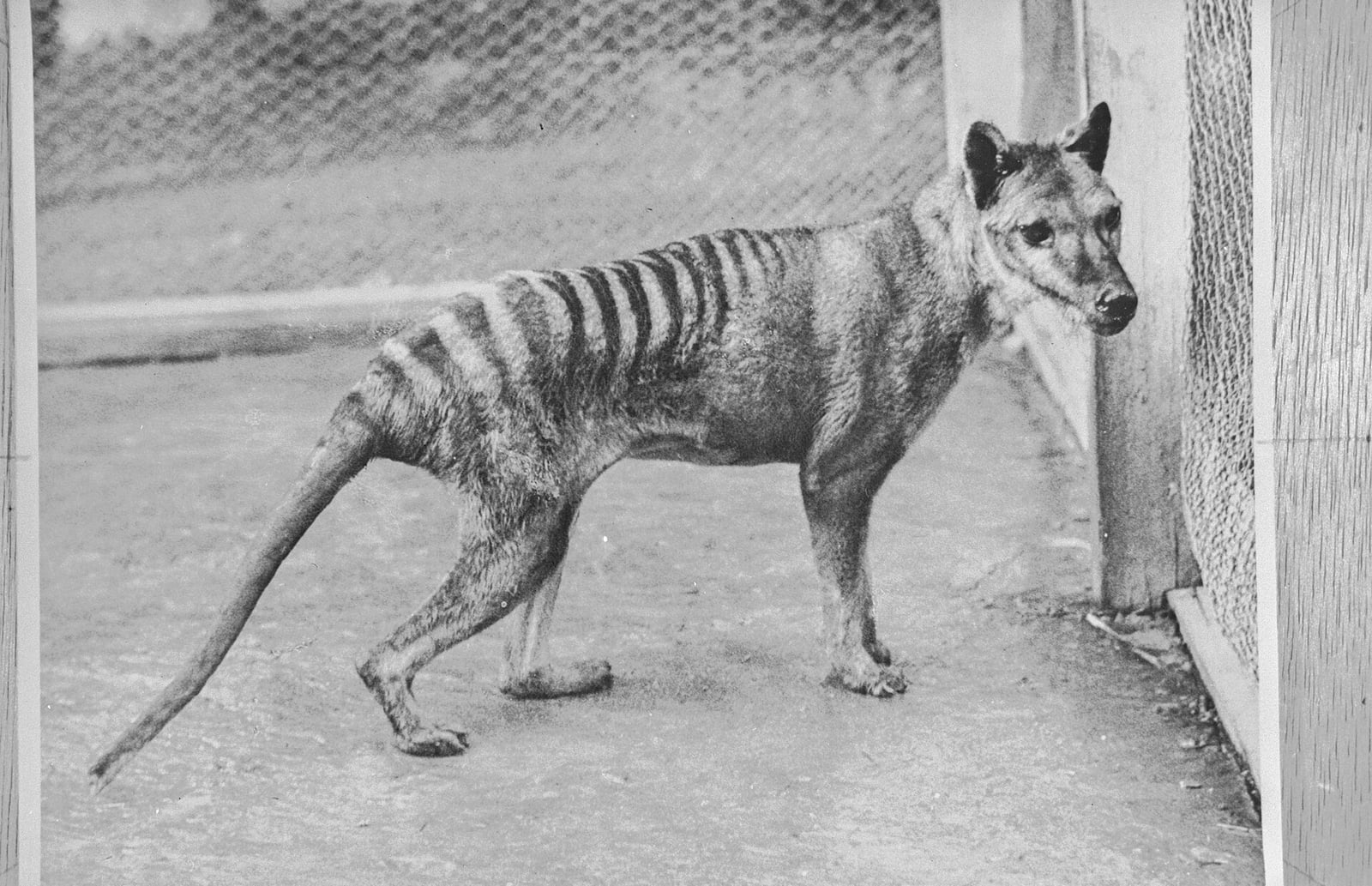
The Last Known Tasmanian Tiger Dies in a Hobart Zoo
A striped marsupial predator hunted for bounties died in captivity two months after Tasmania finally protected it.
On 7 September 1936, the last known living thylacine died in captivity at the Hobart Zoo in Tasmania. The loss came just 59 days after the species had been granted official legal protection, concluding more than a century of intensive persecution and environmental pressure. Widely referred to as the Tasmanian tiger because of the distinctive dark stripes across its back, or the Tasmanian wolf because of its canine body form, the animal was neither tiger nor wolf. It was the sole surviving modern representative of the family Thylacinidae, an ancient lineage of carnivorous marsupials that diverged from other Australasian dasyuromorphs tens of millions of years ago.
Indigenous rock art across mainland Australia demonstrates that the thylacine was once widespread across the continent and New Guinea before vanishing from those landmasses at least 2,000 years ago. Its extirpation from the mainland coincided broadly with the introduction of the dingo, an invasive placental predator that never reached Tasmania. By the time European mariners navigated the southern seas, the marsupial survived exclusively on the island. A shore expedition under Abel Tasman noted animal tracks with tiger-like claws in 1642, though detailed scientific descriptions began only after British colonial settlement in the early nineteenth century.

Keep reading in Yester
Coming soonKeep following the story

Sources
- Extinction of thylacine (National Museum of Australia)
- Thylacine (Australian Museum)
- The long-lost remains of the last known Tasmanian tiger have been found in a cupboard (NPR)
- Long-lost remains of last-ever thylacine discovered in museum cupboard (IFLScience)
- Benjamin: the last known captive thylacine (The Thylacine Museum)
- TMAG's 'lost' last Tasmanian tiger remains (Council of Australasian Museum Directors)
- What happened to the remains of the last known thylacine? (BBC Wildlife / Discover Wildlife)
- Thylacine
Image: Ben Sheppard · Public domain · Wikimedia Commons · cropped
