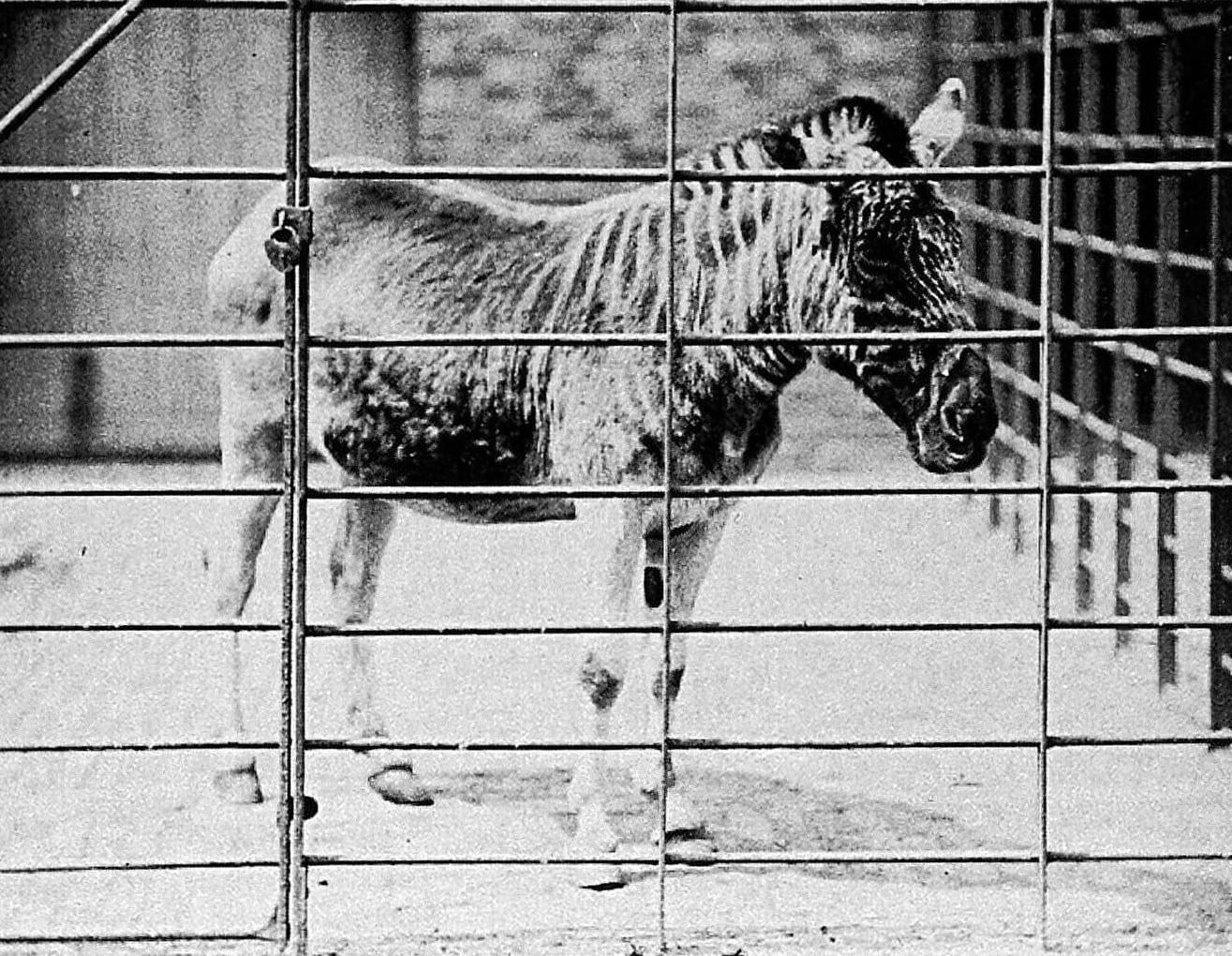
The Last Quagga Dies in Amsterdam Zoo
A half-striped zebra of South Africa’s plains was hunted out, and the zoo did not realise it had the last one.
On 12 August 1883, an aged female equid died in the Natura Artis Magistra zoo in Amsterdam. It had lived at the menagerie since May 1867, far from the dry grasslands of its native southern Africa. Keepers noted the passing of the unusual creature, which bore dark brown stripes across its head, neck, and forequarters while fading into a plain chestnut brown over its back and rear. No one at the zoo appears to have grasped that wild populations had already collapsed and that no others of its kind survived in captivity anywhere in the world.
The quagga was an animal endemic to southern Africa, primarily occupying the Karoo scrublands and interior plains south of the Orange River. Regarded historically as an independent species after Dutch naturalist Pieter Boddaert described it in 1785, it was distinguished by a coat pattern unlike any other living equid. While traditional zebras displayed stark, full-body striping, the quagga exhibited prominent stripes only on the front portion of its body, tapering toward a solid brown flank, with white legs and a white underbelly.

Keep reading in Yester
Coming soonKeep following the story
Sources
- Quaggas and Diamonds: The Possible Relationship Between Diamond Mining and Species Extinction (African Studies Centre Leiden)
- Last quagga in the world dies in a zoo in Amsterdam (South African History Online)
- The Quagga Project (Past), ancient DNA (Yale Center for Genome Analysis and Biodiversity)
- Grant Museum quagga skeleton (UCL Museums blog)
- The Quagga of the Museum Wiesbaden (Museum Wiesbaden)
- Equus quagga quagga Boddaert, 1785 (Recently Extinct Species)
- Quagga
Image: Frank Haes (d. 1916) · Public domain · Wikimedia Commons · cropped
