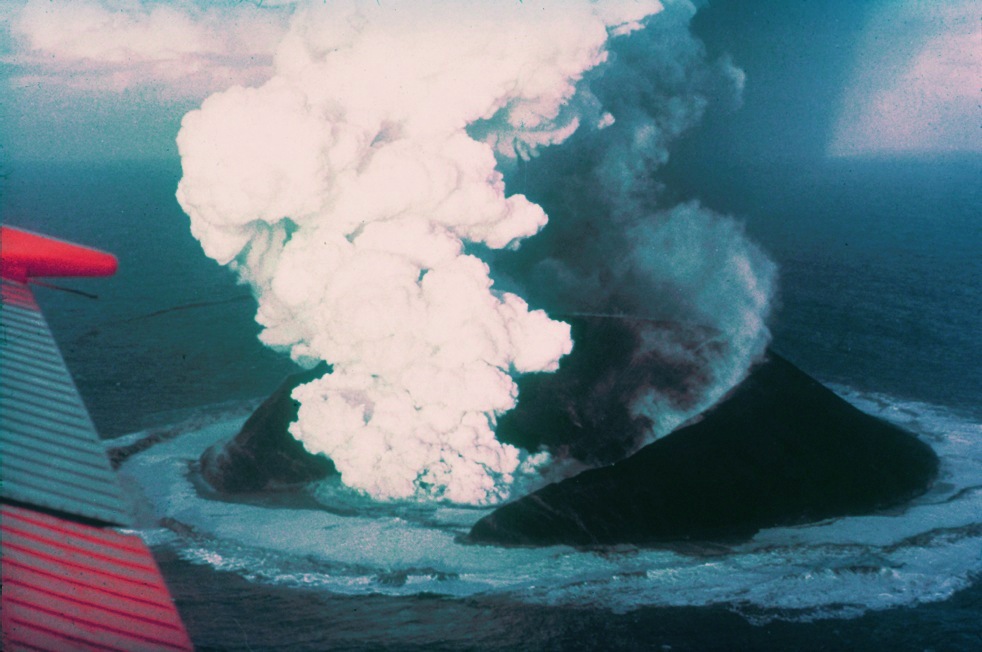
Surtsey Rises from the Sea off Iceland
A new volcanic island became a sealed natural laboratory where scientists watched life arrive from nothing.
In the early morning of November 14, 1963, the crew of the fishing vessel Ísleifur II spotted dark smoke rising from the sea south of Iceland. Investigating the source, they encountered explosive bursts of ash breaching the surface. The eruption had originated approximately 130 metres down on the seafloor, part of the Vestmannaeyjar volcanic system, about 18 kilometres southwest of Heimaey. Water pressure had muffled the early stages, but once rising volcanic material neared the surface, explosive contact between magma and seawater created towering plumes. By the next day, this activity had produced an entirely new landmass, later named Surtsey after the fire giant Surtr from Norse mythology.
During its early months, the nascent island faced immediate destruction from North Atlantic waves. Because the initial eruptions were phreatomagmatic, the land consisted of loose tephra and scoria that ocean currents easily stripped away. By the spring of 1964, however, the volcanic pile had grown large enough to block incoming seawater from the vents. In April 1964 the nature of the eruption shifted from violent explosions to effusive lava flows. These deposited a durable cap of rock that shielded the looser material underneath from rapid erosion. By the time all volcanic activity ceased on June 5, 1967, Surtsey covered 2.7 square kilometres; its highest point, reached in early 1964, stood 174 metres above sea level.

Keep reading in Yester
Coming soonKeep following the story
Sources
- The Surtsey Eruption 1963-1967 (Surtsey Research Society)
- Surtsey eruption (Sagnheimar, Vestmannaeyjar Museum)
- Surtsey (UNESCO World Heritage Centre)
- Bird Life on Surtsey (Surtsey Research Society)
- Higher Plants (Surtsey Research Society)
- Erosion of the Island (Surtsey Research Society)
- The Preservation of Surtsey (Surtsey Research Society)
- Surtsey
Image: Howell Williams, NOAA · Public domain · Wikimedia Commons · cropped
