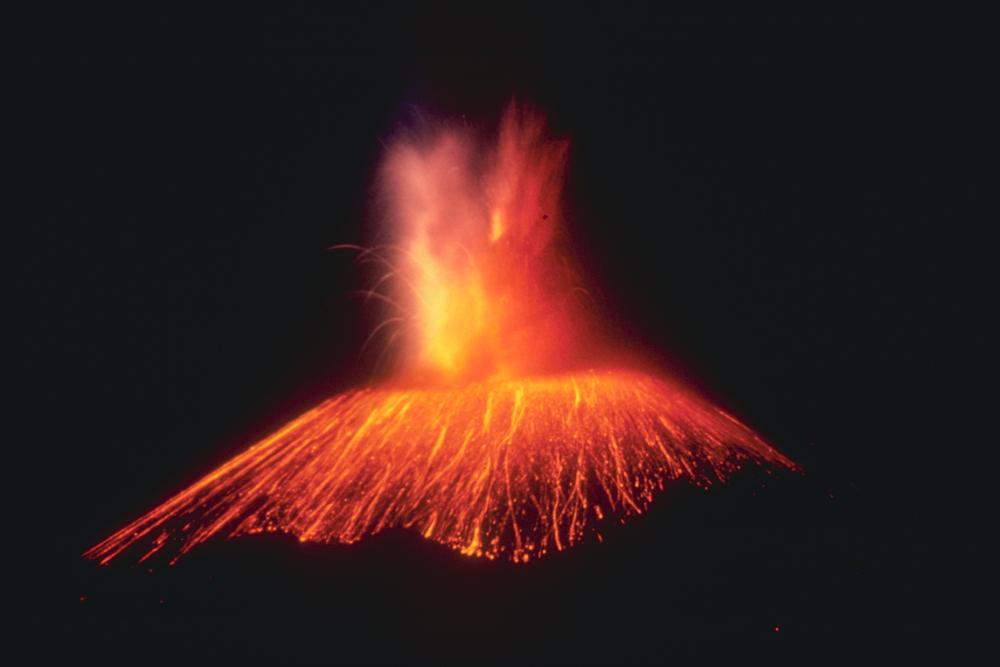
A Volcano Rises Out of a Mexican Cornfield
A farmer watched the ground open in his field, and within a year a cone more than 300 metres tall stood there.
On the afternoon of 20 February 1943, farmer Dionisio Pulido and his family were clearing land for spring planting in the Cuiyusuro Valley in the Mexican state of Michoacán. Around four o'clock, the ground swelled upward and cracked open, creating a fissure several meters long. The rupture hissed and produced gray smoke smelling strongly of sulfur, signaling subterranean gases breaking through to the surface. For weeks leading up to that afternoon, residents across the region had noted subterranean rumbles resembling thunder beneath cloudless skies. Seismologists later identified about twenty earthquakes of magnitude greater than 3 in the roughly six weeks before the eruption, and more than 300 tremors were felt the day before the fissure parted.
Within hours of that initial rupture, the fissure began throwing out walnut-sized lapilli and semi-molten volcanic bombs. Strombolian pyroclastic activity built a scoria cone fifty meters high within twenty-four hours, and by the close of the first week, the mound reached between about one hundred and one hundred and fifty meters, according to different accounts. Ash, rock fragments, and dense smoke quickly blanketed the surrounding farming valley. Parícutin formed as the youngest of roughly 1,400 volcanic vents within the Michoacán-Guanajuato volcanic field, a vast basalt plateau along the Trans-Mexican Volcanic Belt that formed above a subduction zone along Mexico's Pacific coast.

Keep reading in Yester
Coming soonKeep following the story
Sources
Image: R.E. Wilcox, U.S. Geological Survey · Public domain · Wikimedia Commons · cropped
