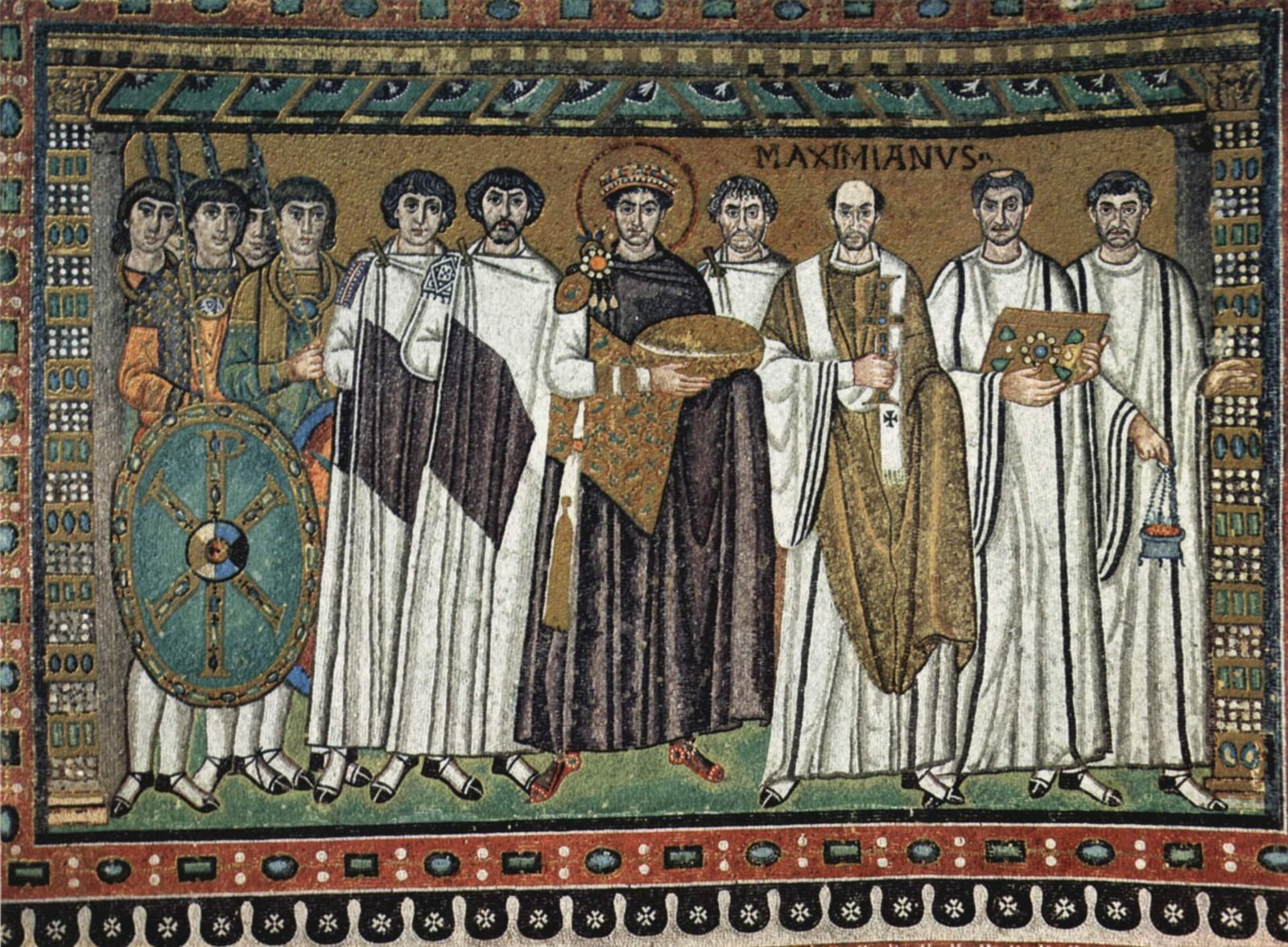
San Vitale’s Mosaics Bring Justinian and Theodora to Ravenna
Consecrated in 547, the church of San Vitale in Ravenna holds glittering mosaic panels of Justinian and Theodora with their courts.
Around 526, Bishop Ecclesius of Ravenna initiated the construction of the church of San Vitale while the city remained under Ostrogothic rule. Funding for the ambitious project was provided by a local banker named Julianus Argentarius, who is recorded as contributing 26,000 gold solidi. By the time San Vitale was consecrated in 547 under Bishop Maximian, the political landscape of the Italian peninsula had shifted dramatically following the military campaigns directed by the East Roman emperor Justinian I.
The building exemplifies the fusion of Roman and Byzantine engineering within a double-shelled octagonal plan. Although it carries the title of basilica today, its centralized layout departs significantly from standard basilican designs. Western methods appear in the construction of the central vault, which employed interlocking hollow terracotta tubes rather than standard bricks to reduce weight, while the octagonal plan itself follows Constantinopolitan models.

Keep reading in Yester
Coming soonKeep following the story
Sources
Image: Meister von San Vitale in Ravenna · Public domain · Wikimedia Commons · cropped
