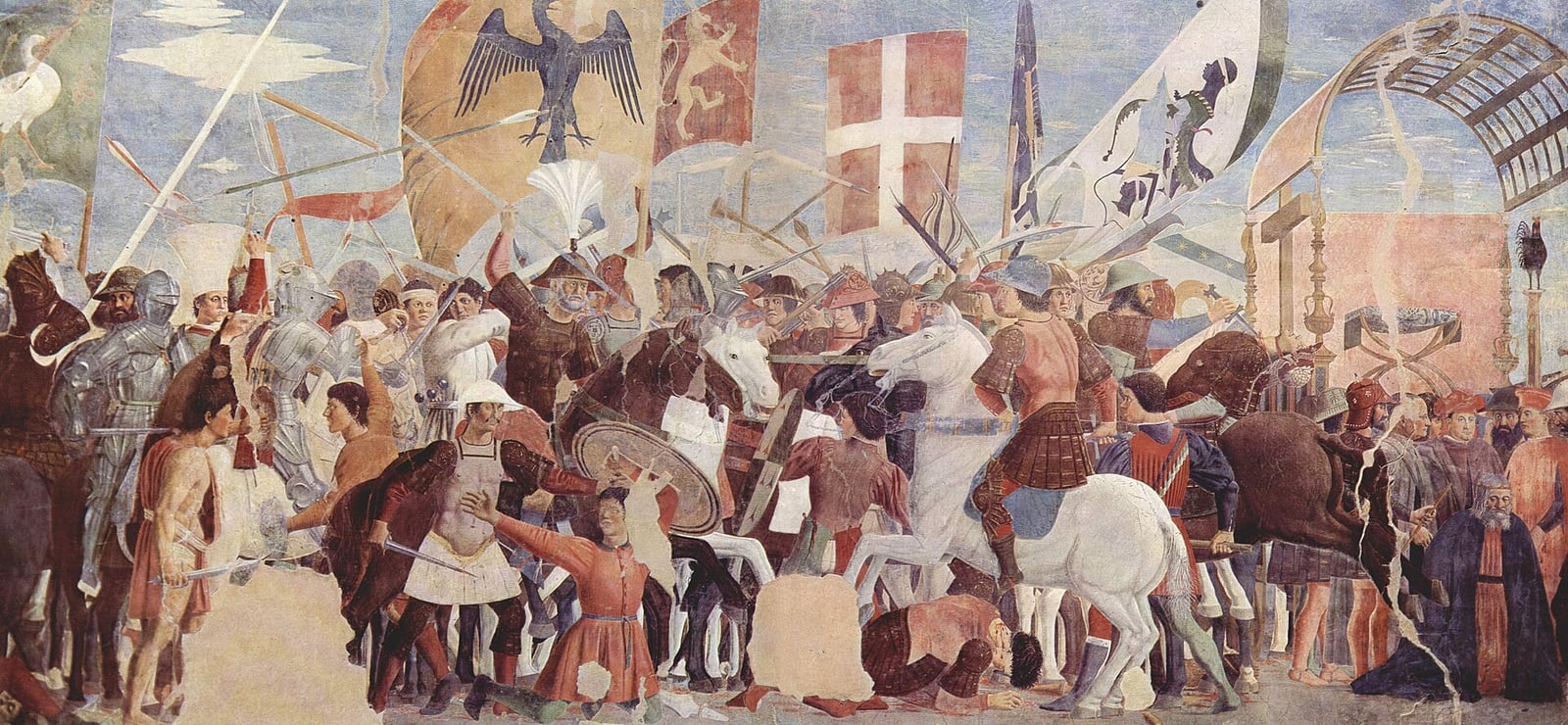
Heraclius Defeats Persia at Nineveh
After years of losses, the emperor Heraclius marched deep into Persian territory and won at Nineveh, ending a war that exhausted both empires.
On December 12, 627, Roman and Sasanian armies met on the plains near the ancient ruins of Nineveh in what is modern northern Iraq. The confrontation marked the climax of a devastating war that had raged since 602, when the Persian ruler Khosrow II invaded Roman territory following the murder of Emperor Maurice. During the earlier phases of the conflict, Sasanian forces had swept across Egypt, the Levant, and Anatolia. A failed siege of Constantinople, mounted by the Persians alongside their Avar allies, allowed Emperor Heraclius to counterattack, carrying the war directly into the Persian heartland.
Heraclius initiated his campaign into Mesopotamia in mid-September 627 with an army estimated between 25,000 and 50,000 men. He had forged an alliance with the Western Turkic Khaganate, whose forces initially joined the expedition. However, these nomadic auxiliaries deserted Heraclius as winter conditions worsened. Khosrow appointed a general named Rhahzadh to lead an army of roughly 12,000 troops in pursuit. Because the Roman army consumed available food and fodder along its path, the trailing Persian forces struggled to maintain adequate provisions for their soldiers and mounts.

Keep reading in Yester
Coming soonKeep following the story
Sources
Image: Piero della Francesca · Public domain · Wikimedia Commons · cropped
