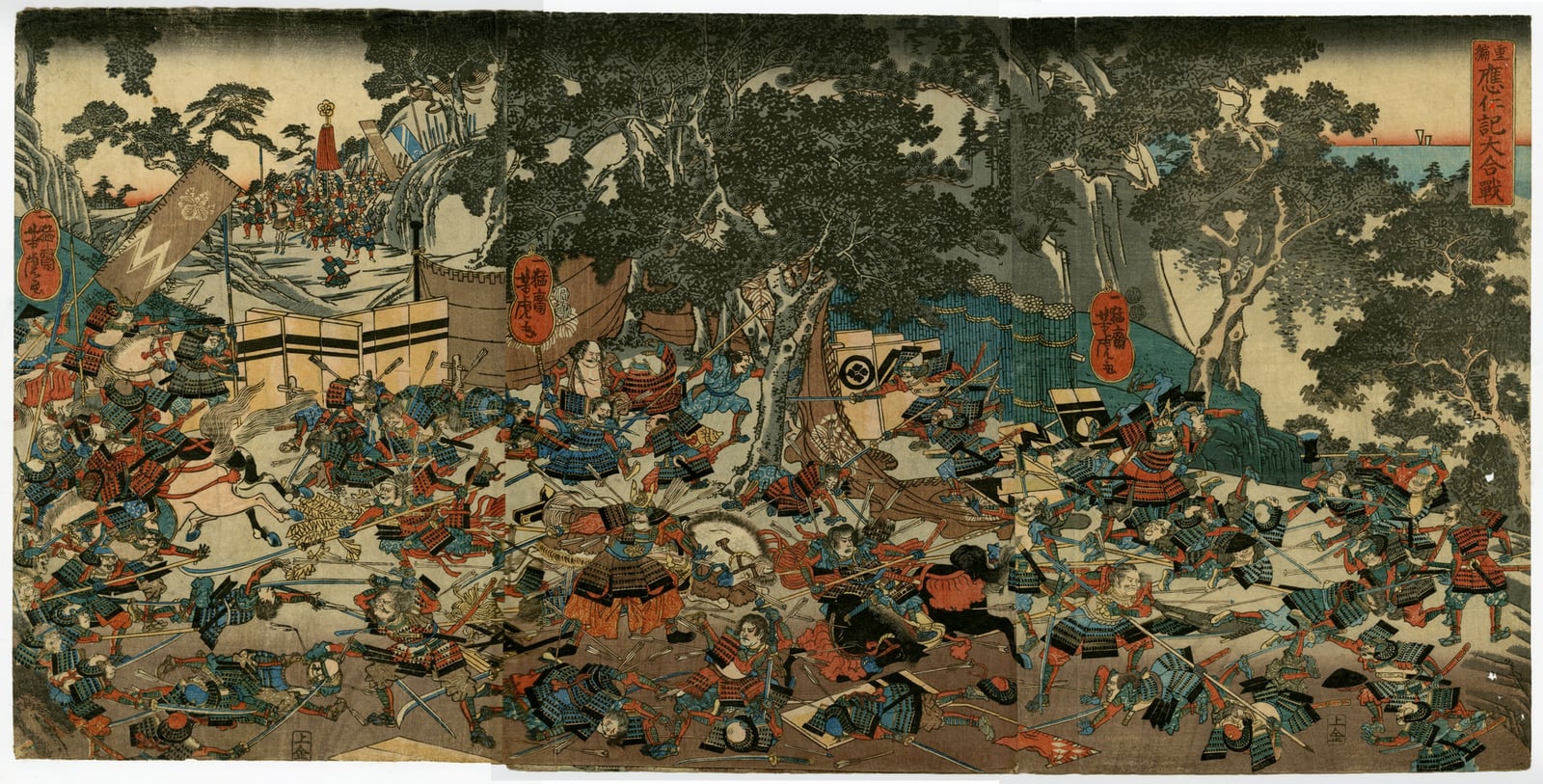
The Ōnin War Turns Kyoto into a Battlefield
A quarrel over the Ashikaga succession set the great warrior houses fighting in the capital for ten years and opened Japan’s age of warring states.
In the spring of 1467, escalating tensions between Japan's most powerful regional lords erupted into urban warfare across the capital city of Kyoto. What began as a series of mansion burnings and skirmishes soon hardened into a decade-long conflict known as the Ōnin War. Rather than an isolated incident, the clashes brought to the surface decades of structural fragility within the Ashikaga shogunate, pitting rival coalitions of samurai against one another in a contest that dismantled central authority and devastated the imperial metropolis.
The immediate catalyst was a succession crisis within the ruling Ashikaga family. In 1464, the eighth shogun, Ashikaga Yoshimasa, lacked an heir and persuaded his younger brother, Yoshimi, to leave the Buddhist priesthood to succeed him. The unexpected birth of Yoshimasa's son Yoshihisa in 1465 immediately fractured the court into competing factions. Yoshihisa's mother, Hino Tomiko, sought outside military support to secure her son's inheritance, enlisting the powerful regional governor Yamana Sōzen. Meanwhile, the shogunal deputy Hosokawa Katsumoto aligned behind Yoshimi. This dispute converged with simultaneous succession battles within other prominent warrior houses, notably the Hatakeyama and Shiba clans, transforming personal rivalries into organized factional warfare.

Keep reading in Yester
Coming soonKeep following the story
Sources
Image: Utagawa Yoshitora · Public domain · Wikimedia Commons · cropped
