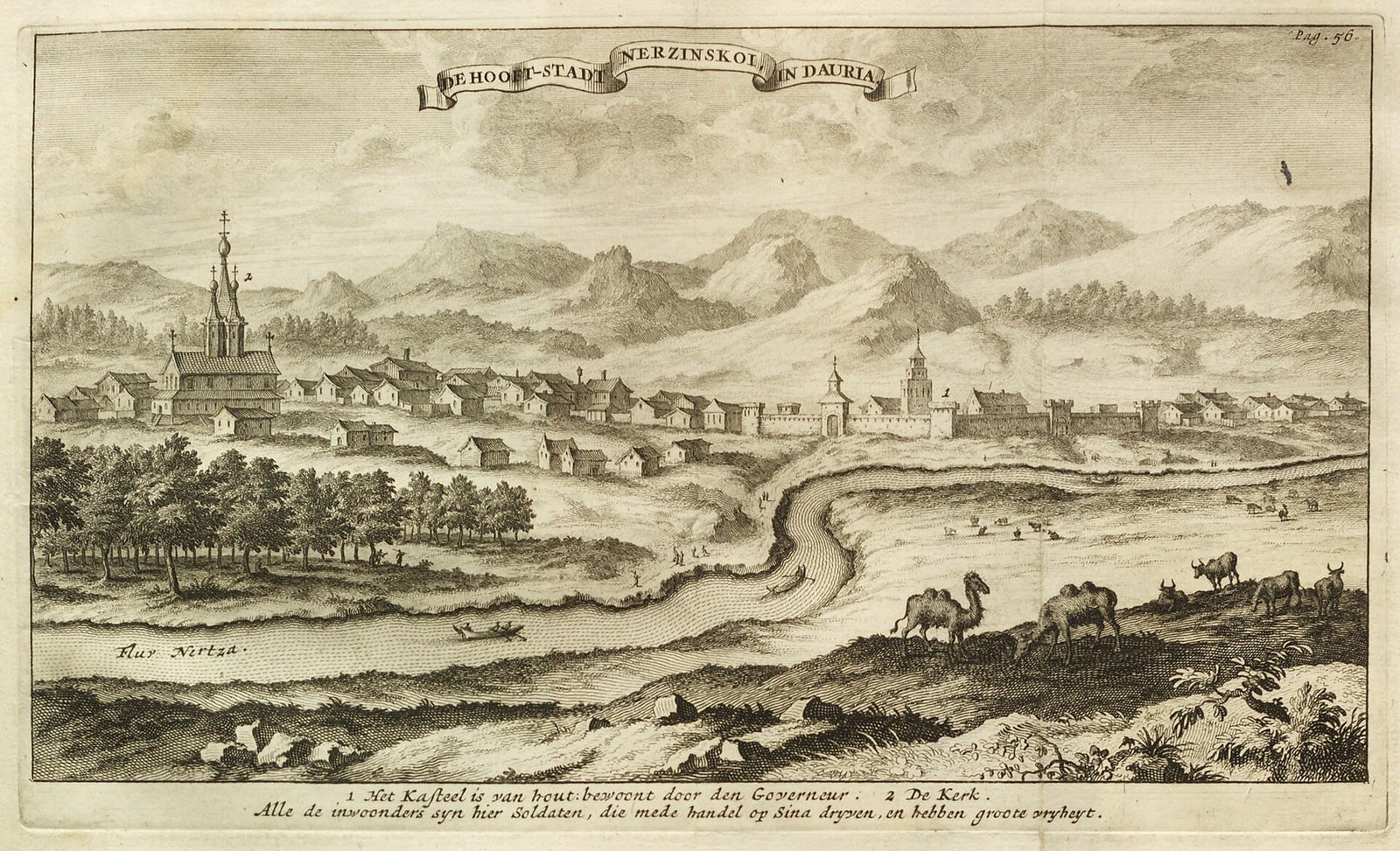
Russia and Qing China Sign Their First Border Treaty
Jesuit interpreters negotiated in Latin to settle the Amur frontier between two expanding empires.
From around 1640, Russian pioneers advanced into the Amur River basin, entering territory claimed by the Qing dynasty. At that time, the Qing were focused on completing their conquest of Ming China, an objective achieved by the 1680s with the removal of the remaining southern Ming loyalists. Having consolidated imperial power, the Kangxi Emperor moved to halt what the court regarded as northern encroachment into the Manchu ancestral homelands. Qing forces captured the Russian outpost at Albazin in 1685 and, after the Russians returned to rebuild it, besieged it again from 1686, largely driving Russian presence away from the river basin.
Both empires faced concurrent geopolitical challenges that made a diplomatic settlement preferable to an extended frontier conflict. Russia was launching military efforts against the Ottoman Empire in the west, rendering the distant Amur indefensible against massed imperial troops. Concurrently, the Dzungar Mongols under Galdan invaded eastern Mongol lands and overran much of Khalkha Mongolia, threatening the Qing realm. Seeking to secure its northern perimeter before turning south and west to address the Dzungar threat, the Qing imperial court sent Latin letters to Moscow urging peace and requesting the withdrawal of Russian forces from the Amur.

Keep reading in Yester
Coming soonKeep following the story

Sources
Image: Eberhard Isbrand Ides · Public domain · Wikimedia Commons · cropped
