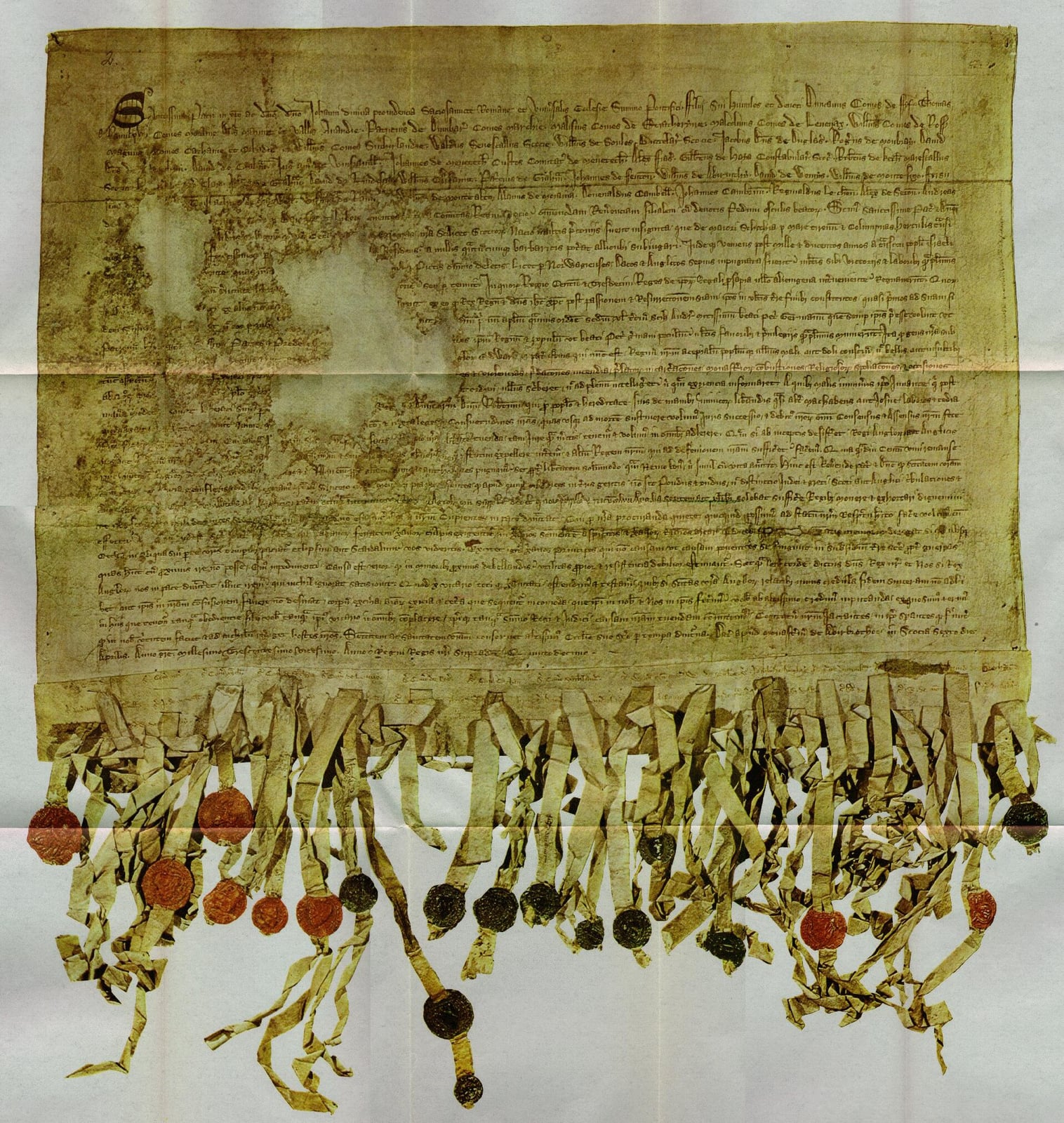
Scottish Barons Ask the Pope to Recognise Their Independence
A letter sealed by Scotland’s nobles defended Robert the Bruce as king and Scotland’s freedom from England.
On 6 April 1320, a gathering of Scottish magnates and barons attached their authority to a Latin diplomatic letter drafted at Arbroath Abbey and addressed to Pope John XXII. Scotland was entangled in a protracted conflict with the English Crown that had escalated following the succession crisis of the late thirteenth century. Robert Bruce had taken the Scottish throne in 1306, but his rule suffered under papal disfavor. John XXII had excommunicated Bruce again in 1318 after the Scottish monarch disregarded papal demands for a truce, prompting a concerted diplomatic campaign by the Scottish court to secure recognition and legitimacy on the European stage.
The letter, commonly called the Declaration of Arbroath, is generally attributed to Bernard of Kilwinning, the Chancellor of Scotland and Abbot of Arbroath. It was one of three related letters prepared at the time, alongside letters from King Robert and from Scottish bishops, though it is the only one of the three known to survive. Thirty-nine noblemen, comprising eight earls and thirty-one barons, are named at the opening of the text, with additional barons and freeholders associated through their seals on the document foot. Envoys transported the document directly to the papal court at Avignon.

Keep reading in Yester
Coming soonKeep following the story
Sources
- The Declaration of Arbroath (Scottish Archives for Schools)
- The people of the Declaration of Arbroath (Historic Environment Scotland blog)
- 700th anniversary of Pope's reply to Arbroath Declaration marked (University of Aberdeen)
- John Balliol (World History Encyclopedia)
- Balliol, John (Encyclopedia.com, Oxford Companion to British History)
- Declaration of Arbroath
Image: Scotland barons · Public domain · Wikimedia Commons · cropped
