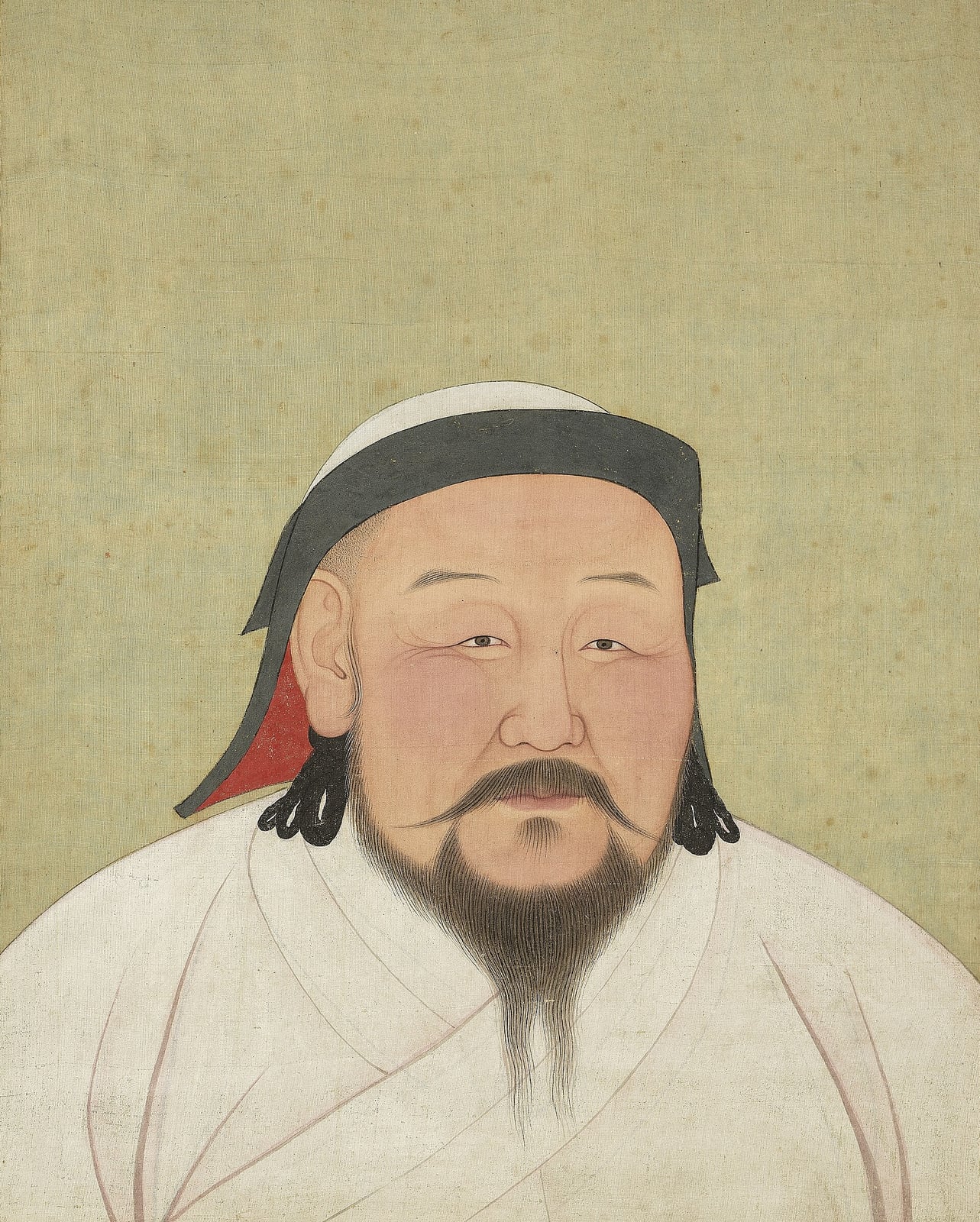
Kublai Khan Proclaims the Yuan Dynasty
The Mongol ruler Kublai Khan gave his realm a Chinese dynastic name, Great Yuan, and built a new capital where Beijing stands today.
In 1271, the Mongol khagan Kublai issued an imperial edict that formally proclaimed the founding of the Great Yuan dynasty. The newly declared dynastic title, Da Yuan, drew directly from a commentary on the first hexagram of the I Ching, invoking the concept of primal unity or the origin of the universe. By claiming the traditional Mandate of Heaven and continuing the Zhiyuan reign era he had begun in 1264, Kublai linked his regime to the political lineages of earlier Chinese dynasties, claiming succession from earlier Chinese dynasties, even as he retained his Mongol imperial roots.
This political act culminated more than a decade of strategic reorientation away from the traditional steppe center. After the death of his brother Möngke in 1259, Kublai engaged in a protracted civil war against his sibling Ariq Böke, emerging victorious in 1264. As the broader Mongol Empire permanently fragmented into autonomous realms, Kublai focused his attention on ruling sedentary East Asia. He began transferring the administrative hub of his realm away from the ancestral capital at Karakorum to northern China. Work began in the mid-1260s on a new city beside the ruins of the former Jurchen capital, Zhongdu. In the early 1270s it became Dadu, the Great Capital, known to the Mongols as Khanbaliq. It stood on the site of modern Beijing.

Keep reading in Yester
Coming soonKeep following the story
Sources
- Yuan dynasty (Encyclopaedia Britannica, via search summary)
- Kublai Khan (SUNY Hudson Valley World Civilization, Lumen Learning)
- Larousse and Chinese encyclopedic sources on the 1272 renaming of Zhongdu as Dadu (via search)
- Kublai Khan (World History Encyclopedia)
- Yuan Dynasty (World History Encyclopedia)
- Yuan dynasty
Image: Araniko · Public domain · Wikimedia Commons · cropped
