Baybars Takes the Hospitallers’ Fortress of Krak des Chevaliers
The Mamluk sultan Baybars forced the surrender of the great Hospitaller castle in Syria after a siege of about a month.
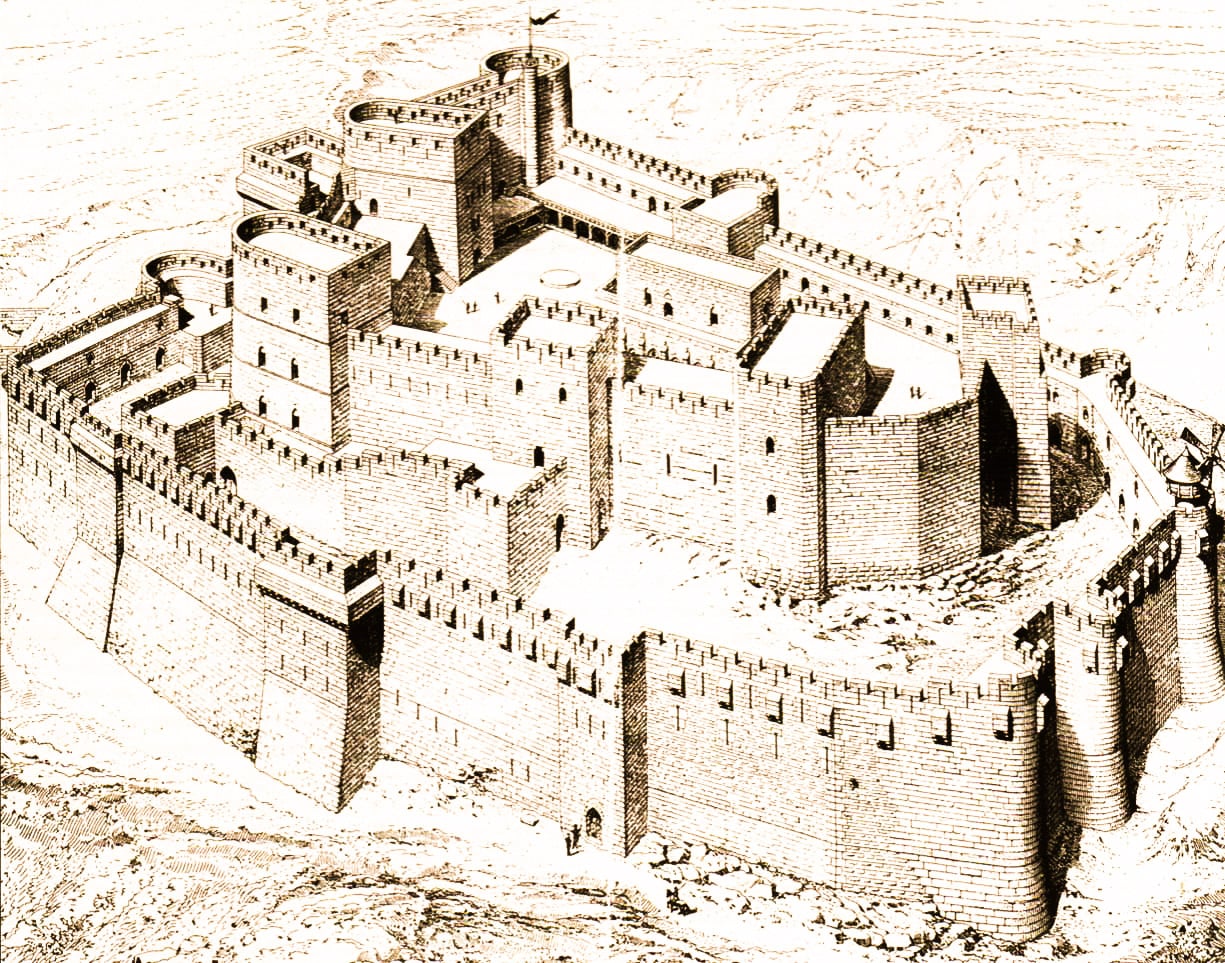
Perched on a hilltop commanding the Homs Gap, Krak des Chevaliers stood for well over a century as the principal bastion of the Knights Hospitaller in the Levant. Originally fortified in 1031 by the emir of Aleppo, and known in Arabic as the Fortress of the Kurds, the strategic position dominated the crucial route connecting Homs with Tripoli. Raymond II, Count of Tripoli, granted the site to the Hospitallers between 1142 and 1144, expecting the military order to defend the borders of his county. Over the following decades, the knights transformed the fortification into a vast administrative center and formidable concentric fortress, complete with an outer circuit of walls, projecting rounded towers, and sophisticated bent gateways that defied repeated Muslim counterattacks.
During the early thirteenth century, Krak des Chevaliers reached its military and territorial peak. At its peak the castle housed about 2,000 people, enabling the order to command the surrounding fertile plains, raid Muslim towns such as Hama and Homs, and collect tribute from neighbors such as the Assassins. While other Latin settlements suffered from internal disarray and territorial contraction, the fortress functioned almost as an autonomous principality, shielding the inland borders of the County of Tripoli and surviving earthquakes in 1170 and 1202 that damaged it and led to rebuilding.

Keep reading in Yester
Coming soonKeep following the story
Sources
Image: Guillaume Rey · Public domain · Wikimedia Commons · cropped
