North Korea Invades the South
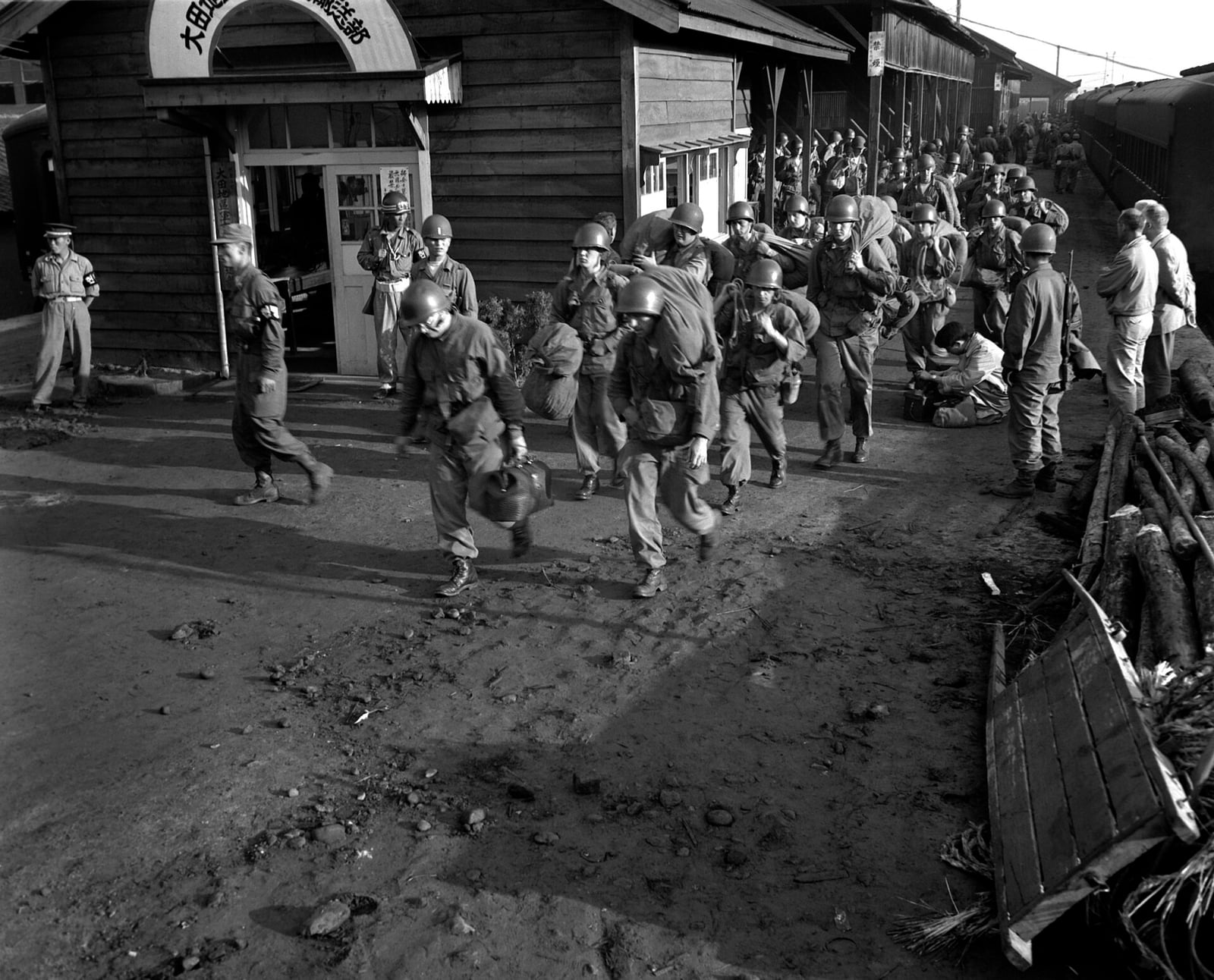
North Korean troops crossed the 38th parallel, and the United Nations sent forces led by the United States.
In the early morning of June 25, 1950, artillery barrages along the thirty-eighth parallel shattered the fragile quiet of the Korean Peninsula. North Korean military forces crossed the border into the south without a formal declaration of war. Spearheaded by armored formations and heavy artillery supplied by the Soviet Union, the Korean People's Army surged across the frontier. South Korean forces had no tanks and few weapons able to stop them, and units committed piecemeal to the defense were routed within days as the northern forces pressed rapidly toward Seoul.
The partition that defined this confrontation had emerged from the close of World War II. After thirty-five years of Japanese colonial administration ended in August 1945, the peninsula was divided into American and Soviet occupation zones along the thirty-eighth parallel. By 1948, opposing administrations had formed under Syngman Rhee in Seoul and Kim Il Sung in Pyongyang, with each government claiming legitimate sovereignty over all of Korea. Following the withdrawal of Soviet forces in 1948 and American troops in 1949, cross-border skirmishes and guerrilla unrest destabilized the region, costing thousands of lives and hardening political divisions.

Keep reading in Yester
Coming soonKeep following the story
Sources
Image: US Army · Public domain · Wikimedia Commons · cropped
