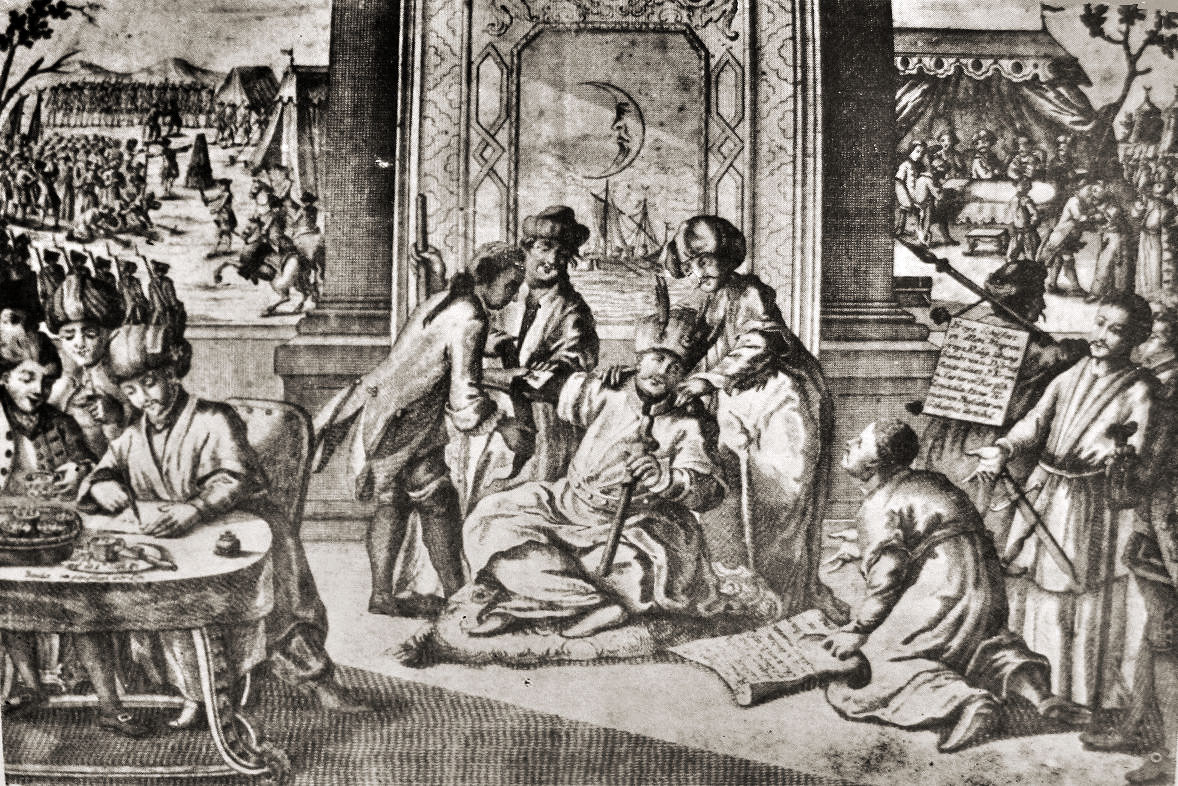
A Defeated Ottoman Empire Signs the Treaty of Küçük Kaynarca
After a war with Catherine the Great, the Ottomans gave up control of Crimea and let Russia claim a role as protector of Orthodox Christians.
On July 21, 1774, representatives of the Russian and Ottoman empires gathered at the village of Küçük Kaynarca in modern Bulgaria to conclude six years of war. Following decisive Russian battlefield victories, including the engagement at Kozludzha, Field Marshal Count Pyotr Rumyantsev met Grand Vizier Muhsinzade Mehmed Pasha to formalize an agreement. The resulting treaty was drawn up in Russian, Turkish, and Italian versions, and historians have compared the texts closely because of differences in wording. It fundamentally altered the balance of power across the Black Sea and Southeast Europe.
The territorial terms broke the long-standing Ottoman monopoly over the Black Sea basin. Russia gained direct sovereign access to key coastal points, including the fortress of Azov and the Crimean strongholds of Kerch and Enikale. On the northern Black Sea coast, Russia secured the fortress of Kinburn and a stretch of coast at the mouth of the Dnieper and Bug rivers, alongside unrestricted passage for its commercial vessels through the Turkish Straits. Earlier limits on Russian shipping were lifted, ensuring that Russian merchant fleets could trade unimpeded and enter the Mediterranean directly past Constantinople.

Keep reading in Yester
Coming soonKeep following the story
Sources
- Treaty of Kuchuk Kainarji (EBSCO Research Starters)
- Kuchuk-Kainardzhi Peace Treaty of 1774 (Encyclopedia of Ukraine, CIUS)
- Russian Skill and Turkish Imbecility: The Treaty of Kuchuk Kainardji Reconsidered (R. H. Davison, Slavic Review)
- The Church of Dosografa in the Treaty of Küçük Kaynarca (Belleten, Turkish Historical Society)
- Treaty of Küçük Kaynarca
Image: Late 18th-century engraving (Cabinet of engravings, Romanian Academy, Bucharest). · Public domain · Wikimedia Commons · cropped
