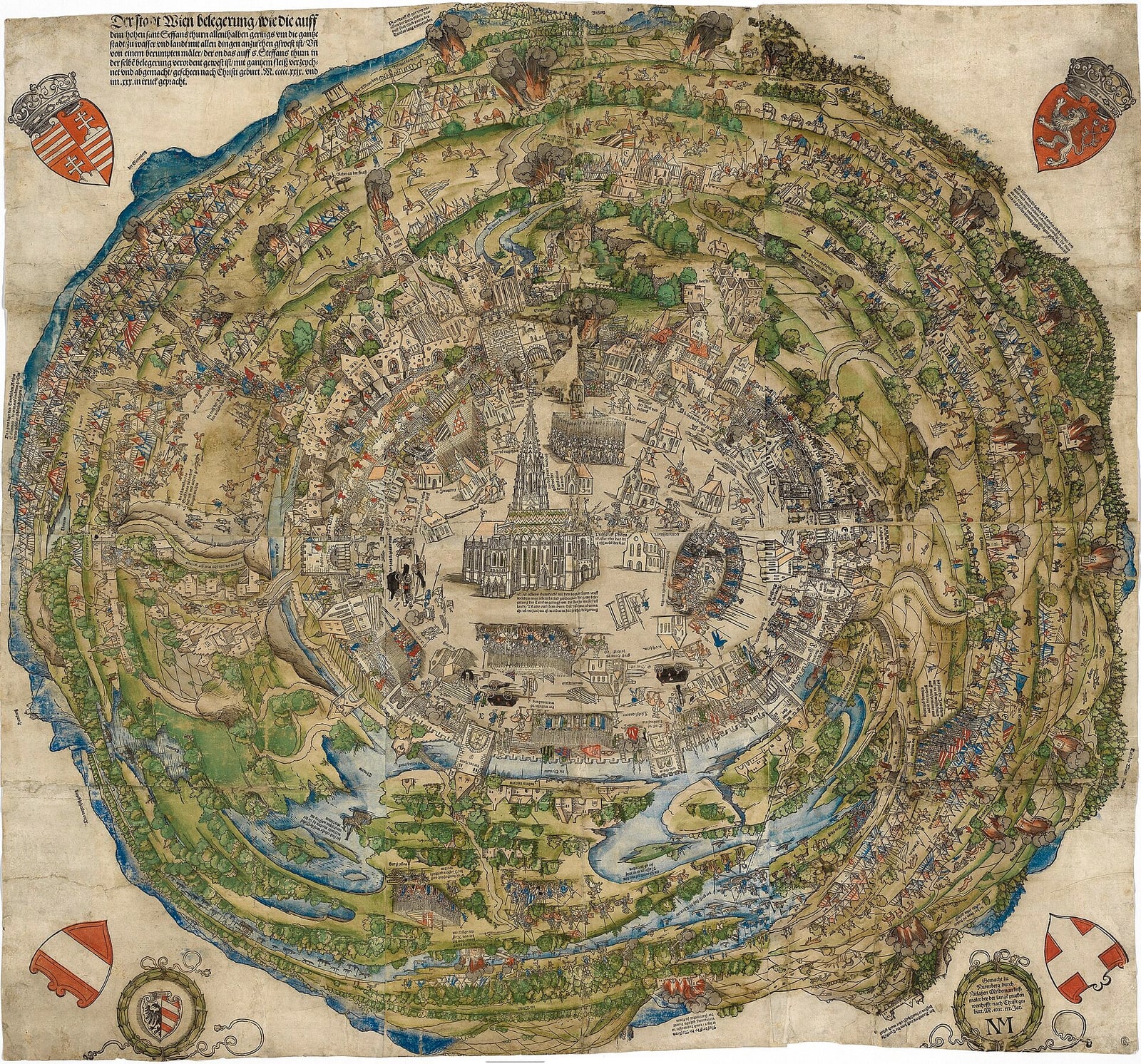
Suleiman’s First Siege of Vienna Fails
After Mohács, Suleiman the Magnificent besieged Vienna, but rain, long supply lines and a stubborn garrison forced him to withdraw in October.
In late September 1529, an Ottoman army led by Sultan Suleiman I encamped around the walls of Vienna. The expedition marked the culmination of a three-year campaign that had fractured central Europe. Following the Battle of Mohács in 1526, where King Louis II of Hungary perished without an heir, the Hungarian kingdom collapsed into factional rivalry. While Archduke Ferdinand I of Austria asserted a dynastic claim to the vacant crown, local noble John Zápolya challenged him and secured the backing of the Ottoman Empire by submitting as a tributary vassal. Suleiman sought to roll back Habsburg influence, backing Zápolya in Hungary before marching on Austria.
Modern historical analysis estimates the combat force that Suleiman brought to the outskirts of Vienna at roughly 80,000 to 120,000 troops. Contemporary Viennese accounts claimed 300,000 or more, a figure historians regard as inflated. The army set out from Constantinople on 10 May, but heavy rain across the Balkans severely disrupted the march. Swollen rivers and deep mud forced the expedition to leave behind its heaviest siege cannons, while pack animals perished in large numbers and illness spread through the ranks.

Keep reading in Yester
Coming soonKeep following the story
Sources
Image: Niclas Meldeman · Public domain · Wikimedia Commons · cropped
