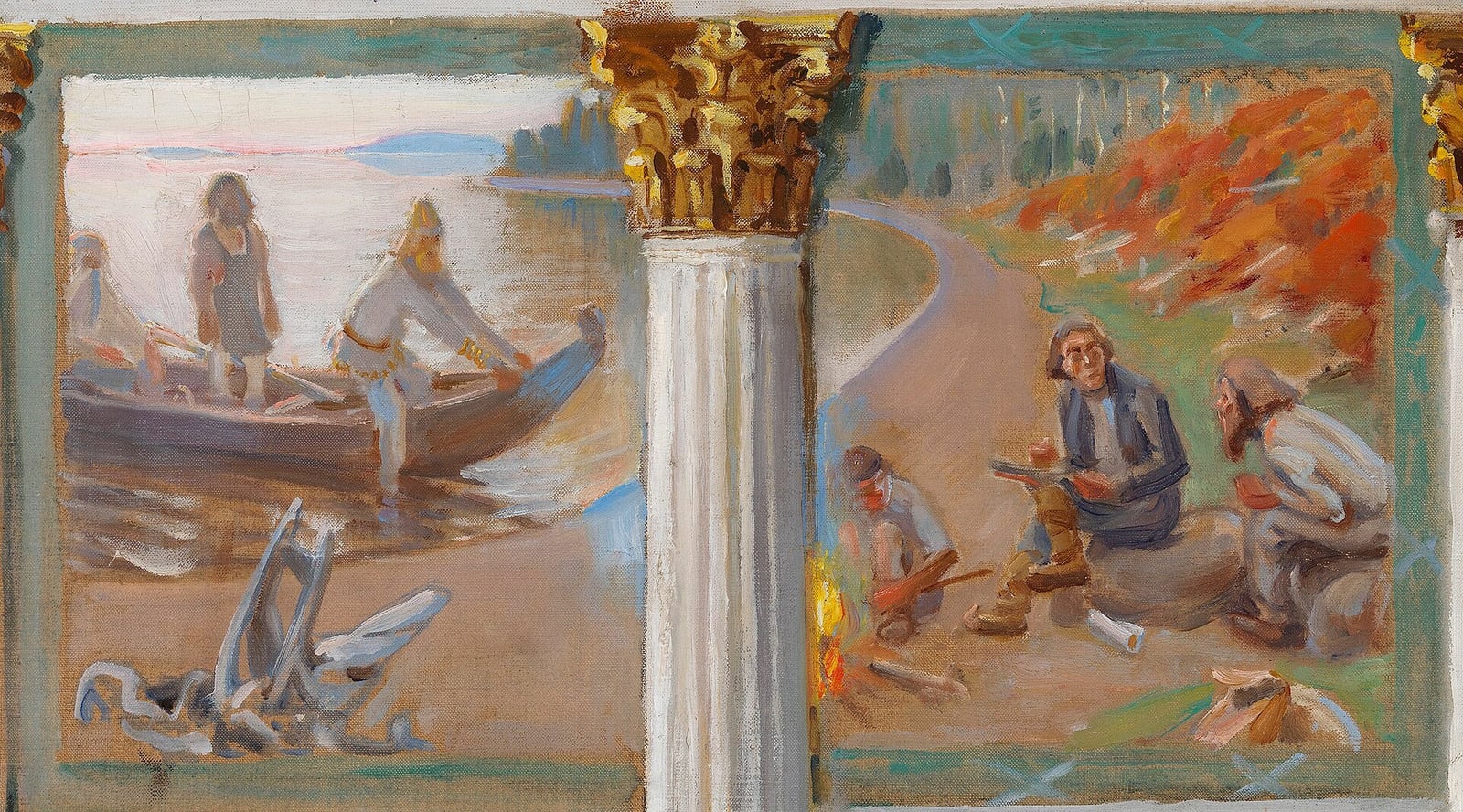
Elias Lönnrot Publishes the Kalevala
Songs gathered from singers in Karelia became Finland’s national epic and fed its sense of nationhood.
In February 1835, a district physician named Elias Lönnrot signed the preface to a newly completed compilation of Finnish and Karelian folk poetry. Published in two volumes across 1835 and 1836, the work bore the descriptive title Kalewala, taikka Wanhoja Karjalan Runoja Suomen Kansan muinoisista ajoista, meaning "The Kalevala, or old Karelian poems about ancient times of the Finnish people." This first edition, later called the Old Kalevala, held thirty-two poems and 12,078 verses, and it was meant to give Finland an epic of its own.
The groundwork for this publication had been laid over years of extensive field research across the eastern margins of the Grand Duchy of Finland and into Russian Karelia. Lönnrot, stationed as a medical officer in the remote Kainuu region from 1833, used his leaves and journeys to transcribe songs from rural reciters. Folklorists such as Carl Axel Gottlund had previously argued that an assembled native epic could kindle national feeling, inspiring scholars to gather the vanishing oral tradition. During his travels, Lönnrot met remarkable tradition-bearers like Arhippa Perttunen, whom he met in 1834 and whose repertoire of more than 4,000 lines gave clear epic shape to stories that other singers knew only in fragments.

Keep reading in Yester
Coming soonKeep following the story
Sources
Image: Akseli Gallen-Kallela · Public domain · Wikimedia Commons · cropped
