Itaipu Begins Turning the Paraná into Electricity
Brazil and Paraguay’s joint dam started generating power on the river that divides them, becoming one of the world’s largest.
On May 5, 1984, the first turbine generator began operating at the Itaipu hydroelectric dam on the Parana River along the border between Brazil and Paraguay. Named after a nearby island, drawing on a Guarani expression meaning sounding stone, the undertaking represented one of the most ambitious engineering projects in South America. The installation of that initial unit marked the transition from a decade of intensive civil construction into an active power-generating complex, built to supply the expanding industrial grids of Brazil while providing Paraguay with an immense energy surplus.
Bilateral planning for the river had taken shape through formal diplomacy during the late 1960s. The foreign ministers of Brazil and Paraguay signed the Iguacu Act on June 22, 1966, formally registering mutual intent to evaluate the shared water resources stretching downstream from the Salto de Sete Quedas. The two countries then signed the Itaipu Treaty on April 26, 1973, which established the legal framework for joint exploitation of the Parana. In May 1974, the binational entity Itaipu was formed to oversee the project, and construction began that year.

Keep reading in Yester
Coming soonKeep following the story

Sources
- Itaipu Binacional official site (Itaipu Binacional)
- Os 50 anos do tratado para a construção da Usina Itaipu (Estratégia Militares)
- Itaipu Dam: the world's largest generator of renewable clean energy (Engineers Journal, Engineers Ireland)
- Itaipu Binacional: 50 anos de historia (Cenario Energia)
- Camara aprova acordo que triplica custo de Itaipu (Tribuna do Parana)
- Itaipu Dam
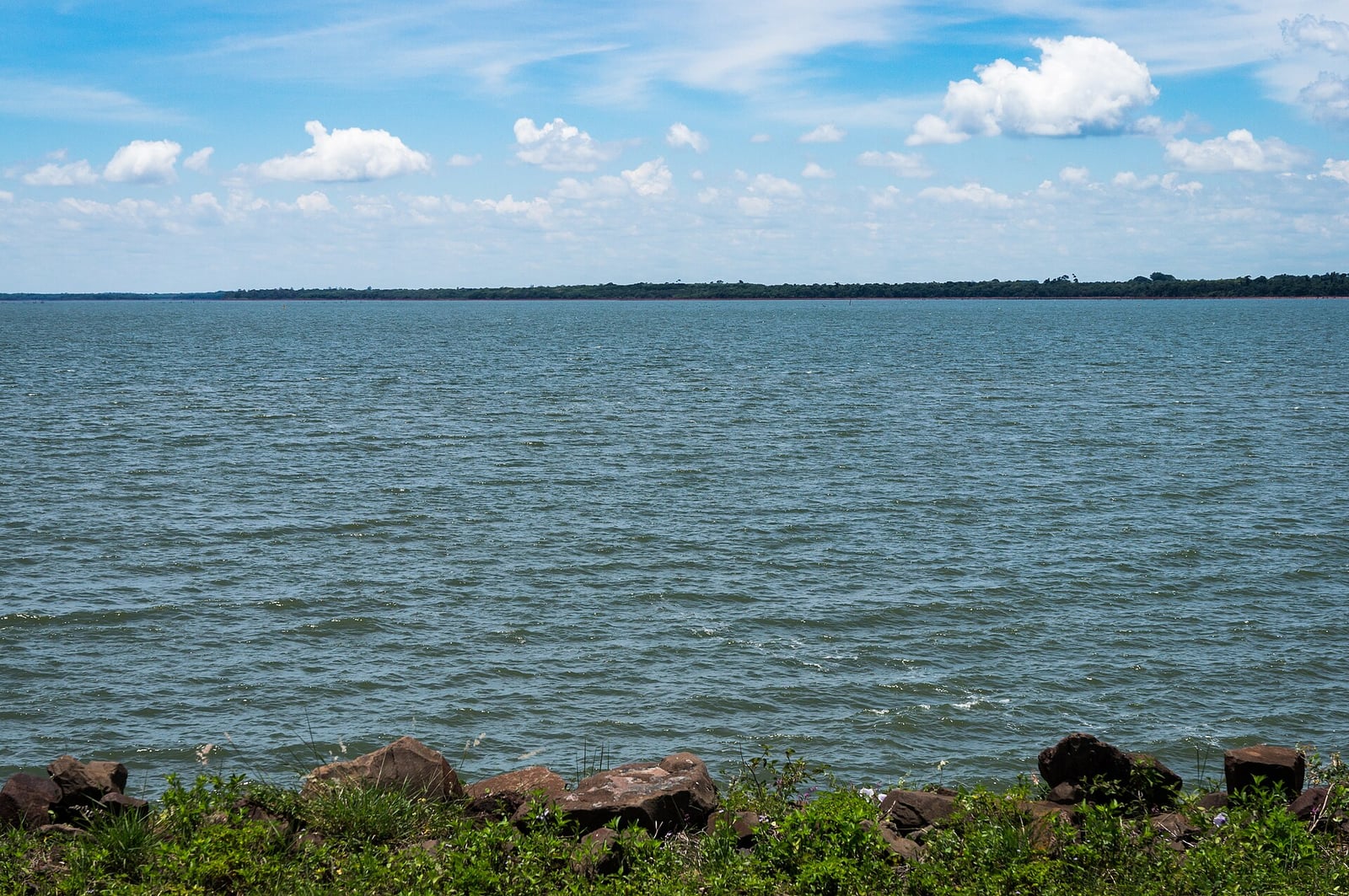
Image: Deni Williams from São Paulo, Brasil · CC BY 2.0 · Wikimedia Commons · cropped
