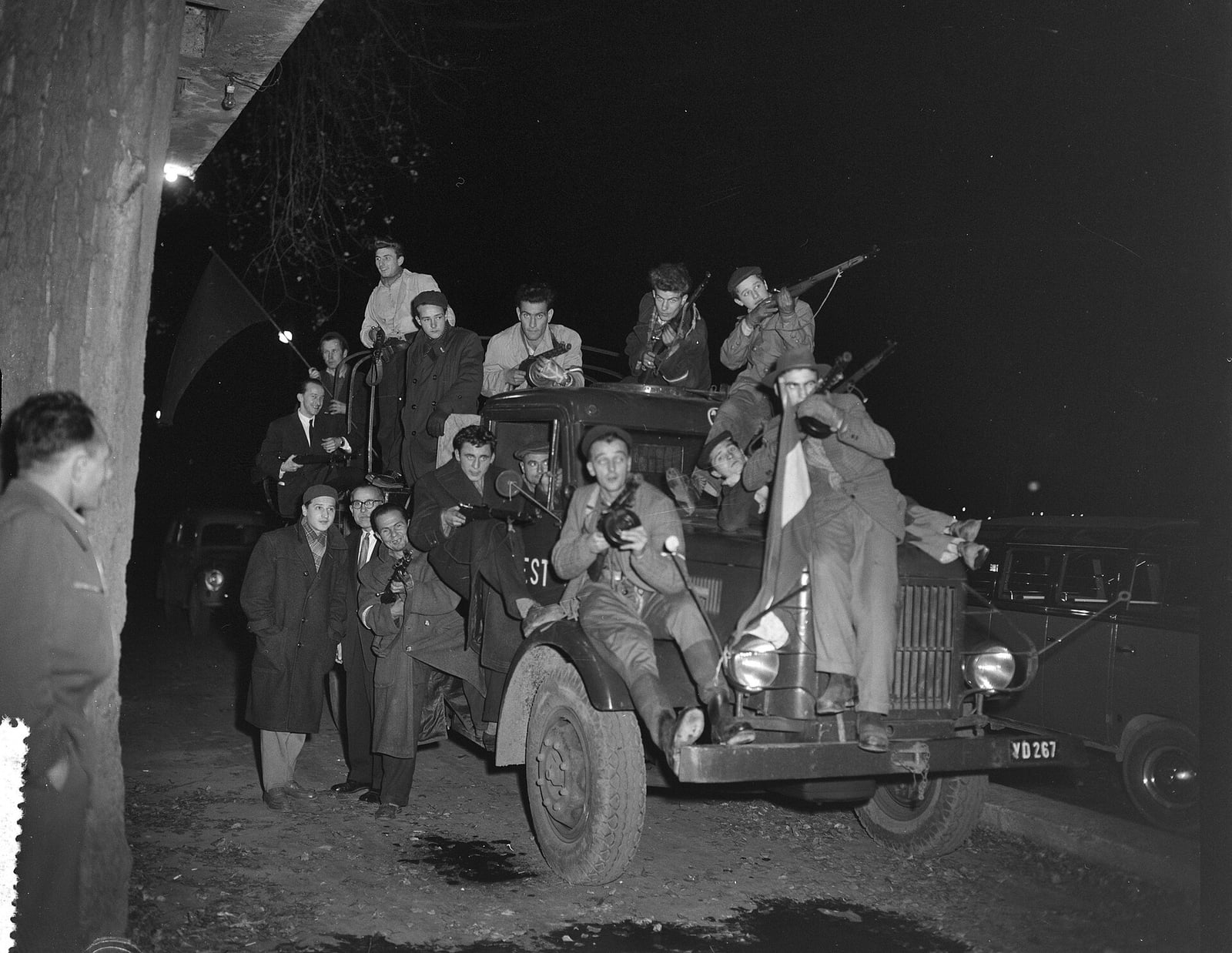
Hungarians Rise Against Soviet Rule
A student march in Budapest became a national uprising that the Soviet army crushed within three weeks.
On the afternoon of 23 October 1956, thousands of university students gathered across Budapest to challenge Soviet dominance and the repressive policies of Hungary's communist administration. Carrying manifestos demanding free elections, national sovereignty, and the withdrawal of Soviet troops, the demonstration grew rapidly as factory workers and citizens joined the marchers. After peaceful gatherings at Petőfi Square and the statue of Józef Bem, a large crowd converged outside the Hungarian Parliament Building, while others toppled a massive bronze monument to Joseph Stalin in the city center.
Violence erupted later that evening outside the headquarters of Magyar Radio, where a student delegation sought to broadcast a list of sixteen political and economic reforms. Officers of the State Protection Authority, the internal security police known as the AVH, detained the envoys and discharged tear gas and live ammunition into the surrounding crowd. Hungarian soldiers dispatched to restore order began handing over their weapons to demonstrators or joined their ranks, triggering an armed assault on the radio building and initiating clashes throughout the capital.

Keep reading in Yester
Coming soonKeep following the story
Sources
Image: Joop van Bilsen for Anefo · CC0 · Wikimedia Commons · cropped
