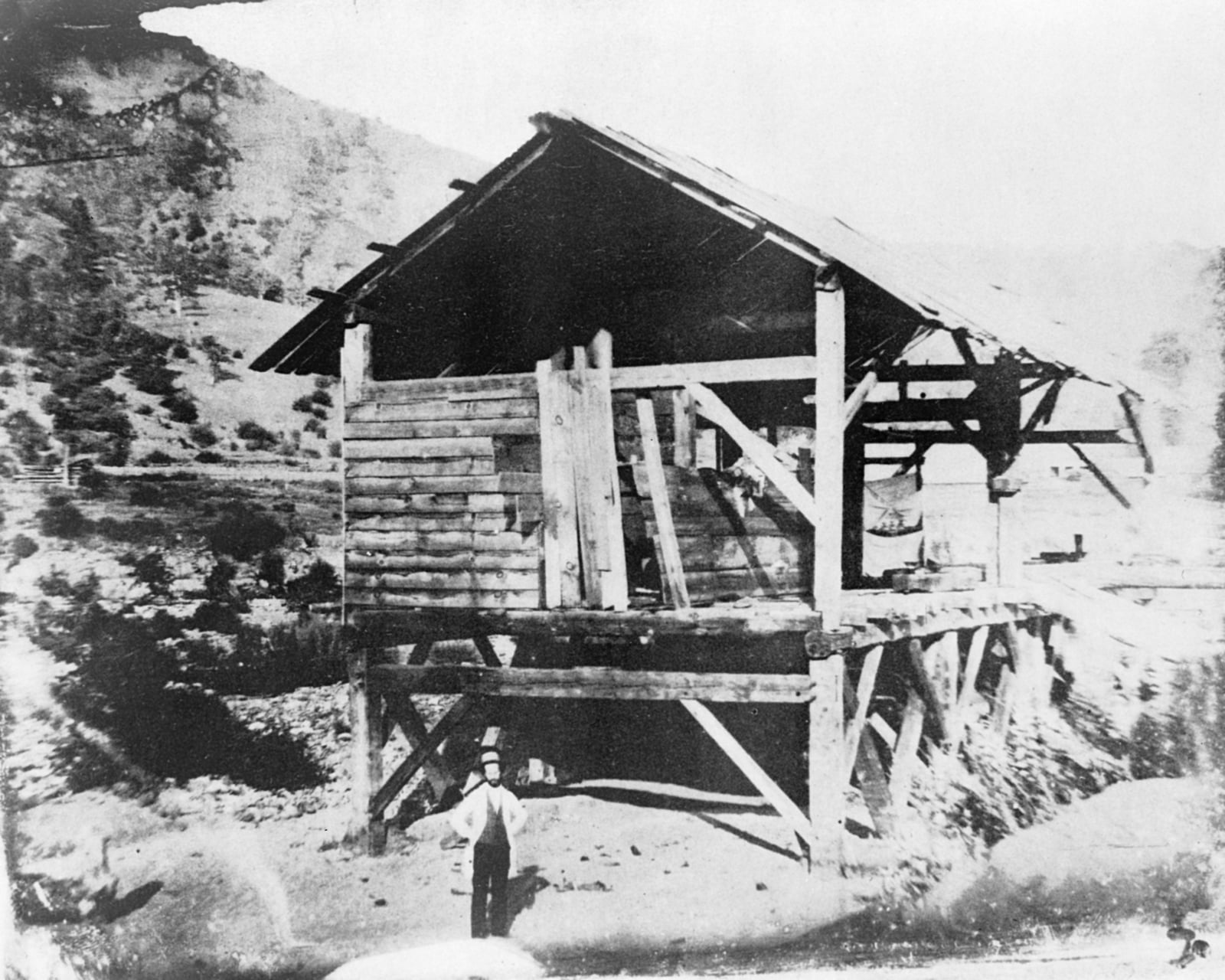
Gold Found at Sutter’s Mill Starts the California Gold Rush
A carpenter’s find in a mill race drew some 300,000 people to California and devastated its Native peoples.
On January 24, 1848, James W. Marshall noticed yellow metal flakes in the tailrace of a water-powered sawmill he was constructing for John Sutter along the American River in Coloma. Marshall showed the metal to Sutter, and tests confirmed it was gold. Sutter attempted to keep the matter quiet to prevent disruption to his agricultural enterprises, but news leaked swiftly. In May 1848, storekeeper Samuel Brannan showed off a vial of gold in San Francisco, sparking local excitement. Reports reached the East Coast later that year, culminating in President James K. Polk verifying the gold discoveries during an address to Congress in December 1848.
Polk's announcement triggered a worldwide movement of prospectors, commonly dubbed forty-niners after their main year of migration. Between 1848 and 1855, an estimated 300,000 individuals arrived in California. Roughly half traveled by sea, braving months-long voyages around Cape Horn or overland crossings through Panama and Mexico, while others made the long crossing over the continent along wagon routes such as the California Trail. The influx came from across the globe, bringing tens of thousands of migrants from Mexico, China, Australia, Europe, and South America alongside American citizens. San Francisco, a small settlement in 1848, grew within a few years into a bustling city and the central metropolis of the new frontier.

Keep reading in Yester
Coming soonKeep following the story
Sources
- California Gold Rush (Encyclopaedia Britannica)
- California Gold Rush (HISTORY.com)
- Gold Rush Overview (California Department of Parks and Recreation)
- Gold! (American Heritage)
- Benjamin Madley presents on the genocide of California Indians from 1846 to 1873 (USC Dornsife Center for Advanced Genocide Research)
- California's Little-Known Genocide (HISTORY.com)
- California gold rush
Image: R. H. Vance · Public domain · Wikimedia Commons · cropped
