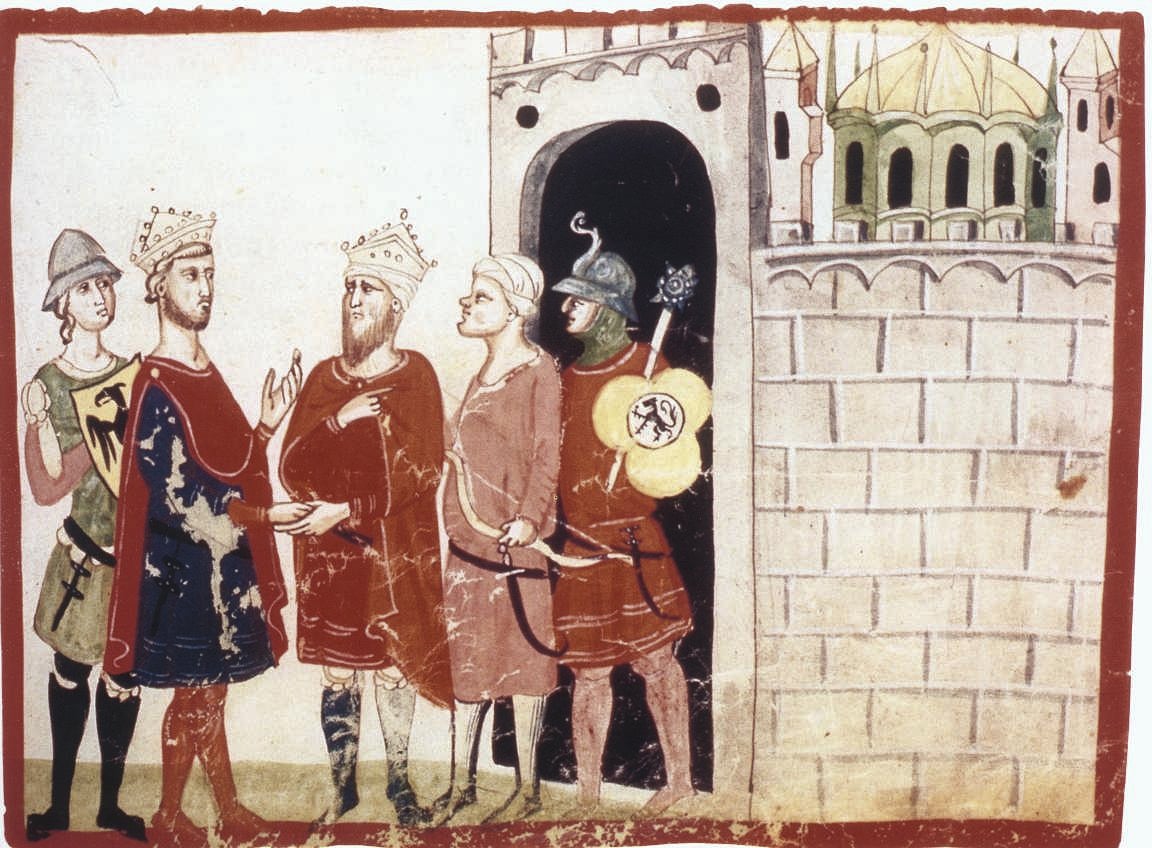
Frederick II Recovers Jerusalem by Treaty
The excommunicated emperor negotiated with Sultan al-Kamil of Egypt and won back Jerusalem under a ten-year truce without fighting a battle.
On 18 February 1229, Holy Roman Emperor Frederick II finalized a diplomatic agreement with Sultan al-Kamil of Egypt at Jaffa. Concluded without significant combat, the pact secured the return of Jerusalem to Christian governance alongside Bethlehem, Nazareth, and a narrow territorial corridor connecting the holy sites to the Mediterranean coast. In exchange, the treaty established a ten-year truce and preserved Muslim possession of the Temple Mount, including the al-Aqsa Mosque and the Dome of the Rock. Frederick had secured a long-sought prize through direct bargaining rather than battlefield victory.
Frederick had pursued the expedition under immense external pressure and difficult personal circumstances. Having repeatedly postponed his crusading vows since 1215, he signed the 1225 Agreement of San Germano, promising Pope Honorius III that he would depart by August 1227 or face excommunication. When an outbreak of disease struck his fleet shortly after setting out from Brindisi in September 1227, the emperor disembarked for medical care. Pope Gregory IX viewed the halt as bad faith, rejected Frederick's explanations, and formally excommunicated him. Defying papal censure, Frederick set sail for the eastern Mediterranean in June 1228.

Keep reading in Yester
Coming soonKeep following the story
Sources
Image: Giovanni Villani, Chronica, 14 · Public domain · Wikimedia Commons · cropped
