
Richard the Lionheart and Philip Augustus Take Acre
After a siege of nearly two years, the crusader armies of the Third Crusade forced Acre’s surrender, which became the capital of a smaller kingdom.
In August 1189, Guy of Lusignan, the titular King of Jerusalem, led an army southward along the Levantine coast to lay siege to the fortified port city of Acre. Two years earlier, the disastrous defeat at the Battle of Hattin had stripped the Latin Kingdom of most of its inland territory and left Jerusalem in the hands of the sultan Saladin. Guy lacked the strength to recapture the lost capital directly, and when his rival Conrad of Montferrat barred him from entering Tyre, Guy chose to establish a strategic coastal base instead. Acre, built on a peninsula with the sea on its west and south sides and massive walls on the other two, held immense tactical importance as an arms depot and primary harbor.
The initial Christian assault failed to overrun Acre's garrison, forcing Guy to pitch camp outside the ramparts and await seaborne reinforcements. What followed became a complex double siege. Although fleets carrying crusader soldiers from Scandinavia, Germany, Italy, and France arrived to bolster Guy's numbers, Saladin soon gathered an extensive relief army from Syria and the Jazira. The sultan encircled the Christian camp in a semicircle east of the city. While the crusaders hemmed in the urban defenders, Saladin's forces pinned the besiegers against the coast, creating a prolonged and claustrophobic stalemate that neither side could quickly break.

Keep reading in Yester
Coming soonKeep following the story
Sources
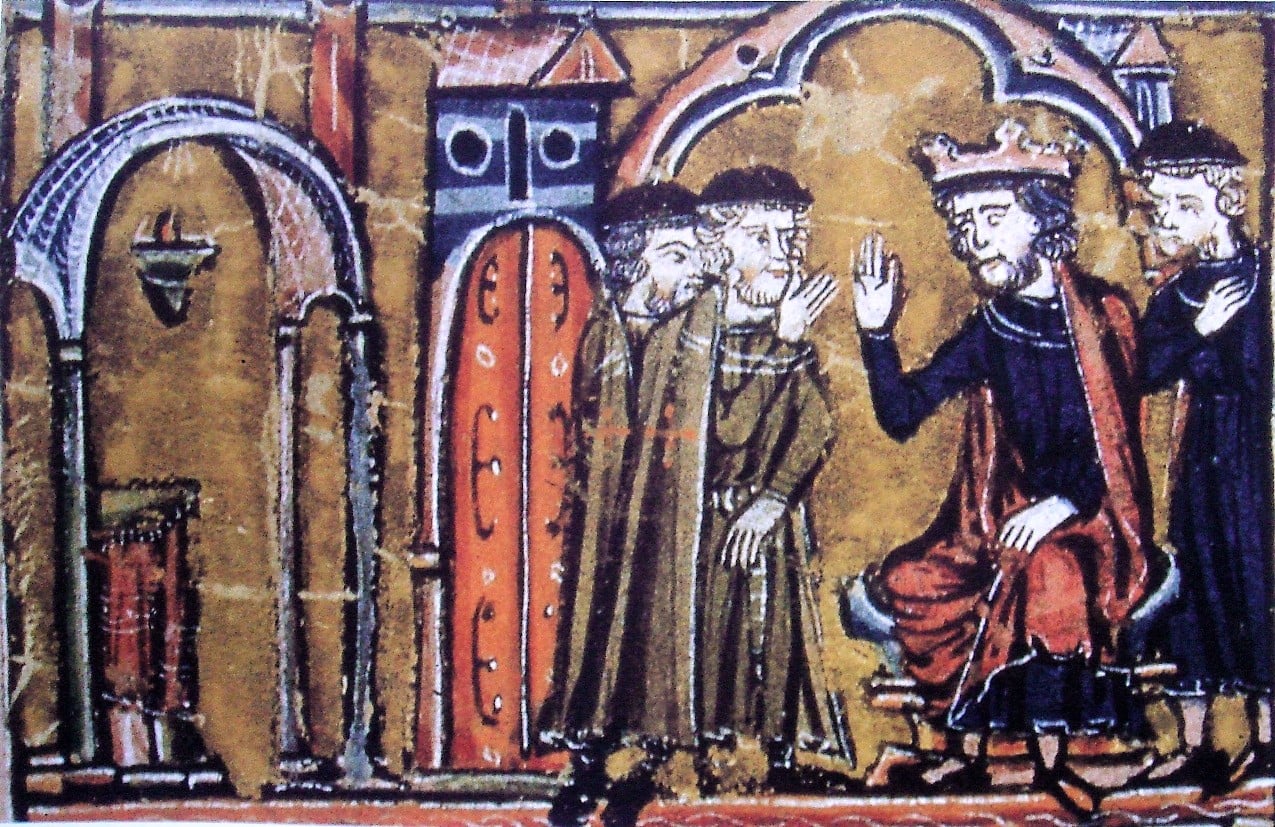
Image: Unknown author · Public domain · Wikimedia Commons · cropped
