The Council of Troyes Gives the Knights Templar a Rule
A church council in Champagne approved a rule for a small band of knights guarding pilgrims, launching the first military religious order.
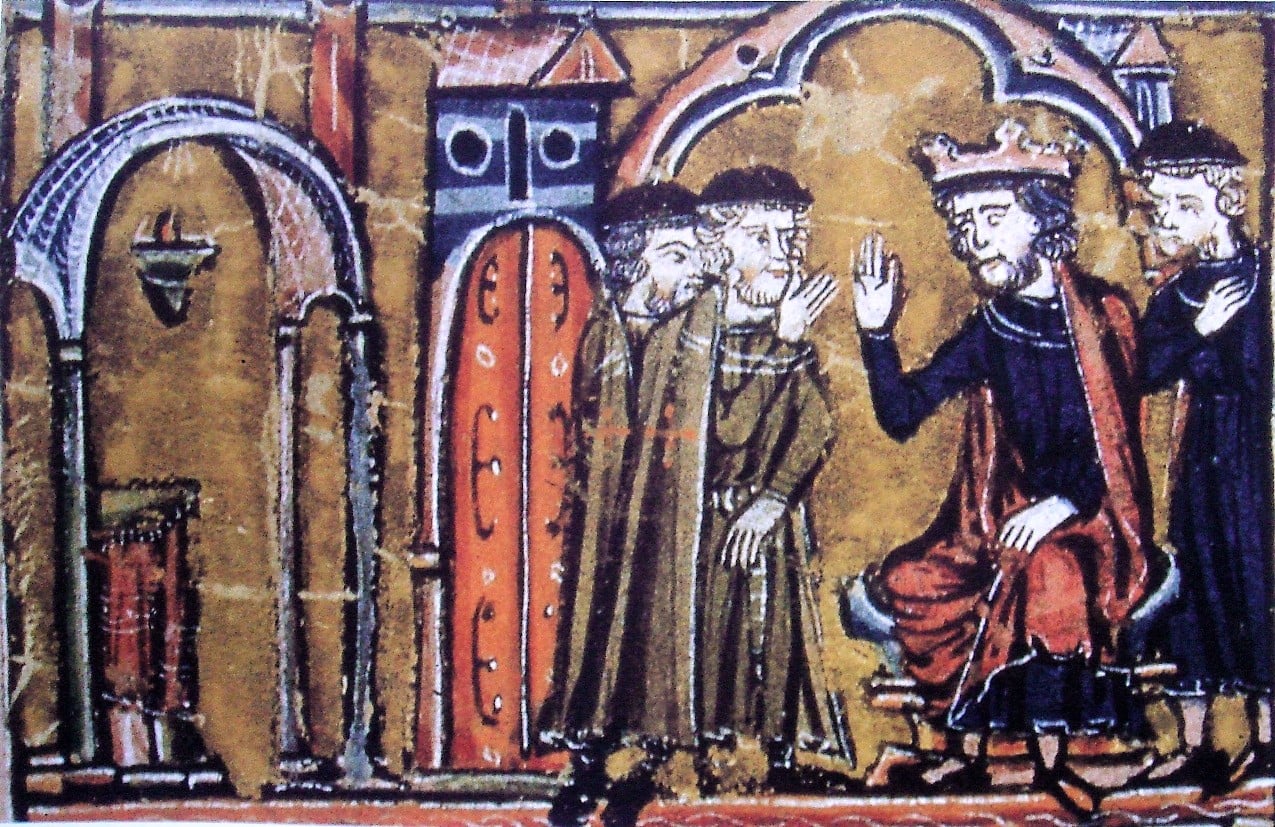
In January 1129, a gathering of churchmen assembled in Champagne for the Council of Troyes to deliberate on an unusual religious brotherhood. A decade earlier, around 1119, the French knight Hugues de Payens had approached King Baldwin II and Patriarch Warmund in Jerusalem, proposing a dedicated community of knights to protect Christian pilgrims traveling from the Mediterranean coast inland toward sacred sites. Following the First Crusade, travelers between Jaffa and Jerusalem faced routine attacks by bandits. Baldwin II accommodated the group in a wing of his royal palace on the Temple Mount, situated in the captured Al-Aqsa Mosque, which contemporaries associated with the Temple of Solomon.
During its opening decade, the fraternity remained small and financially insecure. Founding knights such as Hugues de Payens, Godfrey de Saint-Omer, and André de Montbard possessed limited resources and relied on charity. The order's seal later showed two knights on a single horse, an image often read as a sign of their poverty. Their prospects shifted dramatically when Bernard of Clairvaux, a leading French Cistercian abbot and the nephew of André de Montbard, championed their cause. Bernard helped win formal ecclesiastical approval for the nascent military order at Troyes and, in the following years, wrote a treatise in their favor, In Praise of the New Knighthood.

Keep reading in Yester
Coming soonKeep following the story
Sources
Image: Guillaume de Tyr · Public domain · Wikimedia Commons · cropped
