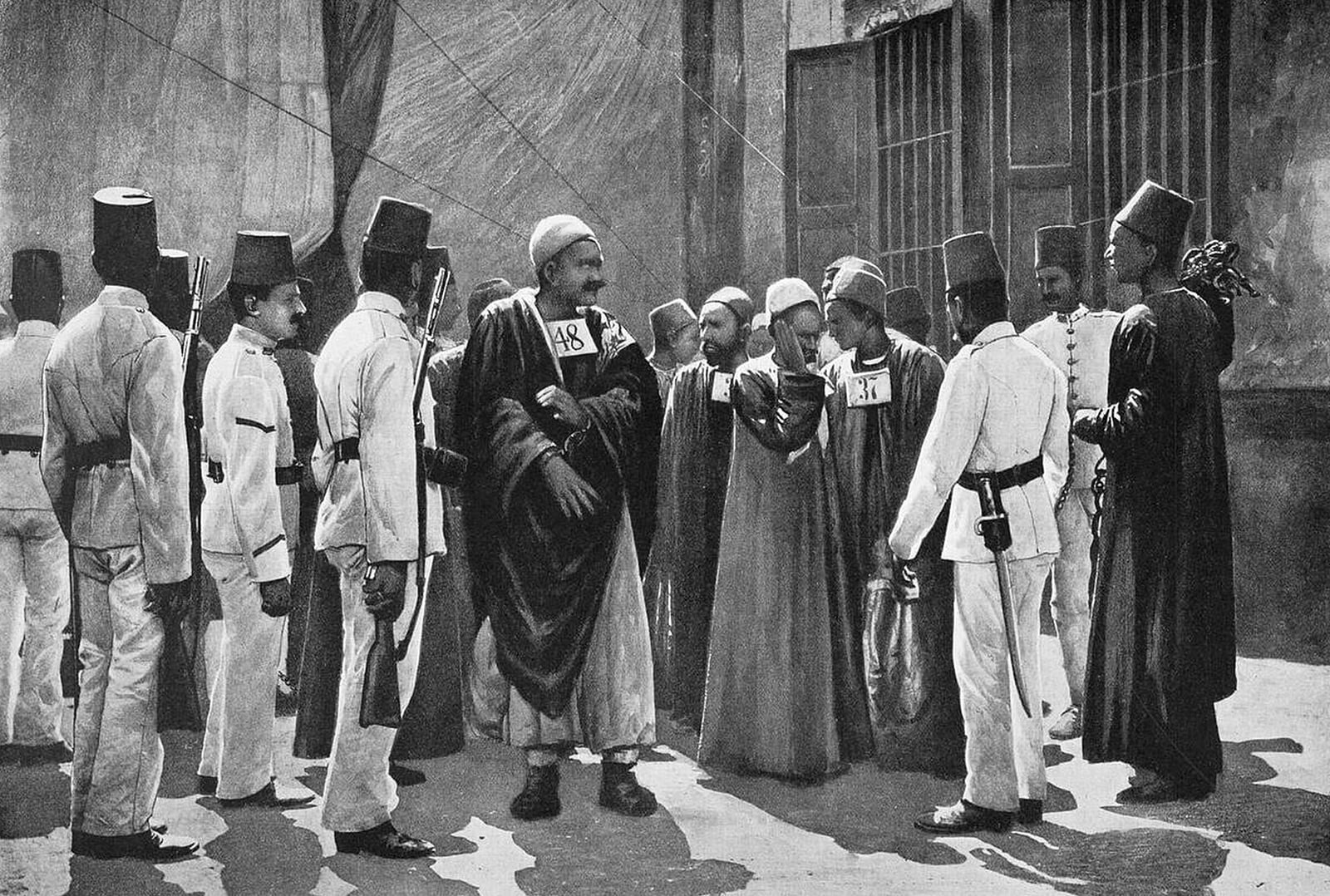
Hangings at Denshawai Turn Egyptians Against British Rule
After a clash between villagers and British officers shooting pigeons, a special tribunal sentenced four villagers to death, and the hangings angered many in Egypt and drew criticism in Britain.
On June 13, 1906, five British officers left their military encampment to hunt pigeons around the village of Denshawai in the Nile Delta. The villagers raised pigeons as a source of food and objected to the officers shooting near their homes. The officers continued to fire. Shortly afterward, a fire ignited in the village, which the inhabitants blamed on the officers discharging their firearms. An altercation quickly developed as the villagers confronted the Britons and attempted to confiscate their weapons. During the struggle, a gun discharged and wounded a woman and, by some accounts, other villagers.
One British officer fled the chaotic scene on foot, attempting to reach his base under the midday summer heat. He collapsed outside the camp and died, and the cause was recorded as heat apoplexy (sunstroke). The British administration, under Consul-General Evelyn Baring, the 1st Earl of Cromer, treated the incident as an attack on British authority and moved to try the villagers before a special tribunal.

Keep reading in Yester
Coming soonKeep following the story
Sources
Image: GRANGER - Historical Picture Archive · Public domain · Wikimedia Commons · cropped
