Caodaism Is Founded in French Indochina
A Vietnamese faith blending Buddhism, Taoism, Confucianism and Christianity drew half a million followers within four years.
In 1925, a small group of Vietnamese civil servants working within the French colonial administration in Saigon formed a spiritualist circle. Members such as Cao Quỳnh Cư, Cao Hoài Sang, and Phạm Công Tắc gathered to practice mediumship and consult the planchette, drawing inspiration from European spiritist authors alongside local traditions. A spirit that called itself AĂÂ, after the first three letters of the Vietnamese alphabet, spoke to them, and on Christmas Eve 1925 it revealed itself as the supreme god. The mediums soon joined Ngô Văn Chiêu, whom adherents regard as the movement's first disciple, and on October 7, 1926, a declaration signed by the movement's leaders and 245 followers was submitted to the French colonial government, announcing the religion known fully as Đại Đạo Tam Kỳ Phổ Độ, or the Great Faith for the Third Universal Redemption.
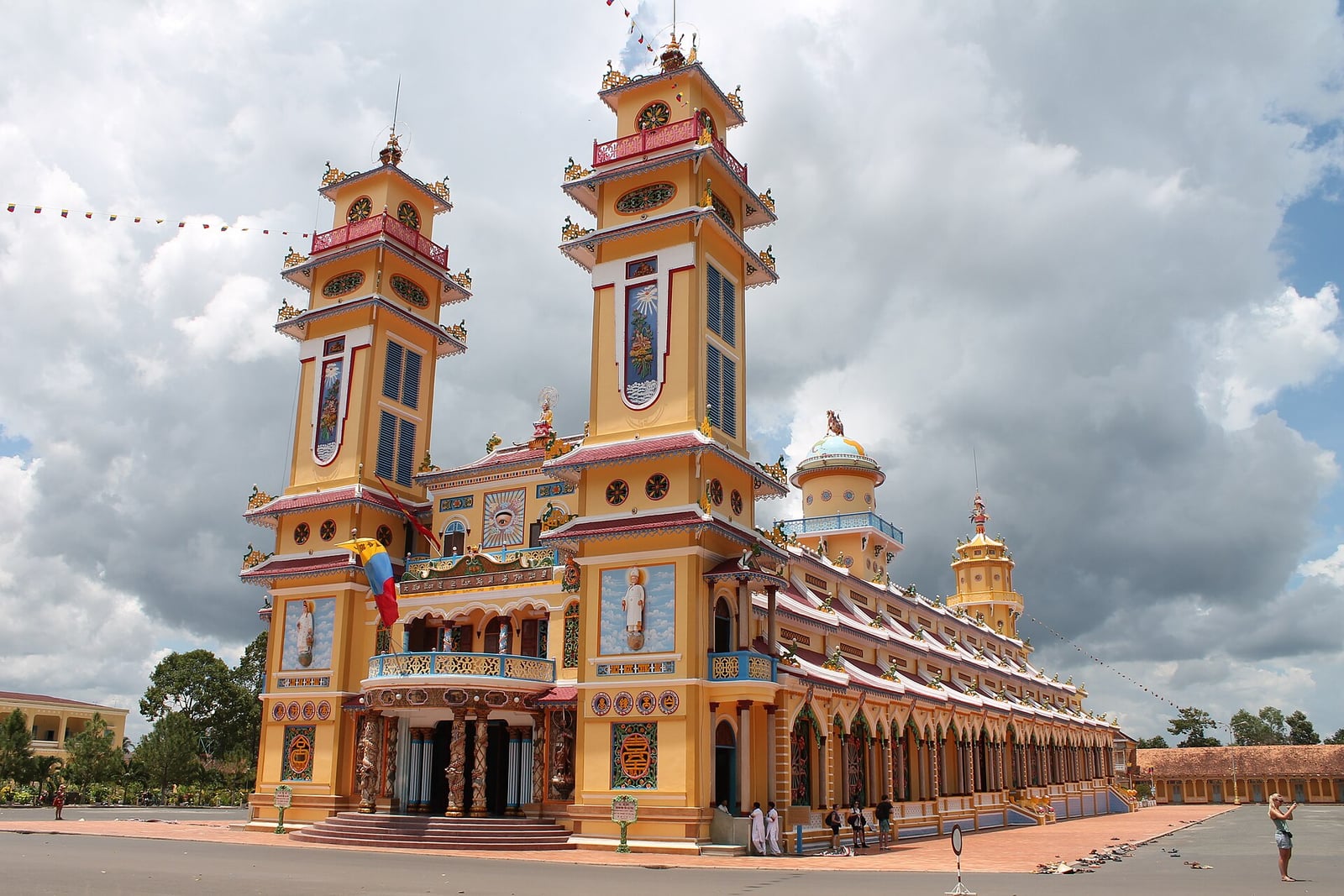
The young movement soon established its institutional center in the southern city of Tây Ninh. However, early differences in vision altered its leadership structure. Ngô Văn Chiêu declined appointment as pope, preferring an esoteric path without broad public proselytizing, and withdrew to lead a separate esoteric branch later known as Chiếu Minh. In his place, Lê Văn Trung assumed leadership as acting pope, steering the faith toward active recruitment. Under this organizational drive, the faith built an elaborate clerical structure resembling the Catholic hierarchy, complete with cardinals, bishops, and priests, while constructing the Great Divine Temple at the Tây Ninh Holy See as its administrative and spiritual heart.

Keep reading in Yester
Coming soonKeep following the story
Sources
Image: Dominik Tefert · Public domain · Wikimedia Commons · cropped
