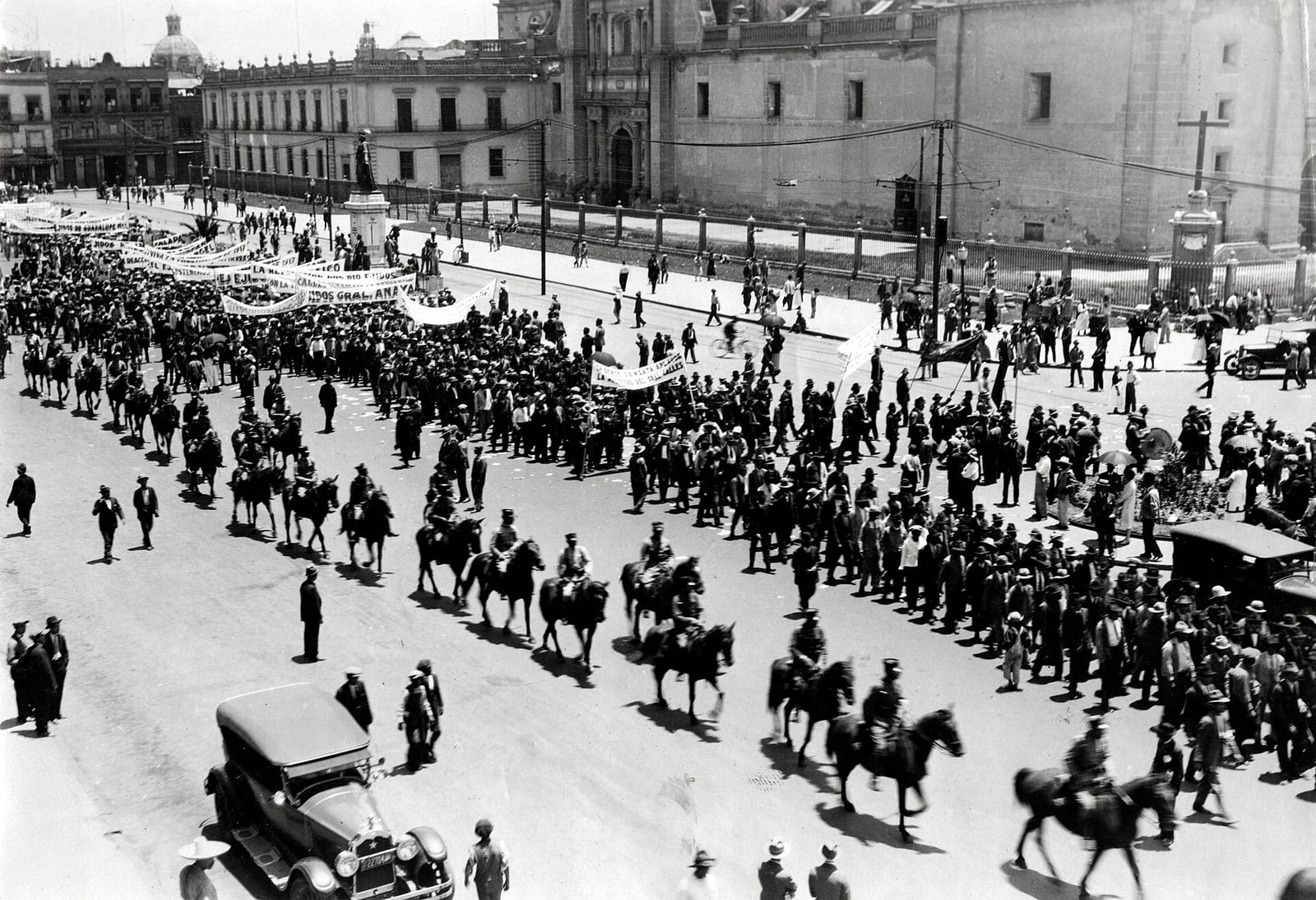
Catholics Take Up Arms in Mexico’s Cristero War
When the government enforced strict limits on the Church, bishops suspended public worship and rural Catholics rebelled.
In the summer of 1926, the long-simmering rivalry between the Mexican state and the Roman Catholic Church erupted into open confrontation. President Plutarco Elías Calles enacted a series of punitive statutory decrees, known popularly as the Calles Law, to enforce the anticlerical articles of the 1917 Constitution. Under these measures, public wearing of clerical garments brought heavy fines, critical speech against the administration carried prison terms, foreign priests faced deportation, and church properties were expropriated. Catholic lay groups organized an economic boycott, and the bishops suspended public worship across the country from the end of July, leaving churches without Mass for the first time and creating unprecedented disruption to traditional religious life across central and western Mexico.
Tensions reached a violent turning point on August 3, 1926, inside Guadalajara, Jalisco. Armed Catholic defenders, reported in some accounts as about four hundred, barricaded themselves inside the Church of Our Lady of Guadalupe and exchanged gunfire with federal soldiers. Across neighboring rural districts, military assaults on local parish buildings and the executions of activist leaders pushed ranch communities into open defiance. Bands of rural fighters declared rebellion in states such as Jalisco, Zacatecas, and Guanajuato, launching what contemporaries termed La Cristiada.

Keep reading in Yester
Coming soonKeep following the story
Sources
Image: Unknown author · Public domain · Wikimedia Commons · cropped
