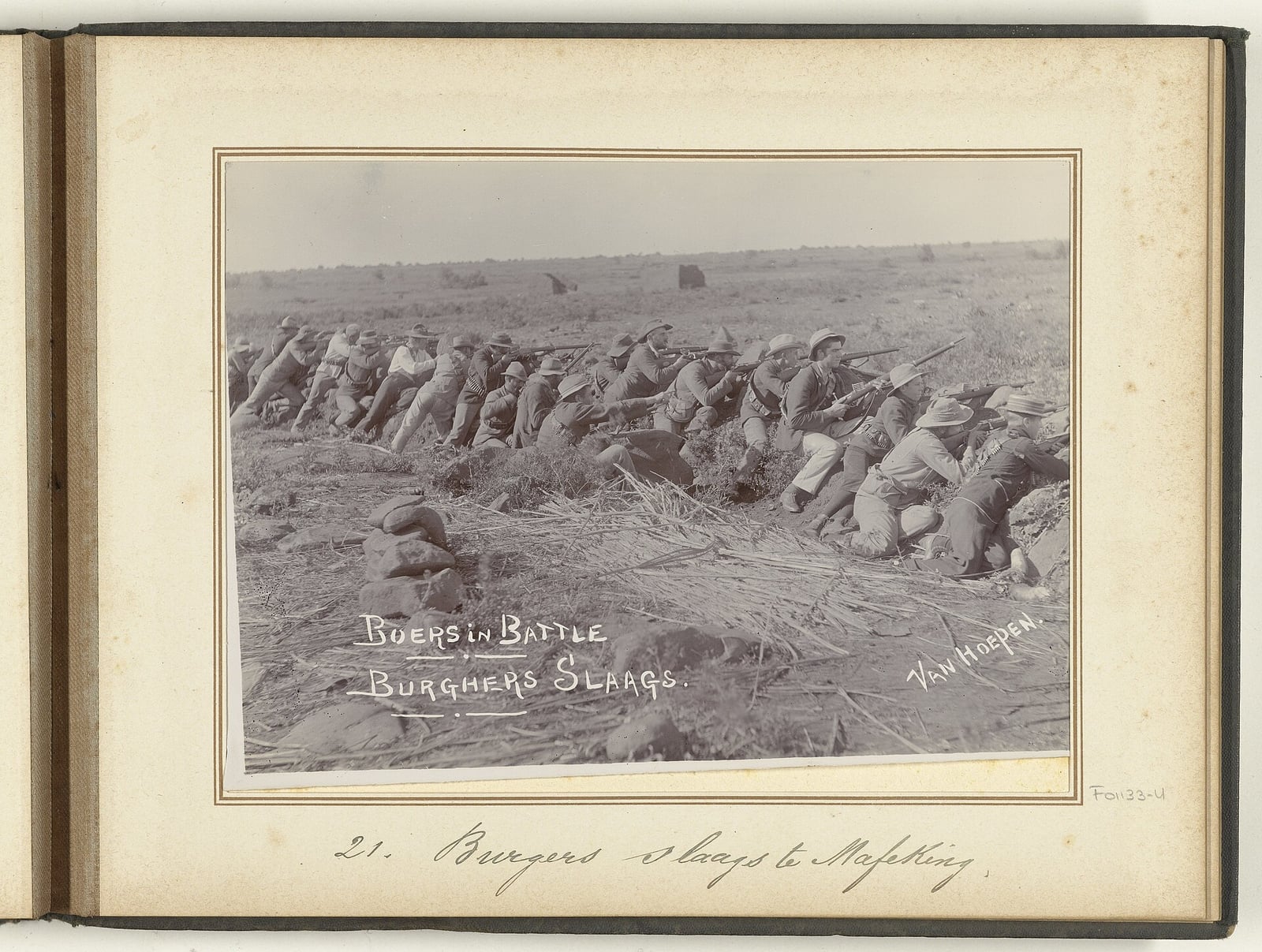
The Boer Republics Go to War with the British Empire
The Transvaal and the Orange Free State fought Britain for nearly three years, a war of sieges, guerrilla raids and concentration camps.
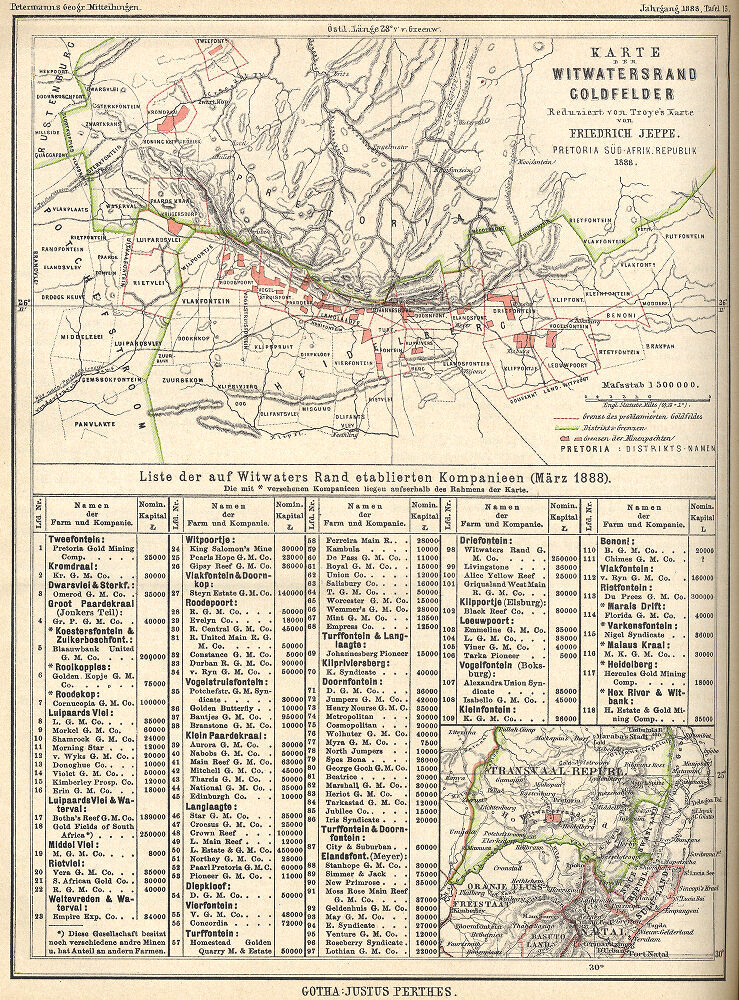
On 11 October 1899, the South African Republic and the Orange Free State went to war with Britain, and their forces advanced into British territory, marking the beginning of the Second Boer War. Tensions had gathered steadily since the 1886 discovery of vast gold deposits along the Witwatersrand ridge. The resulting rush attracted thousands of foreign prospectors, predominantly British subjects known as uitlanders, into the independent Boer states. As the migrant population rapidly expanded in the new settlement of Johannesburg, the government of Transvaal President Paul Kruger sought to retain local authority by enacting strict qualifications that required fourteen years of residence to obtain voting rights. Mining industrialists and imperial officials bristled under these constraints and related tariffs, culminating in the botched Jameson Raid of 1895, an unsanctioned British incursion that deepened Boer distrust of British intentions and prompted extensive rearmament.
Attempts to resolve the dispute through diplomacy dissolved in June 1899 at the Bloemfontein Conference, where British representatives and Kruger failed to negotiate acceptable franchise terms. When the British government resolved to bolster its military footprint by ordering additional troops to southern Africa, the Transvaal government issued an ultimatum on 9 October demanding the withdrawal of British troops from its borders and of the reinforcements sent since June. London treated the demand with dismissal, and Boer commandos mounted swift preemptive strikes into the Cape Colony and Natal once the deadline expired. Relying on marksmanship and civilian militia commandos rather than formal army divisions, the Boers besieged key garrisons at Ladysmith, Kimberley, and Mafeking, while handing British forces significant tactical defeats at Colenso, Magersfontein, Stormberg, and Spion Kop.

Keep reading in Yester
Coming soonKeep following the story
Sources
Image: Rijksmuseum · CC0 · Wikimedia Commons · cropped
