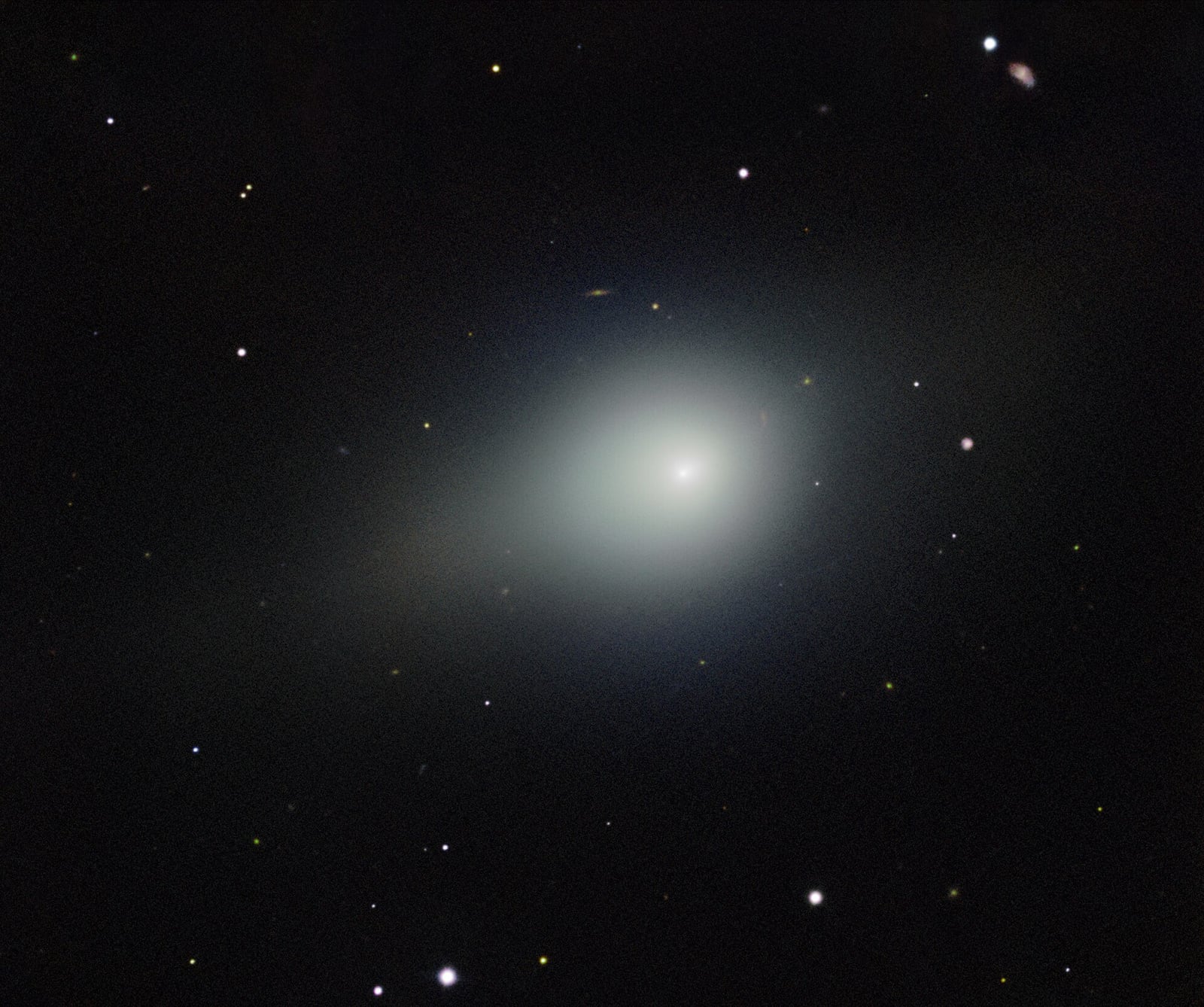
Astronomers Spot a Third Visitor from Another Star
A comet on an escape path became only the third known object to arrive from interstellar space.
On 1 July 2025, an automated survey telescope at Rio Hurtado, Chile, detected a faint, rapid object traveling near the border of the constellations Serpens Cauda and Sagittarius. The telescope operated as part of the NASA-funded Asteroid Terrestrial-impact Last Alert System, or ATLAS. Initial calculations placed the object, temporarily labeled A11pl3Z, at an apparent magnitude of 18, moving at 61 kilometers per second relative to the Sun. Because early positional data suggested an orbit that might come close to Earth, the Minor Planet Center placed it on its confirmation page for near-Earth objects. Further tracking quickly disproved any danger, showing the newcomer was moving along an unbound hyperbolic trajectory.
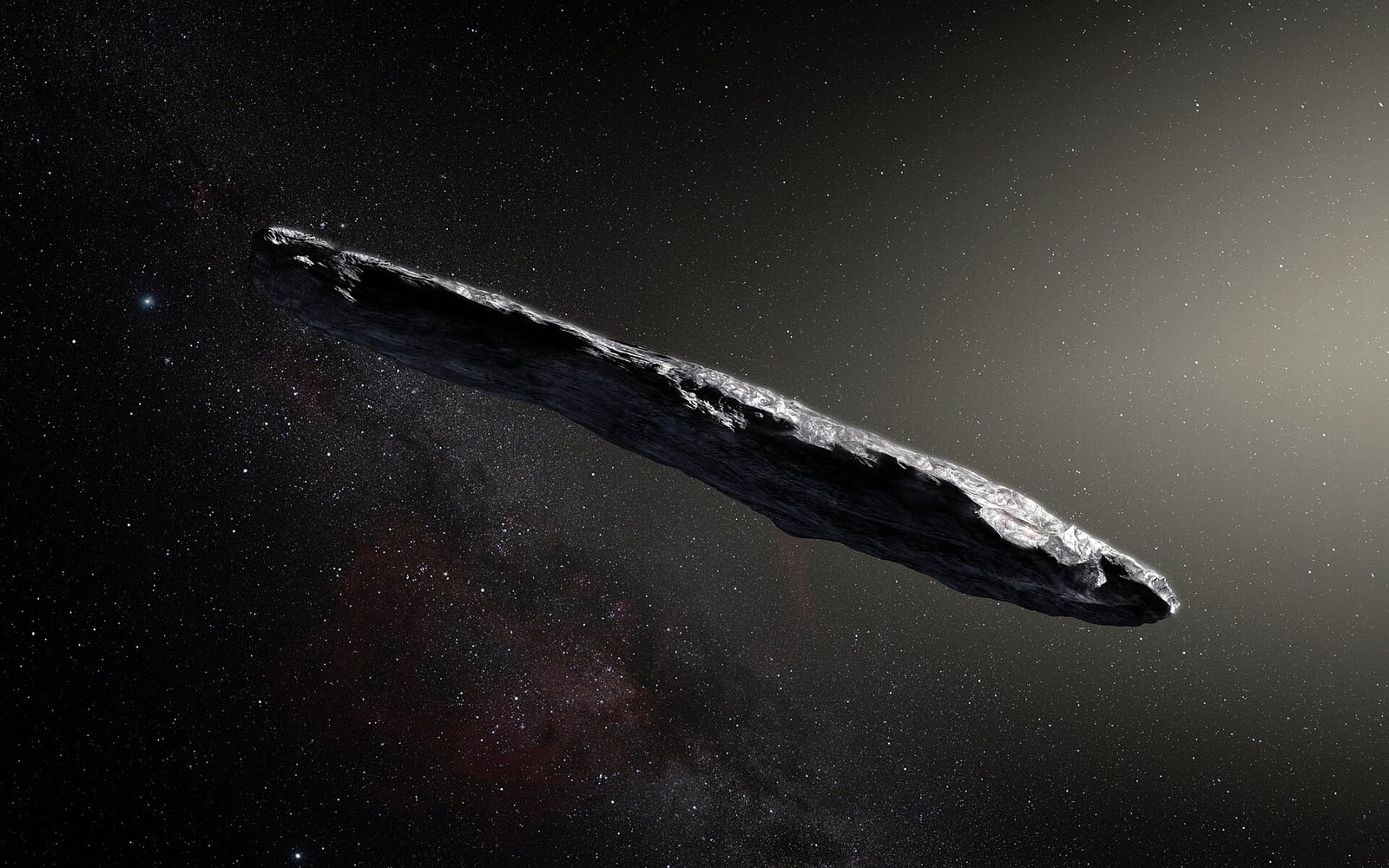
On 2 July 2025, the Minor Planet Center designated the visitor 3I/ATLAS, confirming it as only the third identified interstellar object to traverse the Solar System, following the detections of 1I/'Oumuamua and 2I/Borisov. Follow-up images that same day, including some from the Lowell Discovery Telescope and the Canada-France-Hawaii Telescope, showed signs of a faint coma and a short tail, marking the object as an active comet rather than an inert asteroid. The center also registered it under the non-periodic designation C/2025 N1 (ATLAS), synthesizing 122 observations reported across 31 observatories.

Keep reading in Yester
Coming soonKeep following the story
Sources
- Comet 3I/ATLAS (NASA Science)
- Comet 3I/ATLAS frequently asked questions (ESA)
- MPEC 2025-N12: 3I/ATLAS = C/2025 N1 (ATLAS) (IAU Minor Planet Center)
- Interstellar comet 3I/ATLAS: discovery and physical description (arXiv)
- VLT observations of interstellar comet 3I/ATLAS II: Ni I emission and CN outgassing (arXiv)
- Webb Telescope Finds Interstellar Comet Has Unexpected Composition (Sky & Telescope)
- 3I/ATLAS May Be Oldest Comet Ever Seen (Sci.News)
- 3I/ATLAS
Image: International Gemini Observatory/NOIRLab/NSF/AURA/B. Bolin Image Processing: J. Miller &… · CC BY 4.0 · Wikimedia Commons · cropped
