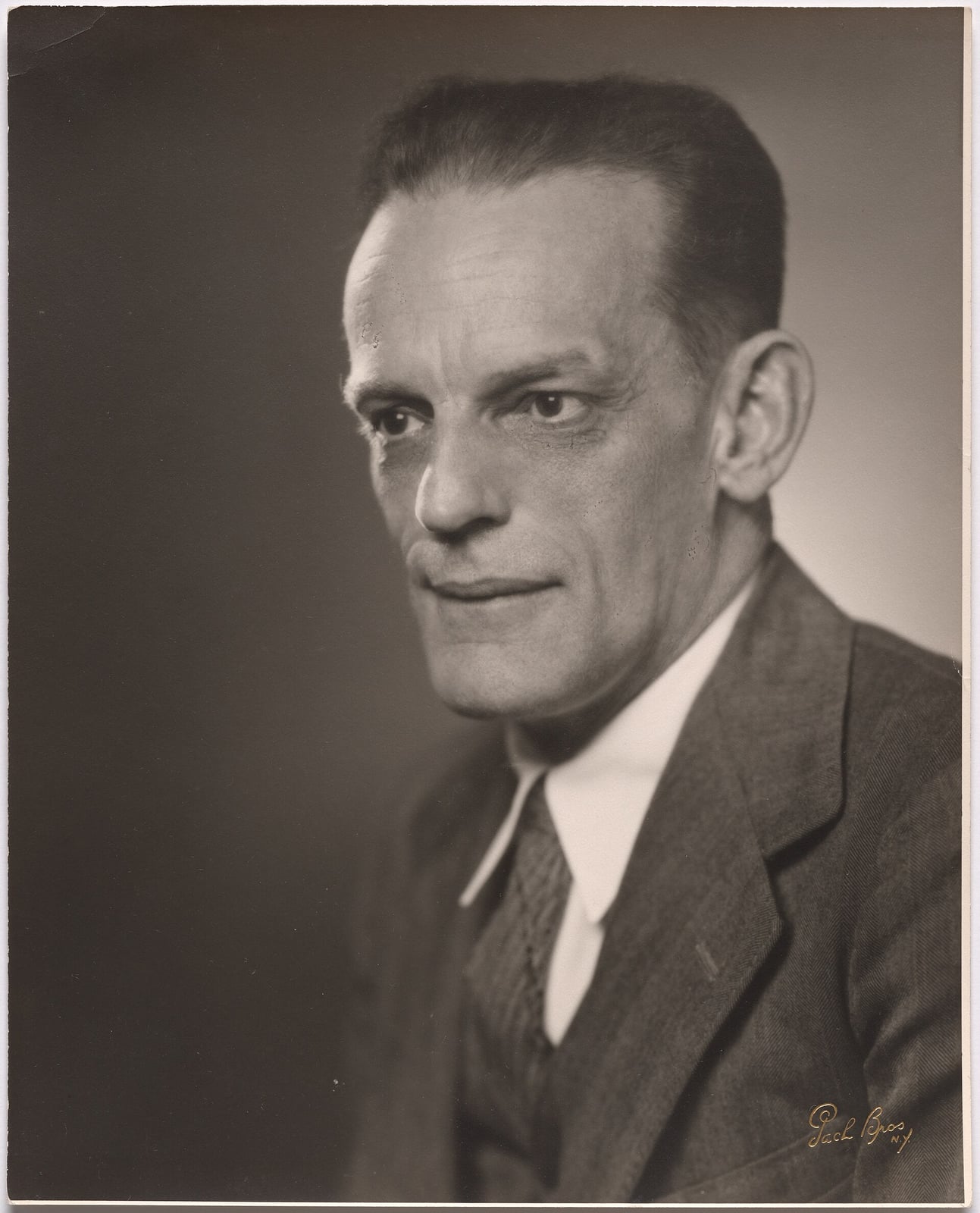
Max Theiler Develops the 17D Yellow Fever Vaccine
A South African virologist’s weakened strain is still used and was tested first in Brazil.
In the early decades of the twentieth century, global travel and commerce intensified concerns about yellow fever, an acute viral disease endemic to parts of Africa and South America. Following the opening of the Panama Canal in 1914, researchers intensified efforts to produce an effective protective biological agent. Early attempts faltered, including an initiative led by Hideyo Noguchi for the Rockefeller Foundation based on an unconfirmed bacterial hypothesis. Pasteur Institute researchers later developed an attenuated preparation from a viral isolate obtained in Dakar, while other investigators produced serum-based formulations, but both methods encountered issues ranging from severe neurological complications to supplies constrained by large human serum requirements.
A decisive turning point came through work directed by the South African virologist Max Theiler at the Rockefeller Foundation. Working alongside Hugh Smith and Eugen Haagen, Theiler aimed to refine an attenuated virus line derived from a patient named Asibi, who had provided the first human isolate of the yellow fever virus in 1927. Theiler kept the virus alive for years in cultures of chick embryo tissue, passing it from culture to culture. By late 1936 this line had changed into a much milder form, called 17D, and in March 1937 Theiler announced it as a new, safer vaccine.

Keep reading in Yester
Coming soonKeep following the story
Sources
- The Yellow Fever Laboratory: Rockefeller Foundation, 1928-1937 (US National Library of Medicine)
- Theiler, Max (Encyclopedia.com)
- Seeff et al., A serologic follow-up of the 1942 epidemic of post-vaccination hepatitis in the US Army (NEJM 1987, via Europe PMC)
- Yellow Fever Vaccine (CDC)
- Brazil and the yellow fever vaccine (PMC)
- Yellow fever vaccine
Image: Oscar White · CC0 · Wikimedia Commons · cropped
