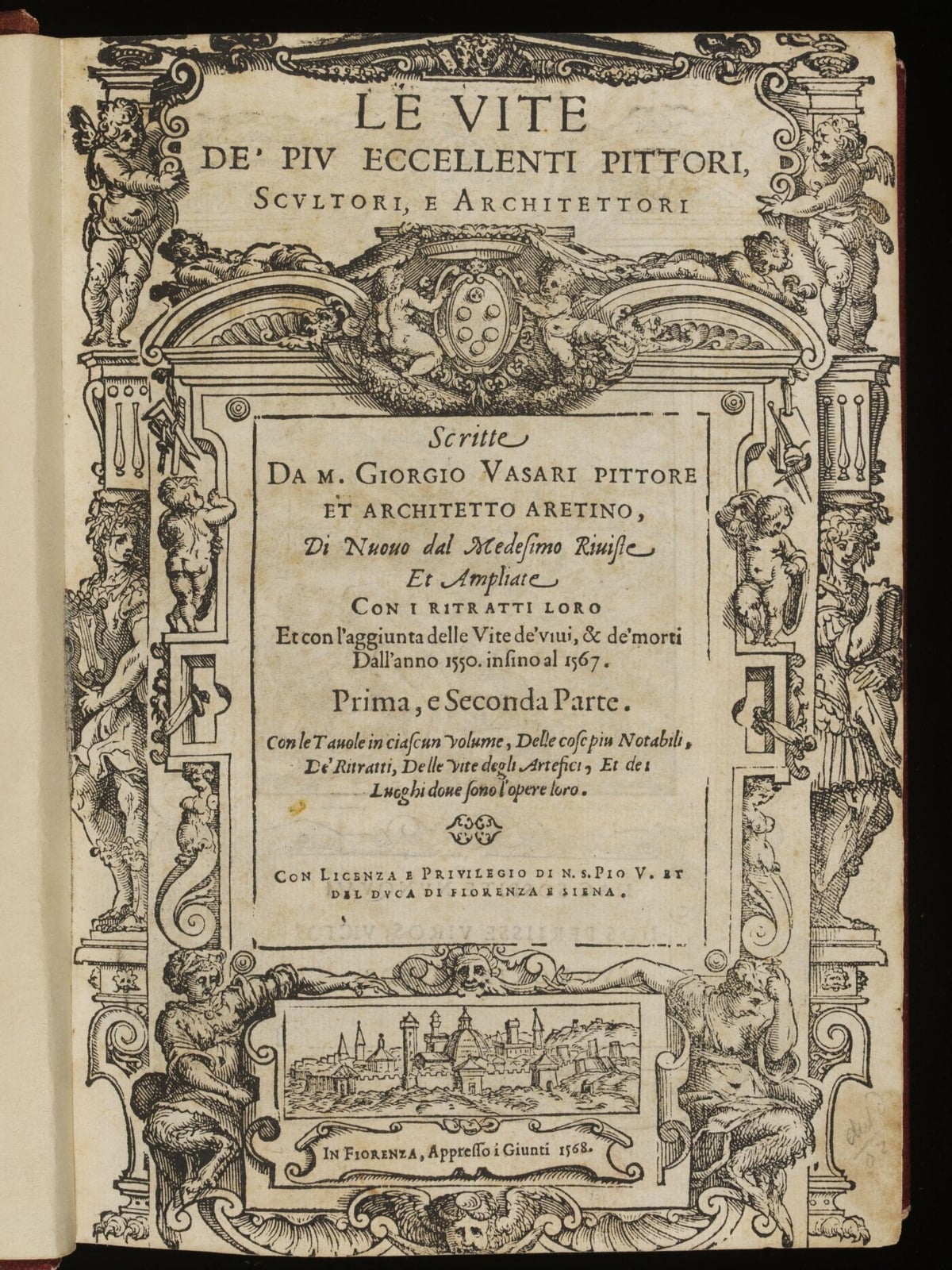
Vasari Publishes His Lives of the Artists
Giorgio Vasari’s biographies of Italian artists from Cimabue to Michelangelo described a rebirth of the arts and laid the foundations of art history.
In 1550, the printer Lorenzo Torrentino published Giorgio Vasari's Le vite de' piu eccellenti pittori, scultori, e architettori in Florence. Dedicated to Cosimo I de' Medici, Duke of Florence, the two-volume work brought together biographical accounts of Italian creators from the late medieval era to the sixteenth century. By Vasari's own account, the project began at a dinner in the palace of Cardinal Alessandro Farnese, where the writer Paolo Giovio spoke of writing about contemporary artists and the cardinal asked Vasari to supply him with material. Giovio then yielded the project to Vasari. Some modern writers doubt the details of this story.
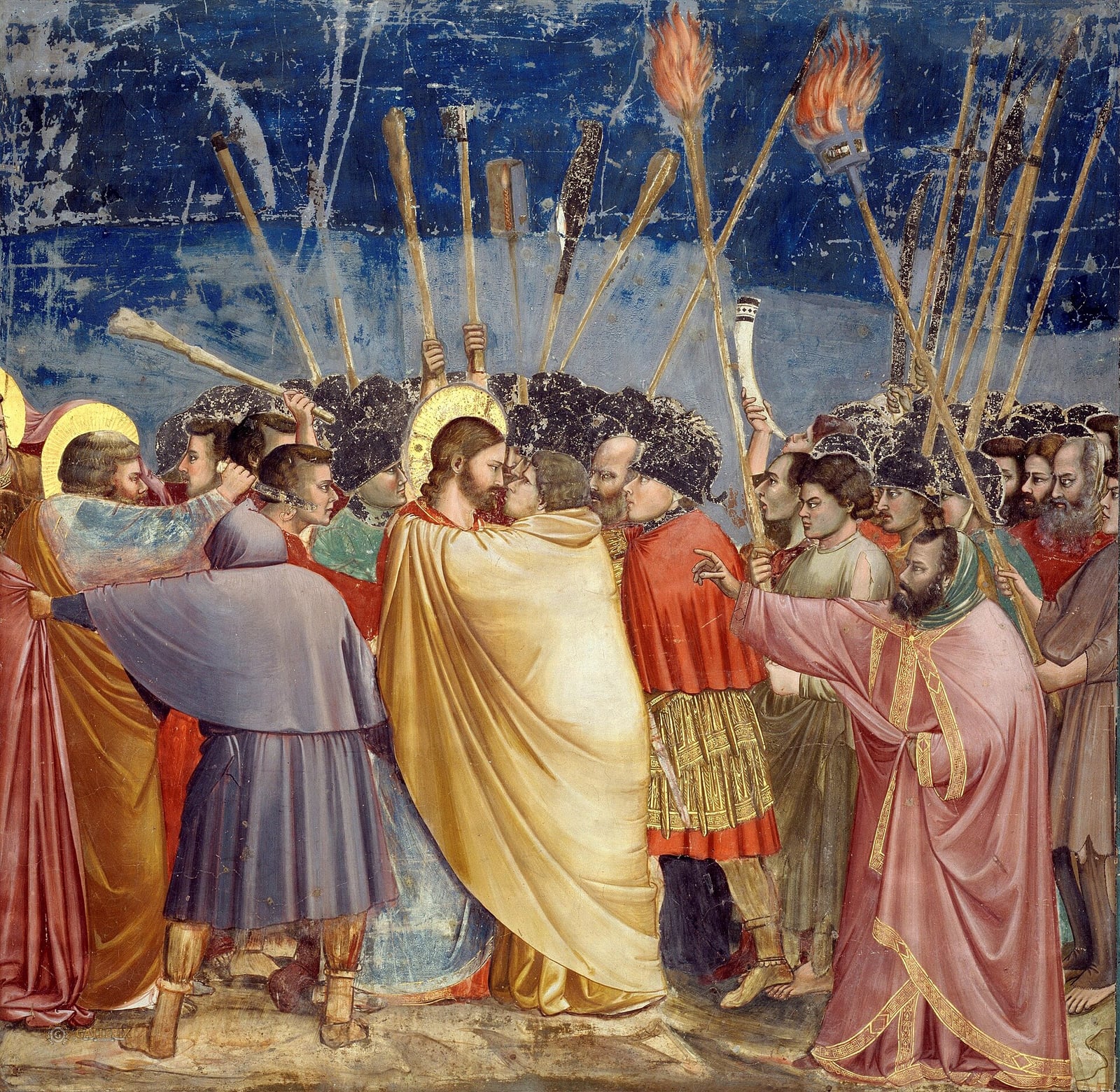
Vasari paired his artist biographies with an introductory treatise examining the methods, technical processes, and materials required in painting, sculpture, and architecture. Rather than relying on systematic archival research for chronological accuracy, he gathered personal observations, studio traditions, and an extensive supply of workshop anecdotes. Some of these accounts, including the tale of Giotto deceiving Cimabue by painting a realistic fly onto a surface, repeated older literary tropes rather than confirmed historical occurrences. Scholars have noted errors and false information especially in his accounts of artists who lived long before his own time.

Keep reading in Yester
Coming soonKeep following the story
Sources
- Lives of the Artists (Uffizi Library, second edition 1568 record)
- Giorgio Vasari: the man, the stories and the lives (Art UK)
- Lives of the Artists (Getty)
- Lives of the most excellent painters, sculptors and architects (Discover Arezzo)
- Giorgio Vasari (Encyclopedia.com, Gale)
- Lives of the Most Excellent Painters, Sculptors, and Architects
Image: Giorgio Vasari · Public domain · Wikimedia Commons · cropped
