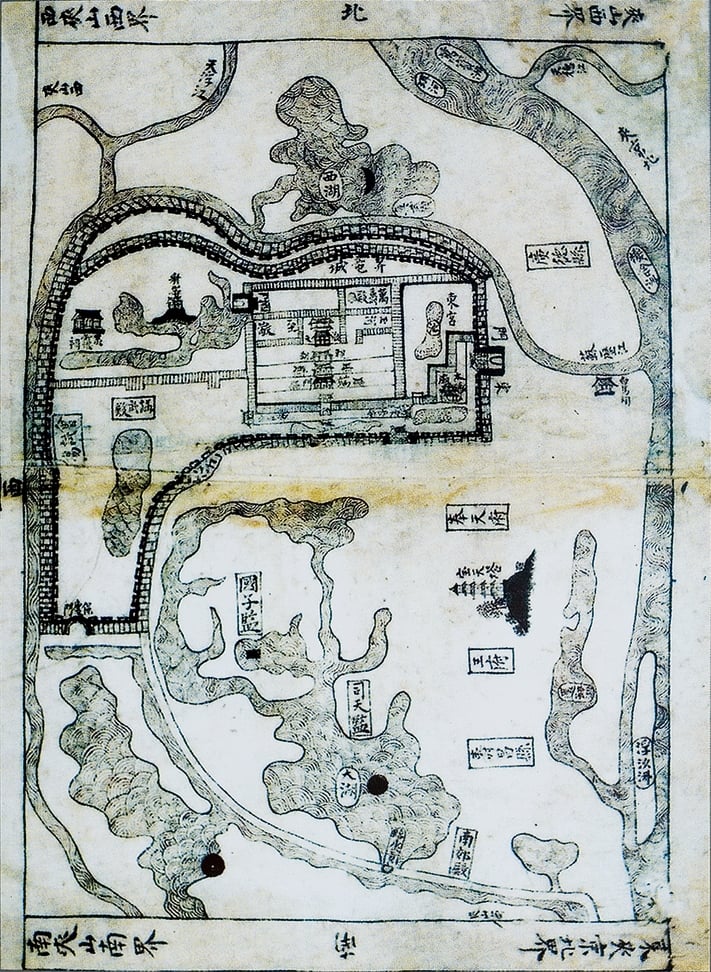
Lý Thái Tổ Moves Vietnam’s Capital to Thăng Long
The founder of the Lý dynasty moved his court to the site of today’s Hanoi, which has been the heart of Vietnam for most of the thousand years since.
In 1010, the newly installed emperor Lý Thái Tổ moved the capital of his realm from Hoa Lư to the site of an earlier fortified settlement along the Red River. The founder of the Lý dynasty took up residence at the grounds previously known as the Đại La Citadel. According to imperial tradition, the monarch decided on the relocation after reporting the sighting of a dragon rising from the water, prompting him to rename the seat Thăng Long, or ascending dragon. The choice anchored the political leadership of the Vietnamese realm in a location that had already accumulated centuries of administrative and military importance.
Long before the Lý dynasty chose the site, the surrounding landscape had functioned as a focal point for successive governing powers. Early political organization in the territory included the third-century BC citadel of Cổ Loa, followed by periods of foreign domination. During the first century, the area saw armed resistance when the aristocratic sisters Trưng Trắc and Trưng Nhị mobilized widespread support against the Han dynasty, establishing a brief royal center upriver at Mê Linh before their defeat. In subsequent centuries under Chinese rule, a fortified base called Tống Bình emerged in what is now central Hanoi, gradually evolving into a primary administrative seat.

Keep reading in Yester
Coming soonKeep following the story
Sources
Image: Lê Thánh Tông (1442 - 1497) · Public domain · Wikimedia Commons · cropped
