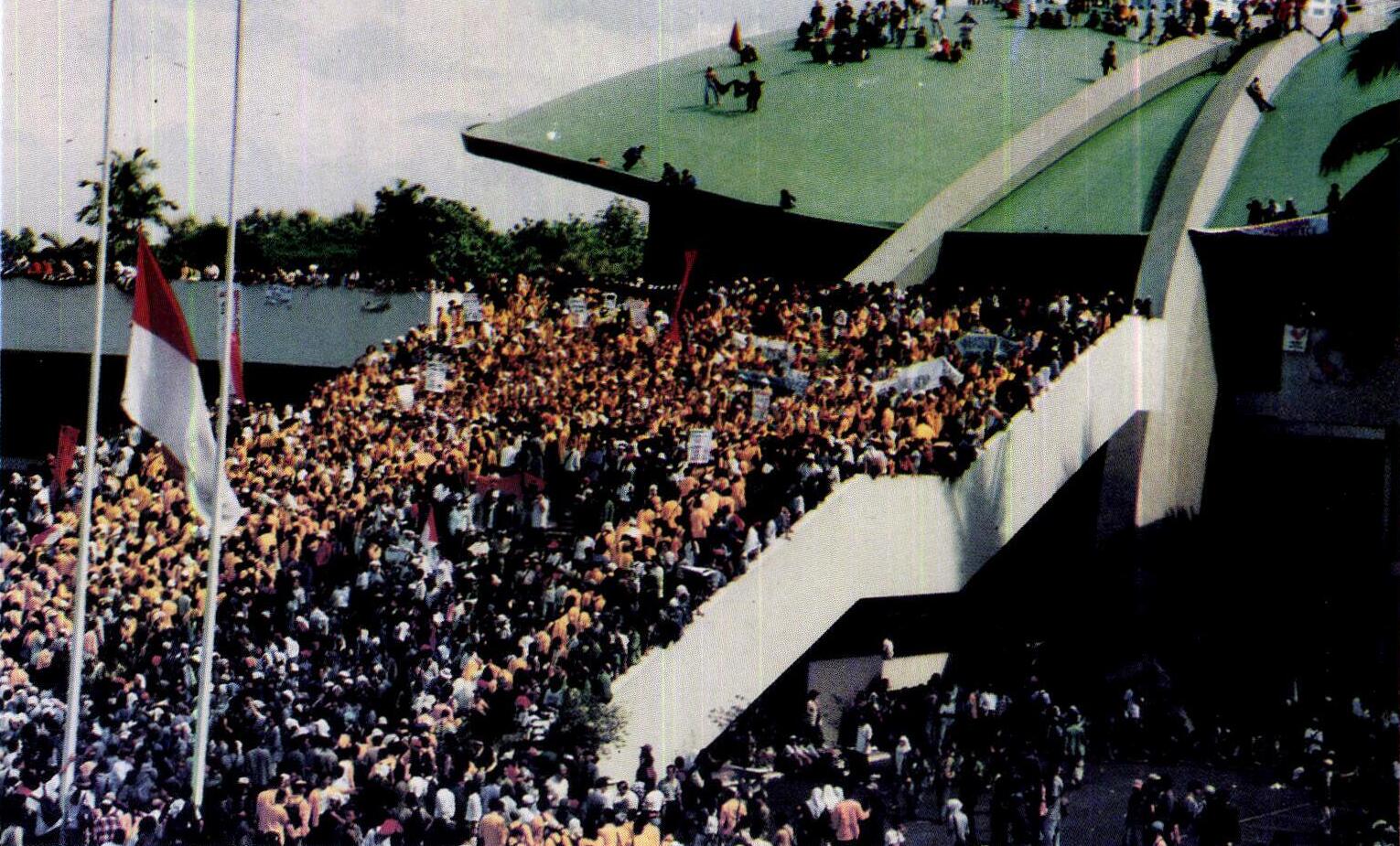
Suharto Resigns After 31 Years Ruling Indonesia
Economic collapse and student protests forced out the general who had held power since the 1960s.
On the morning of May 21, 1998, President Suharto appeared before television cameras in Jakarta to announce his immediate resignation. The address concluded more than three decades of authoritarian governance under his New Order regime, which had commenced in the late 1960s. Suharto's centralized system had long curtailed political freedom, obliging senior civil servants to back the state-sponsored Golkar grouping and allocating reserved legislative seats to the military while prohibiting soldiers from voting. Golkar won landslide victories in tightly managed elections, and the People's Consultative Assembly repeatedly reelected him unopposed.
The foundation of the New Order fractured rapidly in the late 1990s under the weight of the Asian financial crisis. The Indonesian rupiah went into free fall, losing most of its value against the United States dollar within months. Domestic enterprises carrying dollar-denominated loans failed, and foreign capital departed en masse. High private debt, inadequate oversight, and pervasive patronage exposed fundamental systemic vulnerabilities. Rescue packages arranged through the International Monetary Fund failed to restore confidence, and inflation soared while living standards collapsed for the poor.

Keep reading in Yester
Coming soonKeep following the story
Sources
Image: Secretariat General of the House of Representatives of the Republic of Indonesia · Public domain · Wikimedia Commons · cropped
