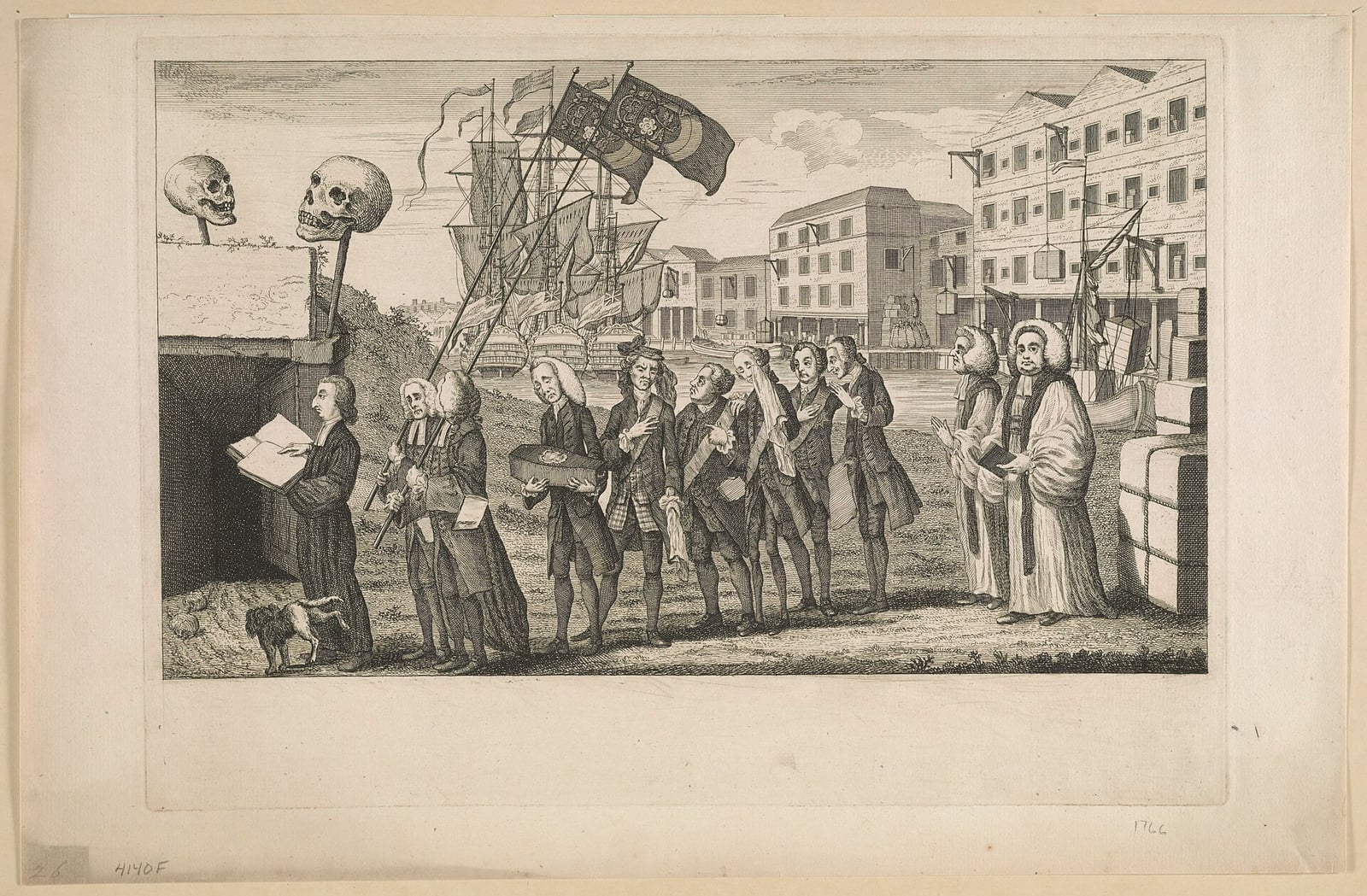
Parliament Taxes the American Colonies with the Stamp Act
A tax on printed paper in Britain’s American colonies set off boycotts, riots and the cry of no taxation without representation, and was repealed within a year.
On 22 March 1765, the British Parliament enacted the Duties in American Colonies Act, commonly known as the Stamp Act, to take effect the following November. Passed by Parliament with little debate, the measure levied direct duties on paper throughout the American colonies. It mandated that legal documents, newspapers, pamphlets, playing cards, and dice bear embossed revenue stamps produced in London. Because the act demanded settlement in scarce British currency rather than local paper money, and placed jurisdiction for violations within non-jury admiralty courts, it provoked swift constitutional alarm across British North America.
The ministry of George Grenville devised the legislation to help finance roughly ten thousand British regular troops stationed in North America following the Seven Years' War. Britain's national debt had nearly doubled during the war years, making domestic tax hikes politically fraught. Grenville argued that the colonies ought to help pay for their own defense. Colonial assemblies counterargued that they had already contributed heavily to the war, that a French threat no longer existed, and that Parliament had never before imposed internal revenue duties directly upon them.

Keep reading in Yester
Coming soonKeep following the story
Sources
Image: British Cartoon Prints Collection · Public domain · Wikimedia Commons · cropped
