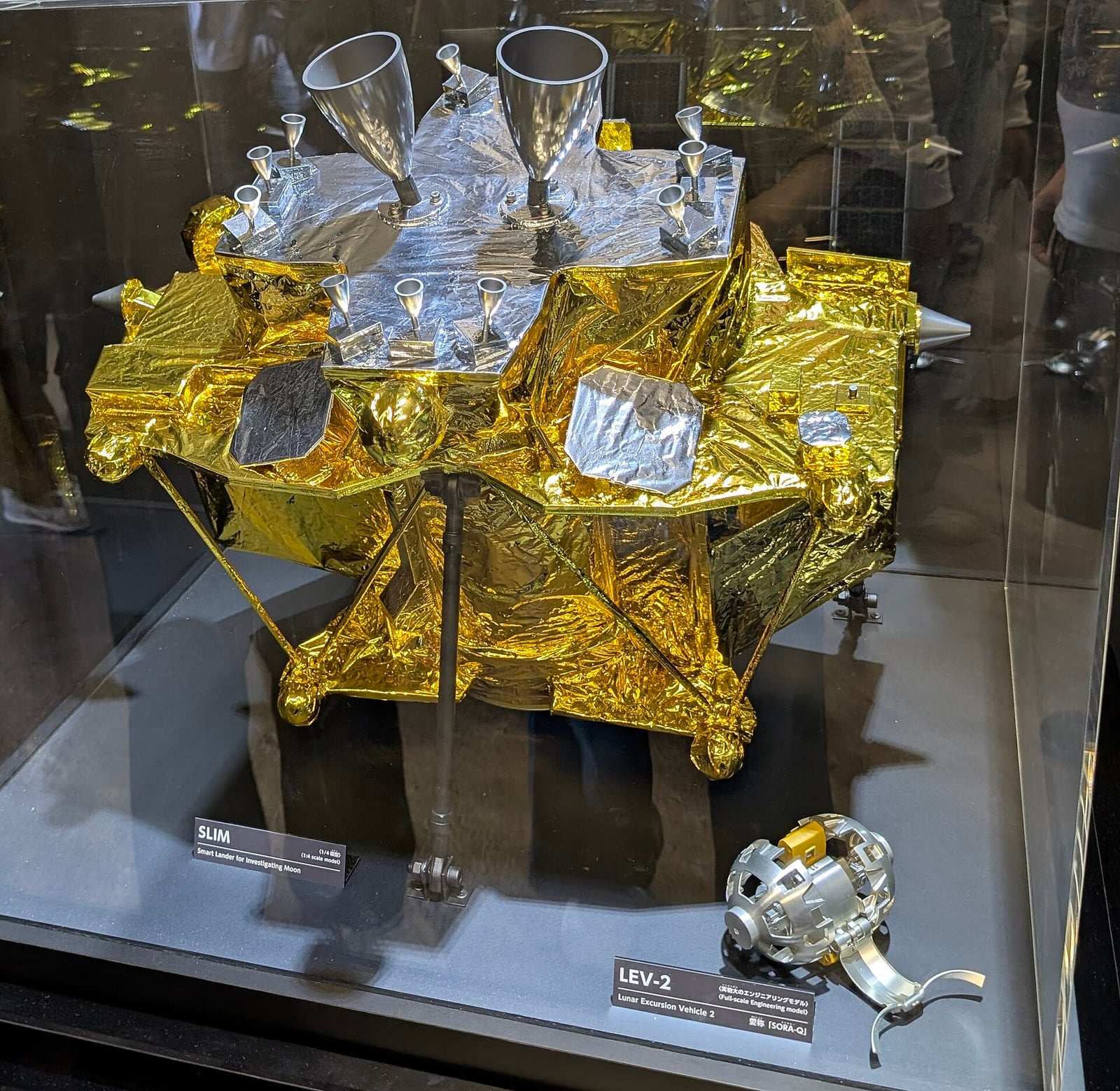
Japan’s SLIM Lands on the Moon Within 100 Metres of Its Target
Japan became the fifth country to soft-land on the Moon, though its probe came to rest on its nose.
On 19 January 2024, Japan Aerospace Exploration Agency operators watched as the Smart Lander for Investigating Moon, known as SLIM, executed a powered descent toward the lunar terrain. Nicknamed the Moon Sniper, the robotic spacecraft was designed to transition lunar exploration from landing where circumstances permitted to landing precisely where mission planners intended. Upon touching down near Shioli crater in the Sea of Nectar, Japan became the fifth country to accomplish a soft landing on the lunar surface, following the Soviet Union, the United States, China, and India.
The primary technological ambition of the mission was to achieve an unprecedented touchdown accuracy within a 100-metre radius of its target. Earlier lunar landings had worked within broad margins; the 1969 Apollo 11 Lunar Module, for example, accepted a landing zone about 20 kilometres long. To achieve pinpoint precision, SLIM applied crater-identification techniques derived from facial recognition software, cross-referencing real-time optical observations against topographical data collected years earlier by Japan's SELENE orbiter.

Keep reading in Yester
Coming soonKeep following the story
Sources
- Press Release: SLIM moon landing outcome (JAXA, Jan 25 2024)
- Press Release: conclusion of SLIM lunar operations (JAXA, Aug 26 2024)
- JAXA's SLIM literally lost an engine (SpacePolicyOnline)
- Japan's SLIM mission is revived on the Moon (Scientific American / Nature)
- 20 minutes of terror: SLIM pinpoint landing (ISAS/JAXA)
- LEV-1 operations on the lunar surface (IAC-24 paper, IAF)
- Smart Lander for Investigating Moon
Image: Artem.G · CC BY 4.0 · Wikimedia Commons · cropped
