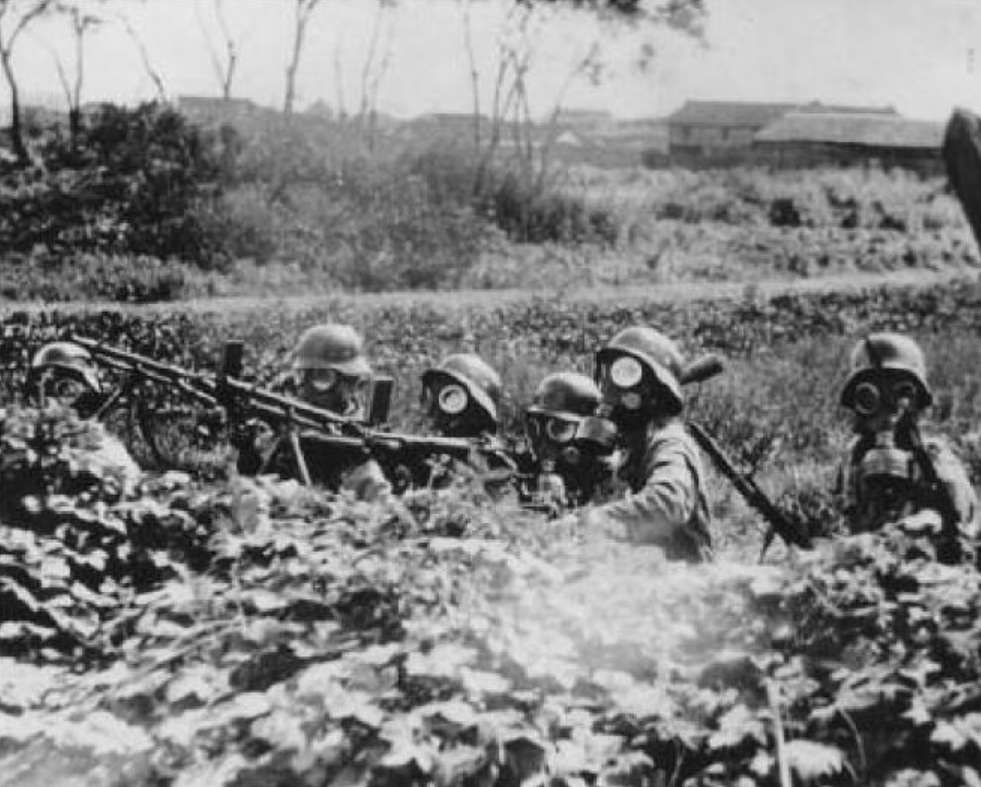
China Makes a Stand at Shanghai
Three months of street fighting against Japan, the first major battle of the war, drew the eyes of the world.
On August 13, 1937, gunfire erupted between Chinese security forces and Japanese troops in Shanghai, transforming regional friction into a vast urban conflict. Following the Marco Polo Bridge Incident near Beijing in July, tensions in the port city escalated sharply after Chinese guards killed a Japanese naval officer and a sailor at the gates of Hongqiao airfield on August 9. Chinese leaders sought to draw the primary Japanese advance toward the Yangtze River delta, hoping to slow northern operations, gain time to move vital manufacturing inward, and attract Western diplomatic backing. Instead, the confrontation became an unforgiving struggle that engulfed China's premier commercial hub.
The opening stage centered on aggressive assaults by the Republic of China's National Revolutionary Army against entrenched Japanese naval landing troops. Operating from reinforced positions in districts such as Hongkou, Japanese forces held firm behind concrete fortifications, supported by artillery fire from warships moored along the Huangpu River. Chinese assaults repeatedly stalled because troops lacked the heavy artillery required to destroy reinforced concrete bunkers. Chiang Kai-shek's command deployed the German-trained 87th and 88th Divisions, later supplemented by the 36th Division, attempting coordinated advances with British-built tanks. However, poor coordination between armor and infantry allowed Japanese defenses to blunt every breakthrough.

Keep reading in Yester
Coming soonKeep following the story
Sources
Image: Unknown photographer · Public domain · Wikimedia Commons · cropped
