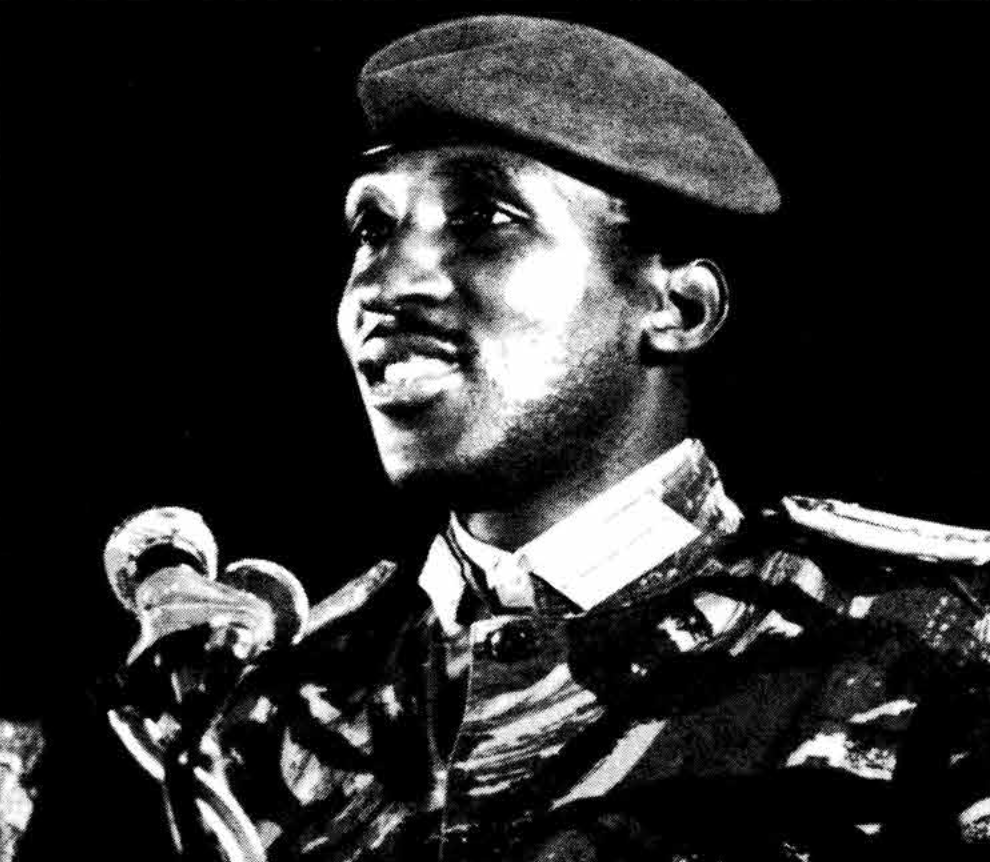
Thomas Sankara Takes Power and Renames Upper Volta Burkina Faso
A young army captain launched mass vaccination, literacy and tree-planting drives before he was killed in 1987.
On 4 August 1983, a military coup d'état led by Blaise Compaoré brought 33-year-old Captain Thomas Sankara to the presidency of the Republic of Upper Volta. Sankara had previously served as prime minister earlier that year, but his tenure ended in dismissal and house arrest following political friction with the sitting administration. Released and elevated to power through the rebellion organized by his military comrades, Sankara promptly declared the start of the Democratic and Popular Revolution, committing his government to anti-imperialism, domestic self-sufficiency, and sweeping social reorganization.
A year after taking office, on 4 August 1984, Sankara changed the country's name from Upper Volta to Burkina Faso, a title combining words from Mooré and Dyula to mean the land of upright people. He is credited with writing the words of a new national anthem, adopted a fresh flag, and set about dismantling colonial and traditional hierarchies. Central to his restructuring was the marginalization of traditional authorities, particularly the Mossi elite, whose hereditary privileges were curtailed as administrative control shifted toward newly formed, Cuban-inspired Committees for the Defense of the Revolution.

Keep reading in Yester
Coming soonKeep following the story
Sources
Image: The Militant/ Ernest Harsch · Public domain · Wikimedia Commons · cropped
